
Reducing cap mass is a design choice that needs a purpose. A lighter component can change shape, fit or the feel of the finished product. Review the complete construction before removing layers, and identify which compromises the intended wearer and brand will accept.
Use the performance cap buying guide for the related construction decisions, alongside the focused checklist below.
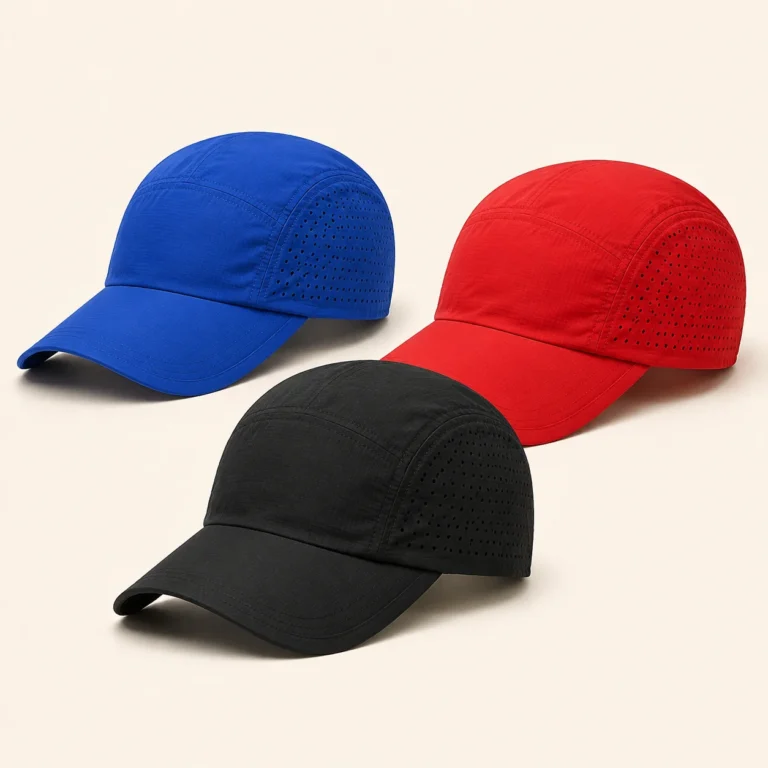
Set the design priority before changing components
Describe the intended activity, wearer and reasons for exploring a lower-mass cap. Keep essential shape, fit and branding needs visible. A minimum number alone does not explain whether the cap still works as intended.
List the crown fabric, supports, band, visor, closure, labels and decoration. Identify where alternatives are being considered. Keep the original accepted construction as a reference so later changes can be compared with a known product.
Review what each layer or component contributes
Discuss the effect of removing support, changing a band or using a different closure. Review seam appearance, crown stability, adjustment and inside finish on the proposed sample. Avoid assuming less material always means a better outcome.
Check decoration as part of the same decision. A changed front construction may respond differently to an embroidered mark or patch. Keep the actual artwork and dimensions with the trial instead of judging an undecorated sample as the final cap.
Compare complete samples on a consistent basis
The complete cap weight check covers weighing conditions and included components. Use that record to explain the measured difference, then retain separate observations about shape and fit.
Identify which components changed together. If several inputs differ, avoid assigning the whole result to one cloth or trim. Record the accepted appearance and the compromises still under discussion.
| Check | Reference to retain |
|---|---|
| Priority | Reason for reducing mass and essential features |
| Component | Proposed alternative and its construction role |
| Comparison | Complete samples and known changed inputs |
| Trade-off | Accepted shape, fit and decoration effects |
| Release | Measured scope and retained product reference |
Keep separate evidence for added performance wording
ASTM D737’s fabric air-permeability scope defines a fabric air-permeability question. A reduction in complete cap mass does not establish that result, moisture management or a general cooling outcome.
Release the accepted component combination, measured scope and relevant sample decisions together. For a repeat, review changed supports, trims or decoration before treating the old mass and wearing observations as current. Keep the product description within what the actual record supports.
Explore the related headwear product. Share the cap reference, artwork, variant quantities and open development questions through Contact Wenext Caps so the next proposal or sample addresses the actual brief.