
A fair fabric comparison starts by identifying what differs between the options. Two swatches can have similar colours while differing in construction, weight, stretch or finish. Two finished caps can feel different because their bands or support changed, even when the shell fabrics are similar.
For a discussion with a performance fabric cap manufacturer, keep the material references and sample construction connected. The Performance Cap Buying Guide covers the complete product. This article explains how to compare proposed fabrics without turning appearance or informal handling into unsupported claims.
Give every option a clear material reference
Record the supplier or mill reference supplied for the option, composition, fabric construction and other agreed specifications. Identify its colour and finish. Keep missing information as an open question rather than filling the gap with a description inferred from a photograph.
Distinguish fabric weight per unit area from the weight of an assembled cap. The latter also includes the visor, band, closure, support and decoration. Use the appropriate measurement for the decision being discussed.
Compare like with like
Agree the condition and method used for a relevant observation or measurement. Keep sample size, handling and other agreed variables consistent where comparison requires it. Mark any difference that could affect interpretation.
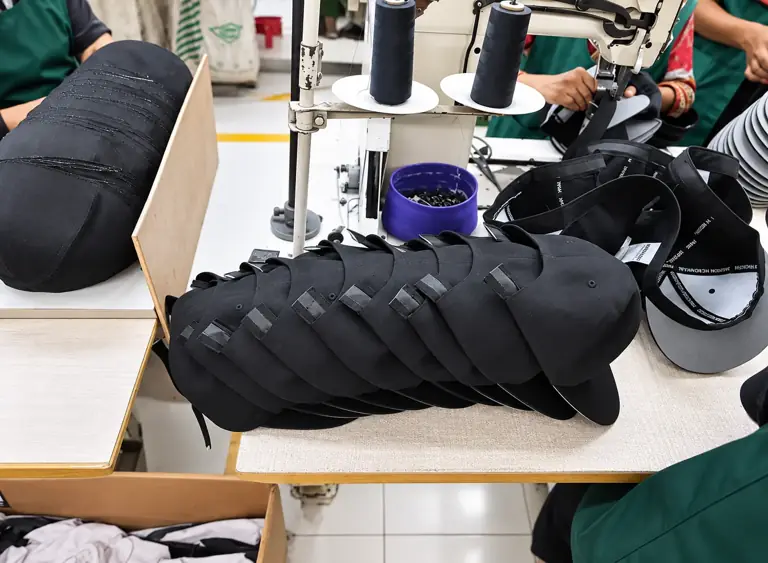
For an assembled comparison, identify whether the crown, support, band, closure and artwork remain the same. If several components change, describe the outcome as a comparison of those complete samples instead of attributing everything to the shell.
Use a simple comparison sheet
| Question | Reference to retain | Decision to record |
|---|---|---|
| What is the material? | Identified swatch and supplied specification | Confirmed details and open information |
| How does it assemble? | Sample construction and support references | Observed seams, shape and decoration result |
| What property is required? | Agreed evidence route and relevant specimen | Whether the evidence supports the requirement |
| What will be ordered? | Accepted material, colour and finish version | Applicable styles and substitution review |
Separate moisture handling from drying rate
AATCC’s public scope for Test Method 195 concerns liquid moisture-management properties of fabrics. Test Method 201 concerns drying rate using a heated plate. A result within one scope is not an interchangeable result for the other.
Where the property matters, agree the applicable method, edition, specimen, conditions and acceptance criteria with the responsible parties. Check the report’s material identity and describe the result only within its actual scope. Do not infer a finished-cap result from an unidentified swatch.
Review the fabric after the intended application
Evaluate the proposed shell in the crown and decorated area. Record visible puckering, seam behaviour, support and the effect on the accepted shape. Identify any trial that uses substitute backing, thread, printing or other application details.
Keep visual and wear observations useful but specific. They can guide a revision without proving a quantified cooling, protection or durability claim. Any additional requirement needs its own agreed evidence.
Close the material choice and substitution process
Retain the accepted swatch, specification and assembled sample references with the product version. Identify which styles and colours use that choice. Review whether a proposed substitution changes the appearance, construction or evidence supporting the product wording.
For a proposal, use the performance cap product page and send the material options and comparison questions. Include the intended activity, artwork, quantity breakdown and destination so the response can address the actual product.