
A fashion baseball cap collection is easier to develop when each variation has a reason to exist. A new fabric, colour or decoration can change both the appearance and the sample work required. Start with the collection’s design families, then identify the differences that need their own material, fit or branding review.
Use the Baseball Cap Buying Guide for the main construction decisions. This article focuses on organising fashion cap colourways and variants into a collection that can be sampled, quoted and ordered clearly.
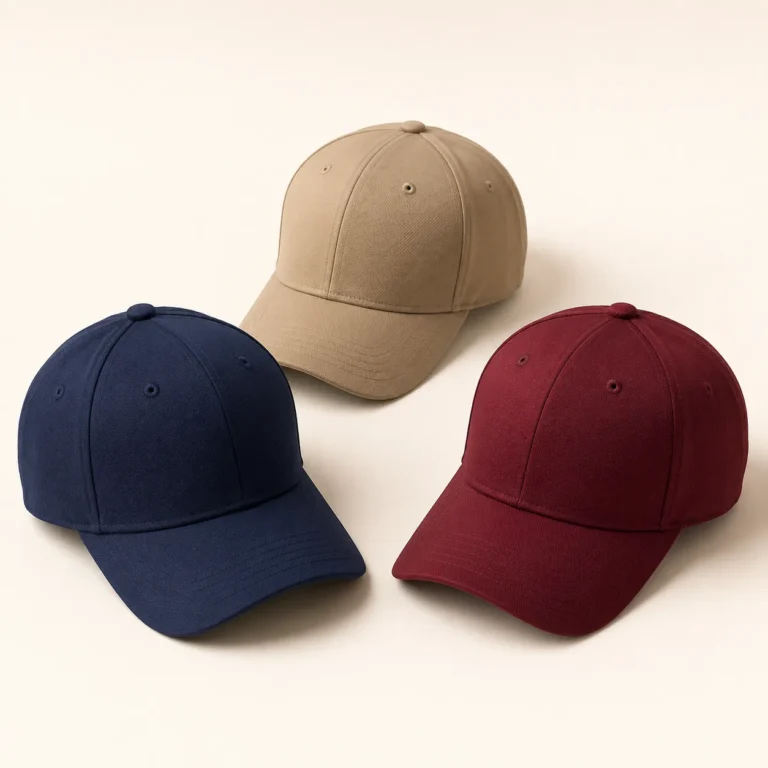
Define the collection’s design families
Group caps by the features that genuinely remain shared: pattern, crown support, visor profile, closure and intended fit. Then list the material and artwork differences within each family. A shared silhouette does not make every variant identical for development.
Explain the intended appearance using annotated references. Identify whether a fabric texture, softer crown, contrasting visor or particular logo scale is central to the design. Several reference photographs without those notes can leave the sample team uncertain about which features matter most.
Compare fabrics and colours physically
Review the proposed swatches for composition, construction, weight, finish and hand feel. Record the accepted material reference for each colourway. A colour name alone does not identify the fabric or establish how it will look after shaping and decoration.
Pantone’s physical sample guidance explains the role of physical references. Compare the actual swatches under agreed conditions and retain any deliberate colour differences. A screen image should not become the only reference for matching a collection.
Show where a variation changes the sample review
A different shell fabric can affect the assembled crown, seam appearance or decoration support. A new logo size can change its relationship to the front seam and visor. Mark these dependencies before deciding which samples represent the collection.
Identify the accepted fit and measuring method, then note which material and decorated versions each sample covers. Do not assume that one attractive sample approves every combination simply because the caps belong to the same seasonal range.
Build a variant matrix before requesting prices
| Reference | Decision to identify |
|---|---|
| Design family | Shared pattern, support, visor and closure |
| Material colourway | Fabric reference, finish and accepted shade |
| Branding version | Artwork, dimensions, colours and application |
| Sample coverage | Approved combination and open revisions |
| Order quantity | Units for the complete finished item |
Use the matrix to separate confirmed items from optional ideas. Ask for quotations against the actual variant quantities and identify assumptions about materials, decoration, labels and packing. A total collection quantity alone can hide the differences between individual items.
Plan the launch around decisions that remain open
List material availability, artwork adaptation, samples and review rounds before confirming the production schedule. Set a decision owner for each open issue. A late fabric or logo change may affect another approval, so keep the dependencies visible rather than changing only the launch date.
Retain the final specification and sample references for later replenishment. Confirm the availability and scope of a repeat order again, especially when seasonal materials or trims are involved. Discuss development through the Wenext Caps baseball cap product page, or send the fashion cap range brief with the variant matrix, references and target schedule.