
A streetwear five-panel cap range needs more than a large front logo. The graphic, panel colors, visor and smaller brand details need to work together across the collection. A design that looks convincing in one mockup may need another artwork color or placement when it moves to a different cap colorway.
Build the range around identifiable versions. The 5-Panel Cap Buying Guide covers construction and buying decisions. This article focuses on graphic scale, color blocking and the records that connect a streetwear concept to its sampled assortment.
Choose the construction before locking the graphic
Select the panel layout and crown profile that carry the concept. Show the relevant seams on the artwork mockup instead of placing the graphic on a generic cap shape. Mark any relationship to the visor and the front-panel edges.
A broad wordmark, a compact symbol and an illustrated patch can each call for a different visual balance. Review the proposed finished size on the assembled sample. Judge it in the intended wearing position as well as in the close-up used to approve detail.
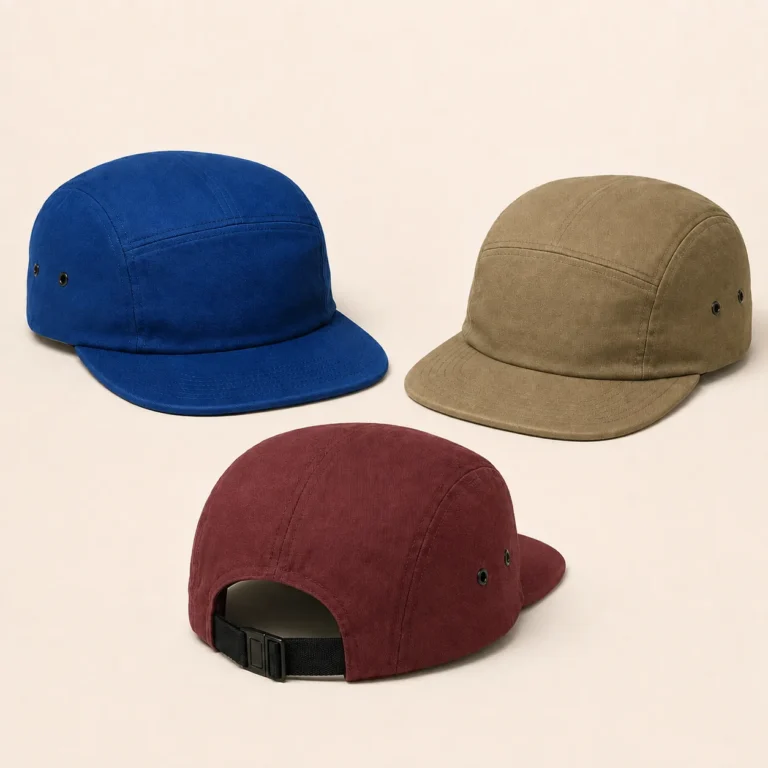
Map color blocking to the individual panels
Name the front, side, top, visor, underside and rear strap colors where they vary. Use a marked view or panel map to show the boundaries. “Contrast panels” can leave the supplier guessing which areas are intended to differ.
Identify what should match and what should deliberately contrast. Include thread, patch edge, closure and seam-tape colors if they affect the concept. Do not assume that repeating one color name across different materials defines the visual result.
Use a physical reference when the color decision needs one
Digital artwork is useful for communicating the arrangement, while the material and decoration samples show the proposed combination. Keep the chosen color references tied to the applicable fabric, thread or trim. Note any approval that is still provisional.
Pantone’s guidance on physical color samples is a useful reference when specifying color. Identify the relevant reference and review the supplied material rather than relying on a screen image as the complete approval.
Check the graphic across the range
A logo approved on the first colorway should still be reviewed where its surroundings change. The same thread or print color may create a different contrast on another front panel. A contrasting visor can also change how the front graphic reads.
List the artwork version and color treatment for each item. If the graphic remains identical, say so. If its scale or application changes, give that version its own approval reference. This is clearer than treating every cap in the collection as an automatic extension of the first sample.
Give each range version a complete identity
| Field | What to connect |
|---|---|
| Item reference | Construction and colorway identity |
| Panel map | Colors and materials assigned to each area |
| Graphic release | File revision, method, dimensions, colors and location |
| Small brand details | Side tabs, rear branding, inside labels and tags |
| Sample approval | The combination reviewed and any remaining conditions |
Include the small details in the design review
Review labels, rear branding and tags with the front design rather than adding them after the main sample is approved. Identify their placement and check the assembled presentation. A visible side tab or contrasting inside tape can be part of the collection’s identity and should have an approved reference.
The private-label trim release checklist helps connect those components to the correct artwork files. Keep the item names consistent between the design sheet, sample comments and order breakdown.
Make collection changes visible before release
If a colorway is added or a front graphic is replaced, identify which items change and which approvals remain valid. Check the associated trims and packing artwork too. A late design revision should not leave two files appearing to be the current version.
Use the Wenext five-panel cap product page to discuss the collection. Send the range sheet, marked graphics and color references through Contact Wenext Caps so the supplier can review each proposed combination.