
A golf cap prototype should answer a defined set of questions. If the first sample is expected to prove the crown pattern, a new fabric, several logos and the final packing at once, it becomes difficult to explain which decision is actually being approved.
For a project with a custom golf cap factory, agree what each sample stage contains and what it can demonstrate. The Custom Golf Cap Buying Guide covers the connected product choices. The process below turns those choices into a practical revision and approval record.
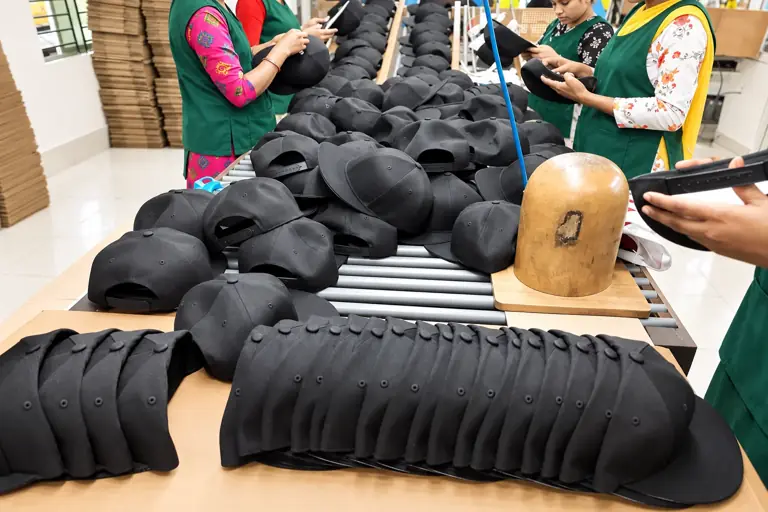
Give each sample a purpose
Start by listing the decisions still open. A shape sample may help resolve crown depth and visor proportions while using substitute materials. A decoration trial may answer questions about stitch detail without representing the complete cap. A later assembled sample can connect the agreed components.
Record every substitution prominently. State which fabric, colour, closure, support or trim is provisional and what must replace it. Otherwise, a photograph of an early sample can become an unintended reference for the final product.
Prepare a comment sheet that can be acted on
Give the sample a style code, version and date. Use numbered comments linked to marked photographs or measuring points. Separate a visible issue from the proposed correction: “front sits higher than the reference” explains the observation; the agreed pattern revision explains the response.
Avoid comments such as “make it better” or “same as before”. State whether a component is accepted, needs a specific change or remains unconfirmed. Keep the previous version available so the next reviewer can see what changed and why.
Review the assembled result after a component change
Changing the shell, front support, sweatband or embroidery can affect more than the detail being replaced. Review the finished crown and fit again where the change is relevant. A logo approved on a flat trial may sit differently when placed across a curved front seam.
Madeira’s embroidery backing guidance is a useful technical reference for support selection. Use it to inform the discussion, then assess the actual fabric, artwork and backing combination on the proposed cap. The guidance does not establish an approval for a particular order.
Use a small approval register
| Decision | Record to retain | Release condition |
|---|---|---|
| Crown and fit | Sample version, views and measurement sheet | Agreed shape and fit comments resolved |
| Materials | Shell, support, band and closure references | Substitutions identified and accepted |
| Decoration | Artwork version, colours and finished-cap review | Size, position and result accepted |
| Labels and packing | Copy, placement and packing breakdown | Product identity and presentation reconciled |
This register is an example, not a fixed testing or production procedure. Add the project-specific evidence, responsible person and approval date. If a test or destination requirement applies, identify the evidence needed before release.
Decide which variations need their own evidence
One approved cap does not automatically cover a different fabric, fitted size or substantially different logo. Map the range and identify what each sample represents. Agree the coverage before sampling so both sides understand the remaining differences.
A shared construction can make review more manageable, but the relationship should be written down. Note which colours, sizes and artwork versions are covered by each reference and which require a separate check.
Close revisions with a clear release record
Before the next agreed stage begins, assemble the current specification, approved sample reference, artwork and quantity breakdown. Resolve conflicting instructions and identify any condition still open. An approval message should state the version and scope it accepts.
Later changes need a new revision and a discussion of their effect on materials, samples, quantities and timing. Keep the previous approval rather than editing away its history. For a new brief, review the golf cap product page and contact Wenext Caps with the sample objectives, construction reference and delivery requirements.