
A wholesale golf cap order can look simple until its colour, logo and size choices are counted together. A navy adjustable cap with a club crest is a different packing item from the same shell with a tournament logo. A fitted version introduces another size breakdown.
Before comparing a wholesale golf cap supplier’s proposal, prepare an assortment sheet that describes those complete combinations. The Custom Golf Cap Buying Guide covers the construction decisions; this article explains how to organise the range and its quantities.
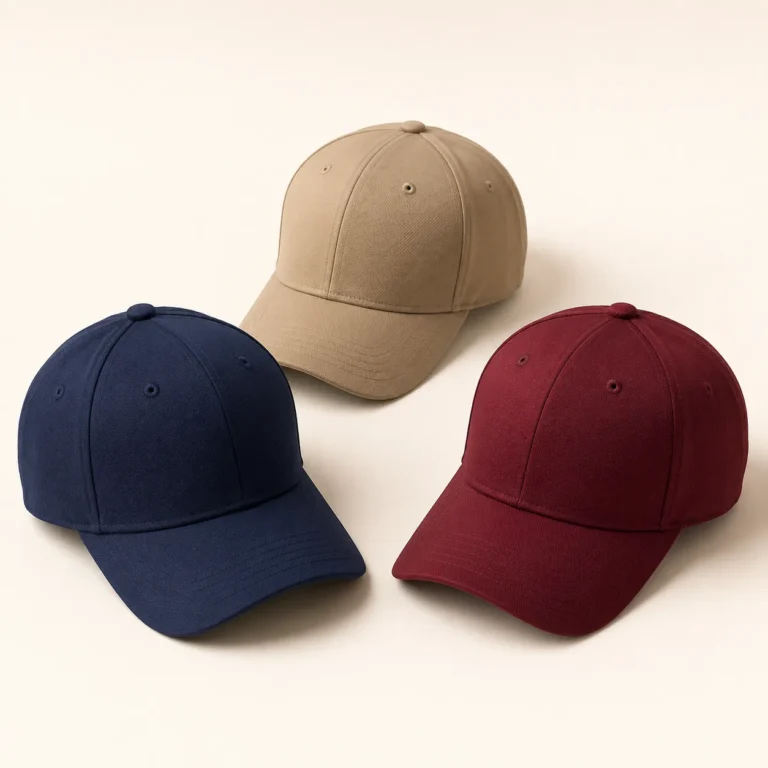
Start with a defined base style
Give each base style a construction reference. Record its panel layout, crown support, visor, shell, sweatband and closure. If two colours use different materials or different size systems, identify that difference explicitly instead of grouping them only by appearance.
This allows the proposal to show what is shared and what is separately developed. It also prevents a quoted “golf cap” from becoming a moving target as one part of the assortment changes.
Count the combinations that will actually be ordered
Create one row for each required style, colour, size and artwork combination. Attach the relevant label and packing reference. Do not multiply every option together if the buyer only intends to order selected combinations.
For example, a club might want two colours with its standard crest and only one of those colours with an event mark. Write those three combinations as three rows. If the event version is fitted, list its individual sizes underneath the correct version and reconcile the subtotal.
Separate fit options from colour choices
An adjustable cap still needs an agreed fit range and closure specification. A fitted collection needs a size chart and quantities by size. Keep these details visible in the assortment sheet rather than hiding them in a general notes column.
A size label on its own does not establish the finished measurements. Refer to the approved size system and sample coverage. If a retailer provides a size curve, confirm who owns that quantity decision and how later changes will be recorded.
Build a sample-coverage map
Show which sample represents each construction, material, decoration and size difference. A common shell may simplify development, but a large sponsor mark or a different front fabric can introduce a separate review requirement.
Mark versions as proposed, sampled, approved or still awaiting a decision. A written relationship between a sample and the variants it covers is more useful than assuming that one photograph approves the entire order.
Keep product identity separate from delivery allocation
Use a stable product code for each complete variant. Then add the intended club, shop, event desk or other receiving allocation. The same product can be sent to several destinations without changing what the product is.
If a retail system requires GTINs, confirm the assignment and data with the responsible buyer. GS1’s explanation of the Global Trade Item Number helps distinguish trade-item identification from an internal supplier code. Do not generate retail identifiers from a style name without the agreed process.
Reconcile packing with the assortment sheet
Record whether cartons contain one variant or an approved mixed assortment. Show quantities by product and destination, any inner grouping and the required carton identification. Check that carton totals add back to the approved order.
Review the packing method with the actual crown and visor shape. Tags, protective materials and nesting direction can affect presentation. Record the accepted packing reference so a later release does not rely on an unrelated cap photograph.
Compare proposals against the same breakdown
Send suppliers the same current assortment and ask them to identify assumptions, exclusions, minimums and any development charges. Confirm whether quantities, samples, labels, packing and delivery responsibilities are included. Resolve differences before treating two totals as directly comparable.
For a Wenext Caps discussion, review the golf cap product page and send the assortment and destination breakdown. Keep a dated version of the accepted sheet with the product specification and artwork files.