
A club cap range needs a recognisable identity and a practical reason for each version. Member merchandise, staff caps and a pro-shop collection can share a crest without needing exactly the same colour, fit or presentation. Define those uses before expanding the range.
For a discussion with a golf club cap manufacturer, prepare a range brief alongside the construction specification. The Custom Golf Cap Buying Guide covers the product decisions. This article focuses on club identity, wearer choice and keeping future reorders connected to the accepted range.
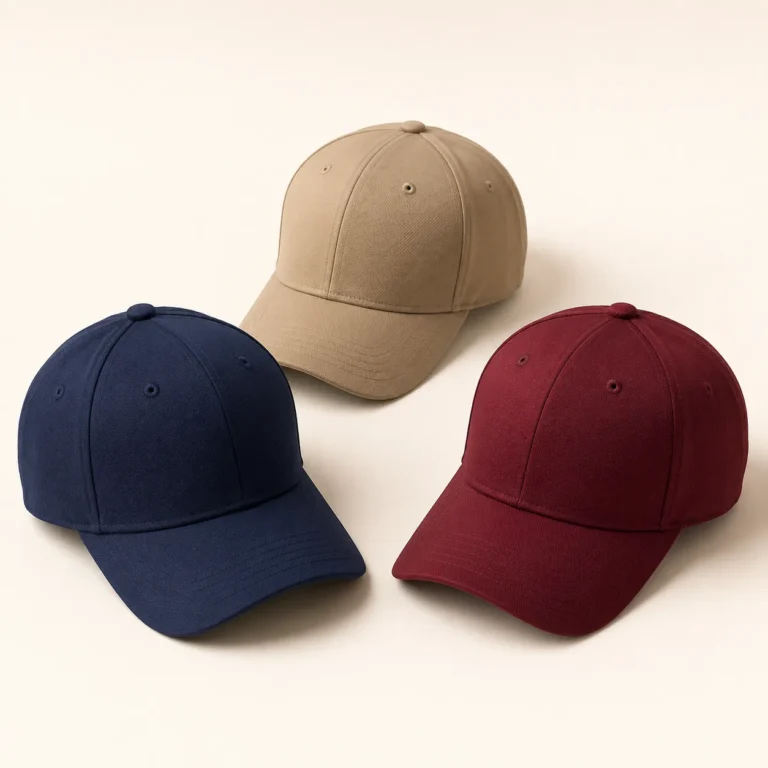
Give each part of the range a purpose
List who will wear or buy each version and how it will be supplied. A staff allocation may follow a uniform plan, while a pro-shop order follows a retail assortment. A member edition may need its own crest treatment or presentation.
Keep a shared product where the construction and branding are genuinely the same. Create a separate version when there is an actual difference. This avoids both unnecessary styles and vague groupings that hide different products under one club name.
Approve the crest and its adaptations
Identify the current master artwork and the club representative who can approve its use. Record the accepted crest proportions, wording and colours. If embroidery needs a simplified version or a different colour treatment, have that adaptation reviewed as its own file.
Show the crest on each proposed cap colour. A tonal version and a full-colour version may create different results, even when they use the same outline. Keep any event date, sponsor or commemorative wording separate from the permanent club identity.
Choose a manageable colour assortment
Connect each colour to its purpose in the range. The club may choose a small core collection and a separately identified seasonal version. Use the buyer’s own sales or allocation evidence to decide quantities; an attractive rendering is not demand evidence.
Record shell, underbrim, closure and decoration colours together. A reorder should not depend on a description such as “the dark blue one”. Retain the material and approved colour references that identify the actual product.
Plan fit choice with the intended wearers
Decide whether the range uses adjustable caps, fitted sizes or more than one construction. For a fitted range, define the size system and quantities by size. For an adjustable range, agree the intended fit coverage and review the cap at relevant closure settings.
Titleist’s Tour Performance TrueFit is a named example of that brand’s fitted construction. It illustrates a different sizing approach from an adjustable cap; its size system is not a Wenext Caps specification and should not be copied into a new pattern without review.
Keep retail and staff information distinct
Show whether each version needs retail hangtags, product identifiers or only the agreed internal allocation references. Keep the cap’s style, colour and size identity consistent with the related labels and packing breakdown.
A staff cap sent to two departments can remain the same product with two allocations. A retail edition with a different crest, material or presentation may require a separate product version. Make those differences explicit before the final quantity sheet is accepted.
Retain a reorder reference set
Keep the accepted sample reference, measurements, component list, artwork, labels and packing instructions together. Give the set a version and date. State whether a later order repeats that version or changes it.
Before confirming a repeat, review material availability, revised club artwork and any proposed substitutions. A similar appearance does not establish an identical component. Record changes and decide which need another sample review instead of silently replacing the earlier standard.
Use the Wenext Caps golf cap product page to discuss the collection, then send the club range and approved artwork references. Include quantities, fit requirements and the destination for a proposal against the actual assortment.