
A school cap order can look simple until the same crest, colour and size have to reach several year groups. The useful starting point is an allocation sheet: which cap version each group needs, how many are required in each size, and who will receive them. That gives the sample review and packing plan a shared reference.
For construction and measurement decisions, start with the Custom Kids Cap Buying Guide. This article focuses on organising a school cap programme from the approved design through to distribution and repeat orders.
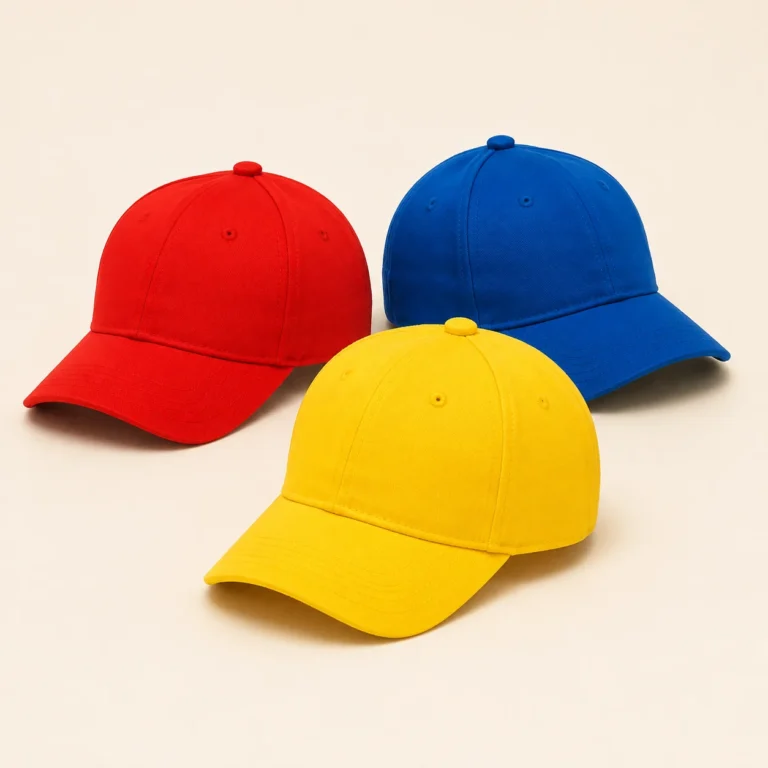
Separate wearer groups before counting caps
List the intended pupil groups and the measured sizes proposed for them. Keep staff caps on separate lines when their pattern, closure or dimensions differ. A shared school colour does not make an adult staff cap interchangeable with a pupil version.
Use a stable item reference for every style, colour, size and crest combination. Collect the quantities against those references rather than using a single total labelled “school caps”. If quantities are provisional, mark the date and the person responsible for confirming them.
Keep the crest approval distinct from the cap approval
Supply the authorised crest file, finished dimensions, placement view and colour reference. Check that fine lettering and outlines remain readable at the proposed size. Where the artwork needs adaptation, retain both the source file and the accepted production version.
Review the application on the intended cap fabric and crown shape. An approved digital crest does not by itself approve embroidery density, backing, placement or the interior finish. Madeira’s embroidery backing guidance provides useful background on matching support to the fabric and design.
Use a size allocation sheet that can become a packing record
| Field | What to record | Why it matters |
|---|---|---|
| Item reference | Style, colour, size and artwork version | Distinguishes similar-looking caps |
| Quantity | Confirmed units for each item | Reconciles the order and packing totals |
| Receiving group | Agreed campus, year group or stock allocation | Supports organised distribution |
| Approval reference | Dated cap sample and crest decisions | Connects the allocation to the accepted product |
| Packing reference | Carton or inner-pack identity and contents | Allows receiving checks against the allocation |
These are planning fields, not fixed packing rules. Agree the actual breakdown with the receiving team. Keep pupil names and other personal information out of the production brief when group-level references are sufficient.
Give the sample review a clear end point
Record which size, colour and decorated version the sample represents. Review the measured cap, adjustment arrangement, visor proportions, seams, labels and crest application. List accepted features separately from changes still required, and identify any version that needs another sample.
State the destination and responsible review parties early. Children’s product requirements depend on the actual product and market; the buyer guide links to the relevant official US guidance where applicable. Keep the agreed evidence and labelling decisions attached to the final specification.
Plan receiving checks and the next school order
Reconcile the packing list with the allocation sheet before dispatch. Agree how the receiver will identify sizes and separate groups without repeatedly opening and repacking the same caps. Review the proposed presentation so the crown, visor and decoration arrive in the accepted arrangement.
For a repeat order, retain the dated specification, artwork version, measurement chart and approval record. Confirm material and trim availability again, and flag changes for review. The previous order is a useful reference, while a documented revision prevents an old component or crest file being mistaken for the current one.
Discuss cap development through the Wenext Caps kids cap product page. To prepare a proposal, send the school cap brief with the proposed sizes, authorised crest, colour breakdown, destination and required timing.