
A restaurant cap brief should begin with the team wearing it and the operator’s actual headwear requirements. A front-of-house uniform item and a cap proposed for a food-preparation role may need different reviews. Agree that scope before choosing a shared colour or adding the restaurant logo.
The Work Cap and Uniform Headwear Guide explains the underlying construction and approval process. This article focuses on role coverage, fit comments, decorated finish and the care brief for a restaurant staff programme.
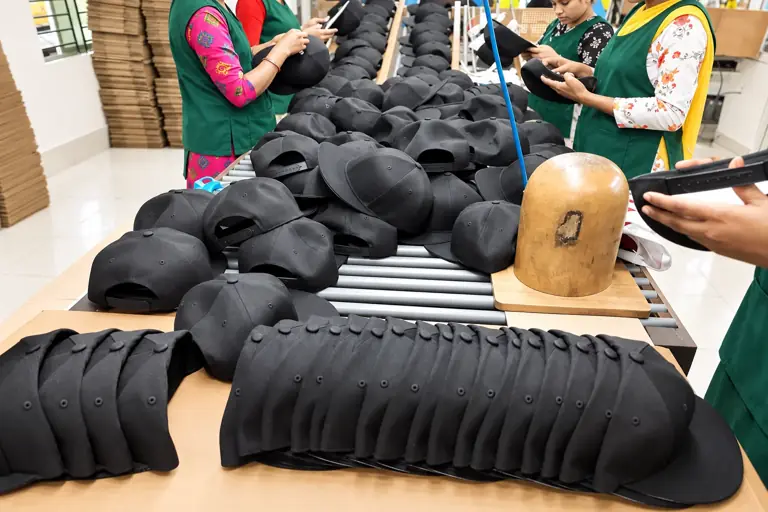
Separate the proposed roles and headwear requirements
List the restaurant roles for which caps are being considered. Identify whether the same product is proposed for each team or whether fit, coverage, styling or identification differs. Have the responsible operator confirm the headwear and hygiene requirements relevant to those roles and locations.
Keep that decision visible in the product brief. A branded appearance alone does not establish suitability for every restaurant task. Where the operator specifies a different headwear arrangement, record it before reviewing a generic cap sample as the intended solution.
Review fit on the complete cap
Define the measurement chart, crown depth and closure arrangement. Include the intended wearing position in the sample review and identify which size and adjustment setting produced each comment. Check the band, rear opening, visor and internal joins together.
Ask reviewers to describe the issue they observed rather than give an unqualified approval for all staff. A pressure point, awkward strap end or unwanted visor position can then become a specific revision. Confirm which wearer sizes and product versions the accepted sample covers.
Approve the logo application and interior finish
Supply authorised restaurant artwork, finished dimensions and placement views. Review small lettering and fine details at the intended application size. Keep any accepted adaptation separate from the source logo file so the correct version can be used again.
For embroidery, consider support together with fabric and design. Madeira’s backing guidance is a useful technical reference. Inspect the assembled application, its interior finish and its relationship to seams; a digital artwork approval does not settle those construction details.
Write the care brief before accepting materials
Describe the proposed care routine and identify who will confirm the instructions. The shell fabric is only one part of the cap: the visor, closure, sweatband, labels and decoration also belong in the review. State what assessment or evidence is needed for the actual combination.
Keep proposed care requirements separate from instructions already verified for the finished product. When a component or decoration changes, review whether the accepted care information still applies. Do not copy a garment’s cleaning instruction onto the cap simply because both pieces belong to the same uniform.
Connect issue quantities to the agreed care and stock plan
The operator should confirm how caps are issued, how replacements are managed and what reserve stock is required. Translate that plan into quantities for each approved style, colour, size and logo version. Avoid assuming a fixed number per employee without the buyer’s allocation.
Agree pack identification and the receiving breakdown, especially when several branches or restaurant concepts share an order. Keep the item references, sample decisions and care information together so replacement requests can identify the intended product accurately.
Discuss development through the Wenext Caps work cap product page. For a proposal, send the restaurant staff cap brief with the operator’s role requirements, fit references, authorised logo, proposed care routine and item quantities.