
Custom Rope Cap Guide
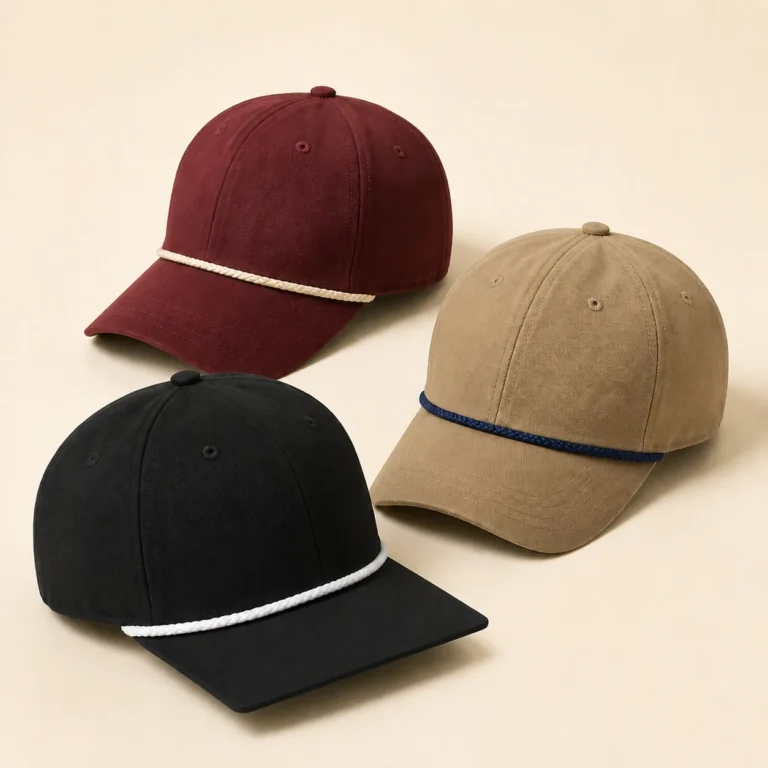
A rope cap adds a decorative cord where the front crown meets the visor. That small detail changes the visual balance of the cap, but it does not define the crown shape, fit or closure. Start with the underlying cap, then specify the cord and branding as connected parts of the design.
Use the Wenext Caps rope cap product page for a project discussion. This custom rope cap guide explains what to put in the brief, what to compare on a sample and which references to retain for a repeat order.
Choose the underlying cap silhouette
Provide front, side, rear and top views of the cap you want. Identify panel layout, crown depth, front support and visor curve. A taller supported front and a softer lower crown create different proportions around the same cord detail.
Show the intended wearing position and fit reference. Specify the closure, rear opening and relevant adjustment range, or the size system for a fitted version. The decorative cord at the front is separate from the arrangement used to fit the cap.
Describe the cord as an identified component
Record the proposed material, construction, diameter or other agreed dimensions, colour and surface appearance. Keep an actual trim reference where available. A photograph can show the intended look without establishing the cord’s composition or exact size.
Give alternatives separate references. A fine matching cord and a thicker contrasting cord are different design options, even when they use the same base cap. Review their effect on the assembled front rather than comparing only loose lengths on a table.
Draw the route and attachment details
Show where the cord begins and ends, the path it follows and its relationship to the visor seam. Mark how its position is measured. Include close-up views or a sample reference for the ends and any visible attachment detail.
Agree the proposed attachment for the actual shell, support and cord combination. Review the front, sides and interior after assembly. Do not assume that a method accepted for one cord diameter or crown construction automatically applies to another.
Compare shell and cord colours together
Show whether the cord is intended to contrast with the shell, coordinate with the underbrim or match part of the logo. Record the references for each component separately. “Navy rope on navy cap” does not identify the physical shades being accepted.
Pantone’s explanation of physical colour samples provides useful context for communicating a colour direction. Agree the actual material and trim samples for the project rather than treating a screen preview as the final colour approval.
Leave a clear relationship between the cord and logo
Map the artwork dimensions and placement above the visor. Identify the reference point and preferred clearance from the cord. A broad badge and a tall crest may need different spacing to achieve the intended balance.
Review the decorated cap from front and side views. For embroidery, Madeira’s backing guidance is a relevant support reference, but the accepted result still needs the project’s own material and design combination. A flat artwork proof cannot demonstrate the finished crown, application and cord together.
Use a focused sample checklist
- Base cap: accepted crown, fit setup, visor and closure references.
- Cord: material reference, dimensions, colour and intended route.
- Attachment: agreed method, end finish and assembled appearance.
- Branding: artwork version, application, position and clearance.
- Presentation: labels, tags and the result after the agreed packing review.
Record observations by location, with a marked view where useful. Separate an accepted detail from a requested change. If a sample uses a provisional cord, shell or closure, keep that substitution visible in the comment record.
Review handling, care and packing against the actual cap
Agree any handling or care review needed for the intended product. Identify its conditions and acceptance criteria with the responsible parties. A neat appearance on a new sample does not establish a quantified attachment life, wash result or other performance claim.
Review the proposed packing with the chosen crown, visor, cord and decoration. Check how the front appears after that handling and identify the accepted packing reference. Hangtags, fasteners and packing materials should be considered as part of the complete presentation.
Separate the assortment into real variations
List the complete cap style, shell colour, cord version, size system and artwork combination for each item being ordered. Add the quantity and relevant label or packing reference. A change to the cord can create a different version even when the shell stays the same.
Agree which variations need their own sample or trim review. One accepted cap does not silently approve a different shell, thicker cord or newly positioned logo. Keep the coverage of each approval clear before extending it across the range.
Retain a usable reference for reorders
Keep the accepted sample reference, construction drawing, cord specification, artwork and packing instructions together under a version and date. Before repeating the order, confirm component availability and identify any proposed substitution.
Review the effect of a change on fit, appearance, attachment and sample coverage. An alternative cord with a similar colour should still be identified and accepted rather than silently replacing the earlier trim reference.
Compare the underlying cap style
The Baseball Cap Buying Guide covers broader crown and purchasing decisions. The 5-Panel Cap Buying Guide explains a particular panel arrangement. For a club or course programme, use the Custom Golf Cap Buying Guide alongside the cord brief.
Common rope cap buying questions
Does the rope determine the cap’s fit?
The front cord is a decorative detail. Define fit through the underlying crown, band, size system and closure, then review the assembled cap in the intended wearing position.
Can different cord colours share one base cap?
Describe each complete combination and agree the relevant trim and sample coverage. Keep quantities and artwork versions connected to the correct shell and cord references.
What should I send for an initial proposal?
Send cap views, fit requirements, shell and cord direction, artwork, quantity breakdown, destination and timing. Add close-up trim references and open development questions through Contact Wenext Caps.