
“Packable” can mean different things in a camper-cap brief. A buyer may want a cap that fits in a jacket pocket, lies flat in luggage or can be placed in a bag without changing its selling appearance. Those are different handling expectations. Define the one you need before choosing the visor and crown components.
For custom five-panel camper caps, review packability on the complete proposed construction. The 5-Panel Cap Buying Guide covers the other product decisions. This checklist helps turn a general travel feature into a sample review that both parties can understand.
Describe how the cap will actually be carried
Show the intended storage space and how the wearer is expected to put the cap into it. State whether the crown is compressed, the visor is bent or the cap is simply placed flat. A sketch or short demonstration can explain the handling more clearly than the word “foldable.”
Keep normal use separate from the shipping arrangement. A cap may be carried loosely by its owner while needing a different presentation for retail delivery. Approve both arrangements if both matter to the project.
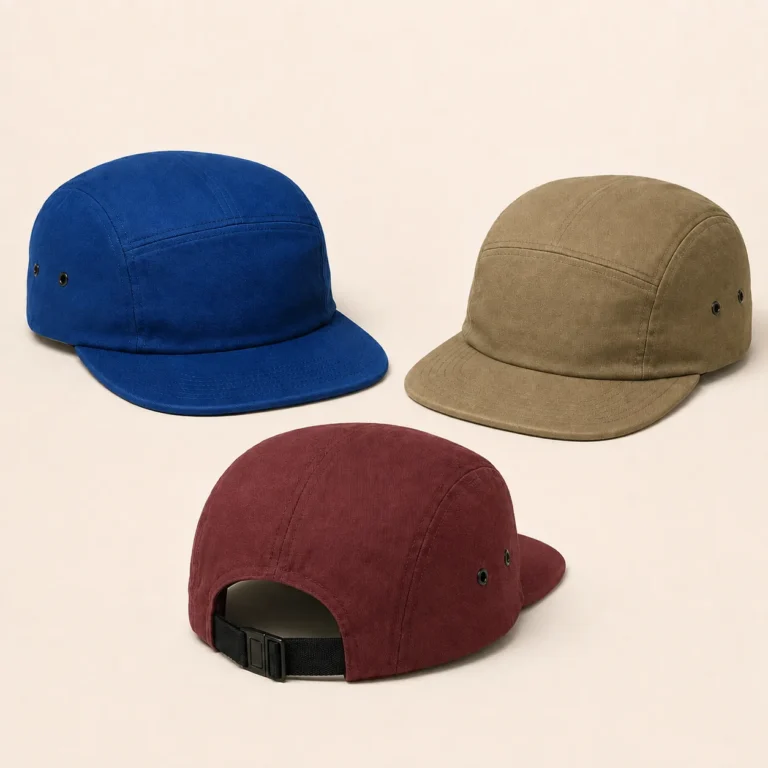
Identify the parts that must tolerate the proposed handling
Review the outer fabric, inside support, visor construction and rear fastening together. Add the decoration, labels and any attached trim to the sample. A flexible crown alone does not establish the behavior of the finished cap.
Ask the supplier to identify the proposed components and any substitutions. If an early sample uses a temporary visor insert, keep the packability decision open until the intended combination is reviewed. Use the sample-round planning record to make those limits visible.
Use a named product example carefully
Some brands describe packability for a particular design. For example, Patagonia describes its Duckbill Cap as a short-brim cap that can be folded into a pocket. That statement belongs to that product and its construction.
It does not establish the panel count of another design or prove that a proposed Wenext camper cap behaves the same way. Use the example to explain the handling you are interested in, then review the relevant sample rather than transferring the claim.
Agree a practical handling review
Define a representative trial with the supplier before comparing samples. Record the sample identity, its starting condition, how it is stored and the agreed review point after unpacking. If the project needs a formal test, identify the applicable method and responsible technical party separately.
A buyer handling trial can answer a design question without being described as a standardized test. Keep the observations specific: a visible crease in the front, a changed visor outline, a distorted patch or a closure that catches during packing. Photos should show the same views before and after the agreed handling.
| Point | What to agree |
|---|---|
| Carrying situation | Storage space and intended way of placing the cap inside it |
| Sample construction | Fabric, support, visor, closure and decoration being reviewed |
| Handling conditions | The agreed procedure and review point |
| Accepted result | Required appearance and function after unpacking |
Review appearance and function together
Check the crown, visor, decoration and inside components after the agreed handling. Put the cap back into the normal wearing setup and assess the fastening. A photograph from above may miss a changed visor profile that is obvious from the side.
Record the acceptable condition and the relevant sample reference. If a change is needed, identify the affected component and repeat the appropriate review on the revised combination. Keep unrelated accepted details clear so the next sample does not reopen the entire brief.
Match the final description to the reviewed product
Use product wording that reflects what was actually agreed and supported. Avoid describing every five-panel camper cap as pocket-folding, crushproof or permanently crease-free. A specific carrying feature should stay connected to the construction and evidence that support it.
For development, discuss the proposed handling through the Wenext five-panel cap product page. Send the storage reference, intended appearance after unpacking and open component questions through Contact Wenext Caps.