
A custom six-panel cap sample may look close to the final product while still containing an available fabric, temporary fastening or unfinished branding. Those substitutions can be useful during development. The approval record needs to show which decisions the sample actually settles.
Agree the sample plan with the custom six-panel cap factory before work starts. Use the 6-Panel Cap Buying Guide for the complete product brief. This article follows the sample from an early crown review to approval of the complete proposed combination.
Start with the construction question that is still open
Write a short purpose for the first sample. It might be to review the front profile, panel joins near the top, crown depth or the position of the visor. Keep the relevant drawing and marked views with that request.
If several details are still undecided, prioritize them with the supplier. The six-panel crown construction brief helps identify the panel map and inside components. The first round can then answer defined questions instead of being judged against an unstated idea of the finished cap.
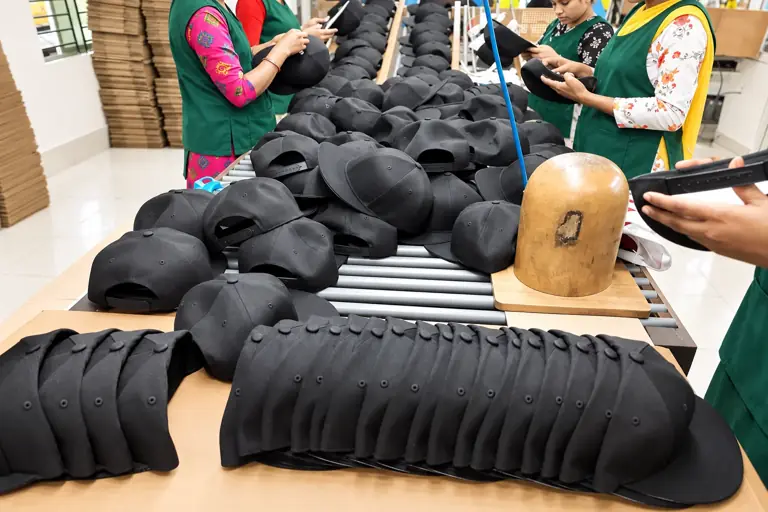
Attach a clear limit to every temporary component
List the substitutions on the sample record. An available colour, a different support material or a provisional buckle should be identifiable without searching through earlier messages. State which later review is needed when the intended component is available.
For example, a crown sample made to compare seam positions may still leave the final fabric and decorated front open. Approval of those seam positions should be recorded precisely. It should not quietly become approval of the substituted material or the untested application.
Ask the supplier how the proposed change affects the next round. Replacing a material, support or visor component can raise a new shape or fit question. Make that follow-up visible in the sample plan.
Use the same fit and view references between rounds
Review the cap in the agreed wearing or display setup. Identify relevant closure settings, cap measurements and the method used. Use comparable front, side, top and rear views when judging a revision.
A comment such as “raise the front” needs a location and a controlling reference. Mark the area being revised and identify the proposed change in terms the supplier can confirm. Keep the accepted panel joins, visor or rear detail clear while requesting that revision.
Give the decorated front its own review
The artwork proof identifies the graphic being requested. The applied sample shows its position across or beside the centre seam, its finished dimensions and the surrounding fabric. Review both references together.
For embroidery, identify the proposed support and review the relevant inside result as well as the visible mark. Madeira’s backing guidance is a useful technical reference for discussing support. The selected fabric, design and cap construction still need their own sample decision.
If the application changes after the crown is accepted, record which approvals remain valid and which need another review. A different artwork size or method should have an identifiable version rather than inheriting an earlier approval automatically.
Make the stages fit the project
The following map is an example for planning a review. Agree the actual sample stages, scope and timing with the supplier; a project may combine decisions or need another round.
| Review purpose | Decision to identify |
|---|---|
| Crown construction | Panel map, profile, seam joins and provisional components |
| Fit setup | Size system, measurements and settings reviewed |
| Decoration | Artwork version, front-seam placement and application result |
| Complete combination | Final materials, components, labels and packed presentation |
Close the final approval against a complete reference
Check the intended fabric, support, visor, fastening, artwork and trims against the production proposal. Include the cap’s supplied condition and the relevant packing review. Record every remaining condition and the party responsible for resolving it.
Retain the accepted sample identity and specification revision with the comments. Later changes should identify the affected items and the decisions they reopen. This gives the production discussion a clear reference instead of a general message saying the sample looked good.
Discuss the development through the Wenext six-panel cap product page. Send the current brief and open sample questions through Contact Wenext Caps so the next round has an agreed purpose.