
A custom logo can fit inside a front-panel drawing and still need adjustment on the assembled cap. The panel angle, seams, visor and chosen application all affect the result you are approving. Start with the selected five-panel pattern and place the graphic on that construction.
The 5-Panel Cap Buying Guide connects branding with the broader product brief. This article focuses on the artwork release and placement references needed to develop custom logo 5-panel caps.
Identify the front layout before setting the logo width
Ask for the relevant front view or pattern reference. Mark the seams, front-panel edges and visor connection that matter to the proposed position. Do not assume that every cap described as five-panel offers the same uninterrupted area.
Show which feature the logo should align with. A centered position needs a clear reference on the selected cap, while an offset design needs its own marked location. Identify the intended finished dimensions and units alongside the artwork.
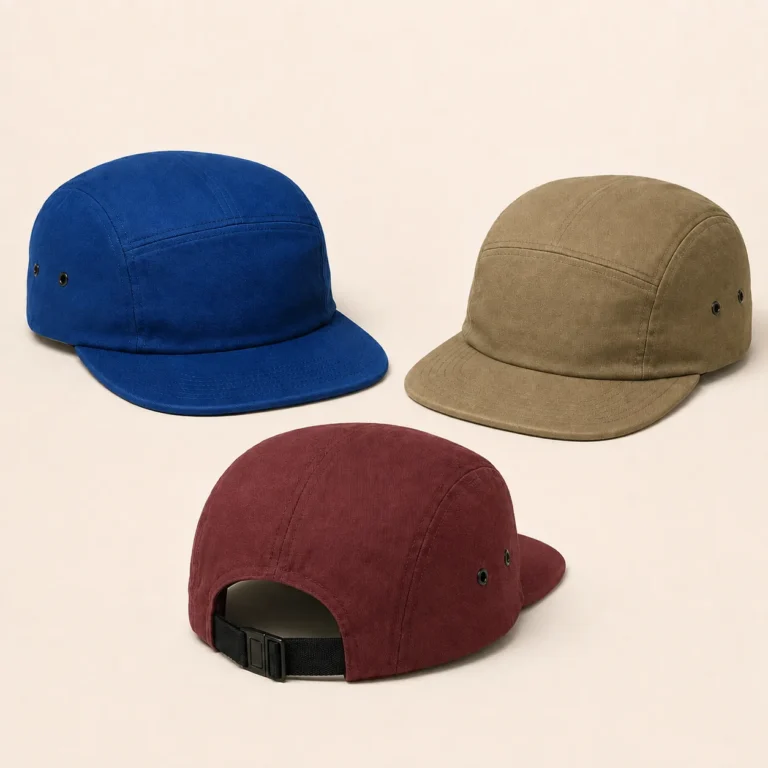
Release one identifiable artwork version
Send the supplier’s requested production artwork together with a readable visual reference. Give the file a revision and connect it to the item or colorways that use it. If several marks appear on the cap, identify each one separately.
Keep finished dimensions, colors, method and placement in the same release. A new graphic in a message should not leave the earlier file appearing equally current. When replacing artwork, state which version is superseded and which items the change affects.
Discuss the application on the proposed material
Embroidery, print, transfer and a separately made badge present different development questions. Ask the supplier to review the chosen method on the relevant fabric and construction. Identify any support or attachment proposal that remains provisional.
For embroidery, Madeira’s backing guidance is a primary reference for support choices. The final proposal still needs review with the actual design and material. A fixed backing or stitch-density prescription should not be assumed to suit every front panel.
Review placement on a complete sample
Use consistent front and side views, then look at the cap in the agreed wearing setup. Check the logo’s apparent scale, position relative to the visor and relationship to nearby seams. Include a close-up where small details need review.
For embroidery, review the surrounding fabric and inside result where relevant. For a badge, review the finished badge and its attachment on the cap. For print or transfer, review the applied result on the proposed surface. The artwork proof and the decorated sample close different decisions.
Use measurements and observations in the comment record
Describe the feature to change and identify its reference. “Move the mark as shown in front view C” is clearer when that view includes the relevant seam or edge and a defined location. Keep accepted artwork details separate from a placement revision.
| Record | What it identifies |
|---|---|
| Cap reference | Pattern, material and colorway being decorated |
| Artwork release | File revision, finished dimensions and colors |
| Placement | Marked location against agreed cap reference points |
| Application sample | Method, support or attachment combination reviewed |
| Approval decision | Accepted details, revisions and remaining conditions |
Identify what changes between colorways
Check graphic contrast and application on the relevant item versions. If the thread, badge, print color or cap material changes, record that difference. Do not extend one sample approval to a different combination without identifying what still needs review.
For a broader collection sheet, use the five-panel graphic and color-blocking guide. Keep its item references consistent with the artwork release and trim list.
Carry the approval into later orders
Retain the approved file, sample identity and placement reference. For a repeat, check whether the cap construction, material or application has changed. If a previous design is resized, treat the new dimensions as a visible revision.
Discuss the design through the Wenext five-panel cap product page. Send the current artwork and marked placement views through Contact Wenext Caps so the proposal can be reviewed on the intended construction.