
A stretch-fit cap has no buckle or snap closure to rescue an awkward fit. If the size band feels too tight, the crown sits badly or the sweatband does not recover after use, the wearer notices immediately. A clean outside appearance is only one part of a successful sample.
This stretch-fit cap sizing guide helps headwear buyers prepare a useful specification and review the parts that affect comfort. It focuses on generic closed-back, stretch-fit construction. If your brief requires a named proprietary product, identify that requirement separately and ask the supplier to confirm the exact product and sourcing route. See our stretch-fit cap product page for the broader sourcing discussion.
For the full order-planning sequence, use the Stretch-Fit Cap Buying Guide. The detailed fit checks below help you review the size system on actual samples.
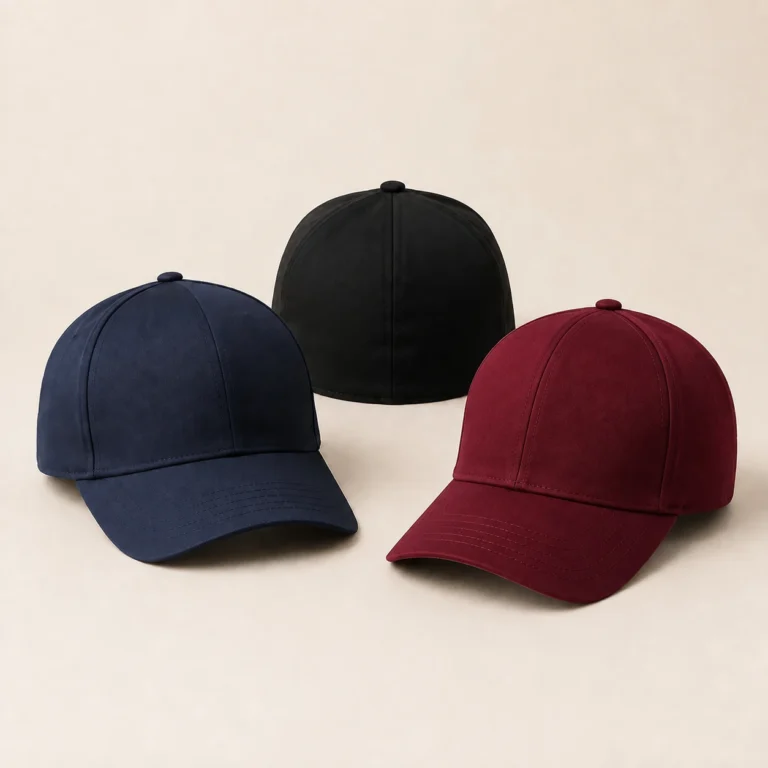
Define the size range before approving the shape
A label such as S/M or L/XL is not a complete sizing specification. Different suppliers may use those labels for different ranges. Ask for the intended head-circumference range and agree how the finished cap will be measured.
Separate the cap’s relaxed measurement from its intended wearing range. Stretch alone does not tell you whether the product will feel comfortable across that range. The fabric, elastic sweatband, seams and crown shape all belong in the review.
Start with the people you expect to wear the cap. A sample approved on one person may not represent the whole target group. Where practical, review the proposed size bands on wearers across the intended range and record the feedback by size rather than collecting one general “fit approved” comment.
Put the complete construction in the brief
For a closed-back cap, the size system needs to work with the rest of the design. Specify the profile, panel construction, visor direction, decoration and material preferences alongside the fit requirements.
- Target size bands: named sizes with the agreed circumference range for each.
- Crown: depth, front shape, structured or unstructured construction and key measurement points.
- Visor: length, curve and appearance reference.
- Materials: fabric composition preference, stretch direction and intended hand feel.
- Sweatband: elastic construction, comfort requirements and recovery expectations.
- Decoration: artwork, logo position, thread colors and size variations.
- Order breakdown: quantities by color and size, labels, packing and destination.
A physical reference can make these decisions easier to discuss. Add notes explaining whether it is a fit reference, a shape reference or a decoration reference. Otherwise, a sample team may copy a feature that you meant to change.
Review stretch and recovery as different questions
A band may stretch enough to put the cap on while still feeling uncomfortable during wear. It may also feel comfortable initially but behave differently after repeated handling. Ask the supplier how the proposed materials and finished construction will be evaluated for your intended use.
During a sample review, record where pressure is felt, whether the cap moves during ordinary activity and how the opening behaves after removal. Compare samples under the same conditions rather than judging one straight from a carton and another after extended handling.
If your order needs a defined recovery test, agree the method, conditioning, acceptance criteria and responsible party in writing. Do not substitute a casual hand-stretch demonstration for a specified test. For sport or workwear programs, make the intended activity clear before material selection.
Check crown depth as well as circumference
Two caps can share a similar opening measurement and still feel very different. Crown depth changes where the sweatband sits, while panel shape affects the space around the head. A cap that sits too high may feel insecure; a deeper cap may touch the ears on some wearers.
Try the sample on without forcing it into the position you want. Observe where it settles, how the front panel stands and whether the visor sits naturally. Review the side and back views, not only the front logo photograph.
When requesting a revision, identify the measurement or visible feature to review. Changing the elastic band to solve a crown-shape problem can create a new fit issue. Ask the sample team to explain which part of the construction they propose to adjust.
Test decoration on the intended size and fabric
Embroidery changes the feel of the decorated area, so approve it on the actual cap construction. Check logo clarity, puckering, backing and the inside surface where the wearer may feel it. Artwork approval on a flat image is not the same as approval of a decorated sample.
If the order has more than one size band, confirm whether the logo dimensions remain the same and how placement is measured on each size. A position that looks balanced on one crown may need review on another.
For raised embroidery, patches or printed details, discuss compatibility with the selected material before committing to the method. Our cap customization page introduces the decoration options; the sample should resolve which option suits your design.
For a technical starting point, Madeira’s embroidery backing and needle selection resources can help buyers understand the materials involved in decoration. Confirm the actual combination on your sample; a general resource does not certify the finished cap’s performance.
Build a clear approval record
Keep the sample revision, size-band specification, material reference, logo dimensions and comments together. Mark what is approved and what remains open. A message approving the color should not be mistaken for approval of the fit.
Useful feedback describes an observable issue. For example: “The lower edge leaves a pressure mark on the smaller wearer in the intended range; please review band tension and the agreed sizing method.” Include the sample size and photographs where helpful.
Before bulk production, confirm the reference sample and the measurement tolerances you will use for inspection. Any test or performance claim should have an agreed basis. A product description such as “comfortable stretch” does not establish a measurable acceptance standard.
Plan size labels and carton assortment together
Size identification affects the buyer’s warehouse as well as the customer. Check that the sewn size label, hangtag, barcode sticker and packing list refer to the same size and color. Keep the product code system consistent across the order.
Confirm the size ratio for each color before quotation and again before packing approval. If a carton contains mixed sizes, specify the assortment. If cartons must be separated by size, make that instruction clear on the packing plan.
For repeat orders, use the earlier specification revision and approved sample reference. Review any proposed material substitution before production; a similar-looking fabric or elastic component may change the fit of the finished cap.
Questions to resolve before placing an order
Can one size fit every customer?
Do not assume so. Define the target wearing range and evaluate the sample against it. If the range is too broad for a comfortable result, discuss an additional size band instead of relying on more stretch.
Does a stretch fabric remove the need for a fit sample?
No. The complete construction determines how the cap wears. Review the finished sample with its proposed sweatband, seams, decoration and crown shape.
What should I include in a quotation request?
Send the style reference, intended size bands, material and decoration requirements, quantity by color and size, branding needs, packing instructions and destination. Request MOQ and lead time for that specification rather than assuming a general figure applies.
Discuss your stretch-fit cap specification
Wenext Caps can review your reference and discuss the development details with you. Begin with the fit range and product brief, then use the sample to resolve the decisions that a photograph cannot show. Send your cap specification and order breakdown for a sourcing discussion.