
A reference cap and a logo file are a useful start, but they do not tell a sample maker which details to keep. The closed back may be right while the crown is too deep, the visor too flat or the intended size range unclear. A short, annotated brief makes those differences easier to resolve.
This custom stretch-fit cap design brief focuses on the information to send before a first sample. Use the Stretch-Fit Cap Buying Guide for the wider buying sequence, and the Wenext Caps stretch-fit product page for a manufacturing enquiry. The construction discussed here is generic; identify any required proprietary product separately and confirm its exact sourcing route.
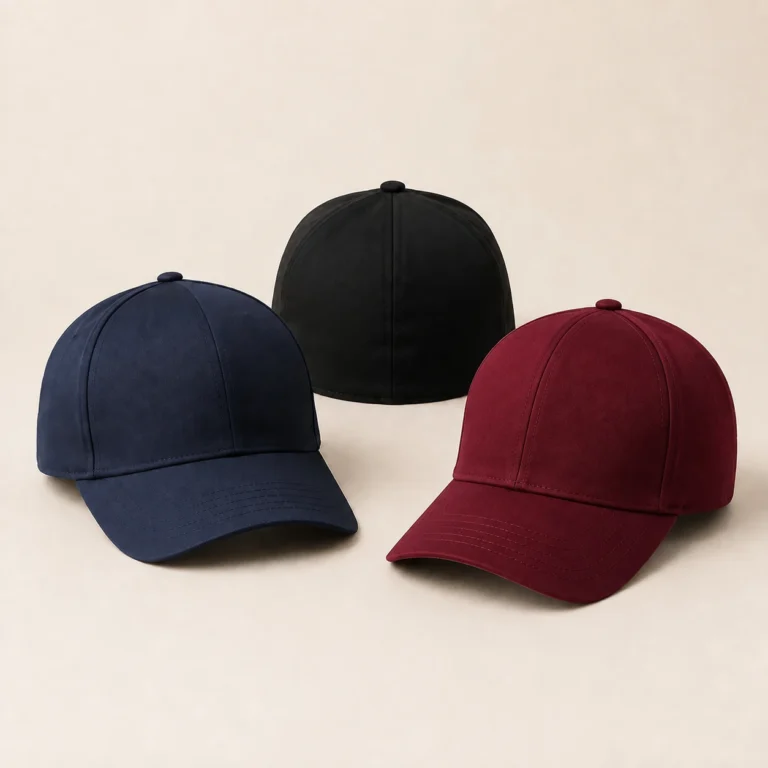
Start with the wearer and the purpose
Describe who will wear the cap and in what setting. A retail collection, staff uniform and team order can need different size assortments, branding and distribution records. State the intended market and adult or other defined wearer group without assuming that one general size label covers everyone.
Explain what the first sample needs to answer. You might be choosing a crown shape, checking a proposed material or reviewing a logo treatment. Mark the main decision so the sample team knows which features need an accurate representation and which can remain provisional.
Annotate the reference instead of asking for an exact copy
Give each reference a name or number. Add front, side, rear and inside views where available, and describe the purpose of each. A cap can be a silhouette reference without being a material or sizing reference. Make those limits explicit.
- Keep: the features you want to carry into the new design, such as a supported front or a curved visor profile.
- Change: the features you want developed, with a marked view or measurement reference.
- Confirm: the details that require a proposal, such as sweatband construction or available fabric options.
Use your own artwork or artwork you are authorized to reproduce. A visible logo on a reference cap is not an instruction to copy it. Remove that ambiguity from the brief before decoration development begins.
Describe the crown, panels and visor separately
Record the desired front height, crown depth and structured or unstructured appearance. Identify the panel arrangement and any seam that crosses the planned logo area. When a photograph is the only shape reference, ask the supplier which dimensions need confirming rather than inventing measurements from the image.
For the visor, state the intended profile, underbrim color and visible stitch layout. If you need dimensions, mark the measurement points on a drawing. Review the visor with the crown in side view; approving each as an isolated component can leave the combined silhouette unresolved.
Keep size-band requirements distinct from shape comments
List the proposed size labels and the intended wearing range for each. Identify which bands need physical fit samples. A request for a lower crown does not automatically mean a smaller opening, so keep those instructions separate.
Use the detailed stretch-fit sizing guide to prepare the fit review. Agree the measurement method, sample conditions and acceptance references with the supplier. Do not treat S/M, L/XL or a hand-stretch demonstration as a complete specification.
Request material options with clear approval limits
State the fabric appearance, composition preference, hand feel and color reference you need. Ask for options when a material has not been selected. Keep the proposed crown fabric, elastic sweatband and internal support identifiable so the actual combination can be assessed on the sample.
Mark temporary components clearly. If the first sample uses an available color or substitute band, record what it can demonstrate and what it cannot approve. A shape sample made with provisional materials should not quietly become approval of the final fit, color or decoration result.
Give each logo its own specification
For every position, include the artwork revision, proposed application method, finished dimensions, colors and placement reference. Identify whether the design crosses a seam or lies near a stretch area. Ask the supplier to flag any conflict between the requested result and the selected construction.
Review a decoration trial on the intended material and then on the finished cap. Check small lettering, edge clarity, puckering and the inside surface. Madeira’s embroidery backing guidance explains why support selection depends on the fabric and design. It is a technical reference, not evidence that a particular cap has passed an agreed check.
Send a short version list
Assign a distinct item reference to each colorway, size band and artwork version. The first brief can be simple: an item code, fabric color, logo version, proposed size band and requested sample quantity. Avoid several files all named “final” when their contents differ.
List the labels and packing needed for the sample as well. Identify any text, size label, hangtag or barcode data still awaiting approval. For quotation, provide the expected bulk breakdown and destination, and ask which quantities or options affect the proposed scope.
Make the first review easy to act on
Return comments against the same item and sample revision used in the brief. Describe the observed result and the intended change. “Please review the front height against reference B” gives a clearer direction than “make it better.” Attach marked photographs where they clarify the issue.
Separate accepted details, required changes and open questions. Ask for a revised proposal when changing one feature could affect another. Record the next sample’s purpose before it is made, especially if materials, size bands or the decoration method change.
Questions before sending the brief
Do I need a complete technical pack to start?
You can start with annotated references and a decision list. Ask which missing details must be resolved before costing or sampling. Keep proposed information distinct from approved instructions.
Can the same logo placement be used on every size band?
State the intended placement and request a review across the planned range. Confirm the accepted reference on the relevant sizes rather than assuming one decorated sample covers all versions.
Should I give a fixed production deadline immediately?
Share the required date and destination early, then ask the supplier to review feasibility against the actual sample and approval plan. Distinguish the requested timing from a confirmed commitment.
Prepare your first sample request
Bring together the annotated reference, construction choices, proposed size bands, artwork, material questions and order breakdown. Review the main stretch-fit cap product page, then send Wenext Caps your design brief. A clear list of unresolved choices gives the sample discussion a practical starting point.