
A trucker hat order passes through several connected production stages. The front fabric, mesh, decoration, visor and closure need to come together in the approved shape. A change to one component can affect work at the next stage, which is why a clear sample and specification matter throughout the order.
This overview explains a typical trucker hat production process and the points a buyer should discuss with the factory. The exact route depends on the construction, decoration method and agreed production plan. Use our custom trucker hat guide to prepare the overall brief.
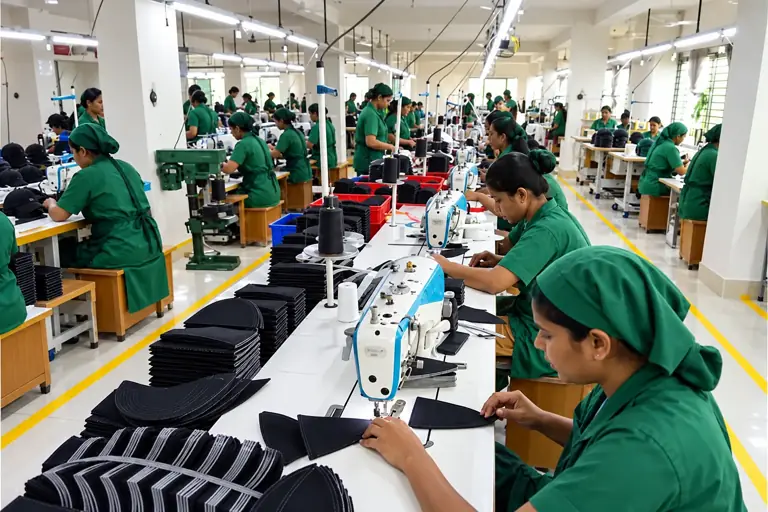
1. Confirm the development and approval references
Before bulk materials and operations are committed, identify the approved cap construction, component references, artwork, measurements and packing directions. Make the current revision easy to recognize. A sample and a technical file should describe the same result.
List open questions and identify any temporary materials used during development. Keep quotation assumptions separate from final production approvals. Our OEM tech pack and sample guide explains how to organize those decisions and record sample feedback.
2. Prepare and review materials and components
The production file should identify the solid front, mesh, support materials, visor components, sweatband, tape, closure and labels. Review the actual materials against the approved references before they are used. Color combinations need to be checked as a complete cap rather than as isolated swatches.
Keep incoming batches identifiable and record any proposed substitution. A different mesh or front support can change shape and feel even when the nominal color remains the same. Discuss material differences before they move through later operations.
3. Cut the panel and visor components
Cutting follows the approved patterns and material directions for the style. The team needs the correct panel construction, size references and component list. Keep cut parts organized so different colors, sizes or revisions are not mixed during assembly.
Review early cut components against the intended shape and the approved pattern references. Where decoration will be applied to a flat panel, make sure the artwork position relates to the finished cap, including seam allowances and the space used during joining.
4. Apply decoration at the appropriate stage
Embroidery, printing and patches may require different access to the cap. Discuss whether an application is made on panels or on an assembled cap and how that choice affects the result. The approved decorated sample should represent the proposed construction and application sequence.
Check artwork version, color, size and placement before repeating the operation across a batch. Review the decoration from the inside as well as the front. A logo should be assessed with its backing or attachment method, not only as a digital layout.
5. Assemble the front and mesh crown
Joining the solid front and mesh panels establishes the crown’s shape and balance. Check panel alignment, seam appearance and the transition between materials. Uneven feeding or tension can show as ripples, pulling or a distorted side profile.
Compare early assembly with the approved reference before later components conceal parts of the construction. The left and right sides should follow the intended shape. Pay attention to the rear opening and the way the crown will sit at the agreed closure settings.
6. Attach the visor, sweatband and closure
The visor needs to align with the crown and retain the approved profile. Confirm the relevant covering, underside, stitch rows and attachment detail. Review the assembled cap rather than judging a visor component on its own.
Check the sweatband, internal tape, closure position and wearer-facing finish as those operations are completed. Operate the closure and inspect its attachment. Rough edges, loose tape or an uneven rear opening are easier to address when they are identified during assembly.
7. Finish, measure and inspect the cap
Finishing includes reviewing appearance, removing loose threads and checking the agreed inside and outside details. Where shaping or pressing is used, the method needs to suit the actual materials and decoration. The finished cap should match the approved construction rather than a generic display shape.
Measure at the defined points and closure setting, then compare the result with the agreed tolerances. Check branding, labels, mesh condition, closure operation and overall cleanliness. Use the trucker hat quality checklist to connect these checks with clear references and inspection records.
8. Pack and identify the finished order
Pack caps in the approved arrangement and compare the resulting crown and visor shape after a packing trial. Keep quantities and color assortments aligned with the order file. Identify any destination-specific cartons clearly for the receiving team.
If the order uses barcode labels, review the required label and print quality before packing. GS1 barcode-quality guidance provides a useful reference for aspects such as contrast, clear space and positioning. Use the actual buyer’s labeling specification for the order.
Keep production records connected to the approval file
Retain the references used at each important stage, along with identified changes and inspection findings. Records should show which batch or colorway was affected and how a concern was reviewed. This makes a later discussion more useful than a collection of unlabelled photographs.
For repeat orders, compare the new materials and current specification with the retained sample before restarting production. Discuss any component or artwork change and identify whether it needs fresh approval.
Frequently asked questions
Is embroidery always completed before the crown is sewn?
No. The sequence depends on the cap construction, equipment access and decoration method. Confirm the intended route and approve a physical sample made with the relevant materials and application method.
Where should quality checks take place?
Checks are useful at material intake, during relevant production operations and on the finished packed order. Agree the scope and criteria for the project before production begins.
What determines the production schedule?
Discuss the confirmed construction, material availability, quantities, decoration, approvals and packing requirements together. Confirm timing for the actual proposal rather than relying on a generic lead-time statement.
Review a factory and production proposal together
See the Wenext Caps factory profile and our trucker hat production page. Send your reference, material and logo requirements, quantities and receiving target through the contact page so the development and production scope can be reviewed.