
Custom Trucker Hat Guide
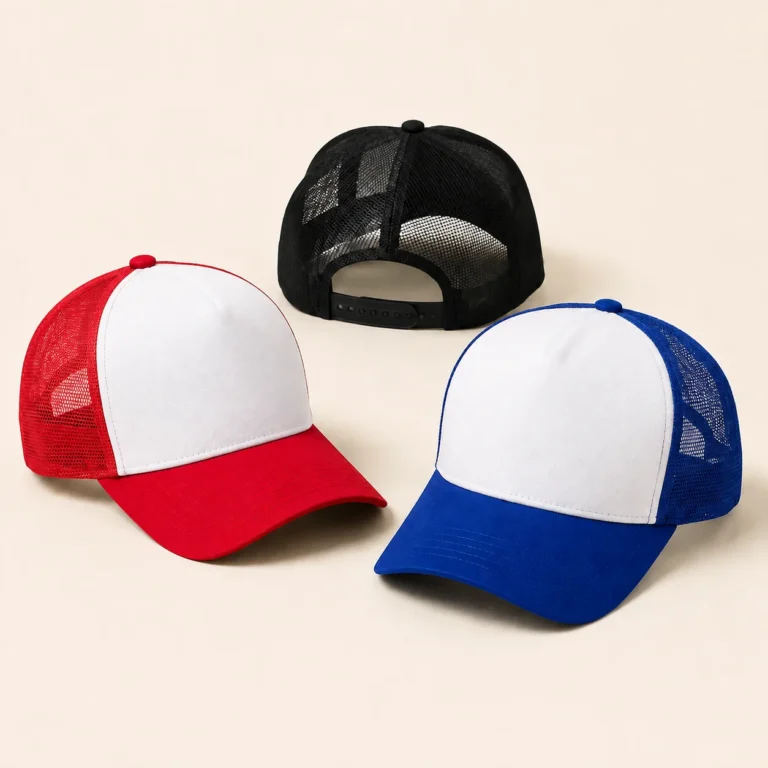
A trucker hat is defined by its front-and-mesh construction, but that description leaves several buying decisions open. Front shape, mesh feel, crown depth, closure and decoration all influence the finished result. This custom trucker hat guide helps you turn a reference image into a specification that a sample team can review.
For production enquiries, visit our trucker hat manufacturing page. Use the guide below to decide what you need before comparing samples and quotations.
Choose the front construction before the logo
A foam front and a fabric front can give the same artwork a different appearance. A broad, uninterrupted front offers a different decoration area from a front divided by a center seam. Share a front, side and inside reference, then mark the features you want to keep.
Describe the intended crown profile and depth rather than relying on “classic trucker” alone. A tall promotional shape and a lower everyday fit may both be sold as trucker hats. Review the shape while worn, because a photograph of an empty cap cannot establish fit.
For a washed finish, review washed trucker cap development.
Evaluate mesh as part of the complete cap
Compare the mesh opening, softness, stability and color against the front material. Inspect the join between the front and mesh, the inside seam finish and the edge near the closure. These details affect how the cap feels and how cleanly the panels sit together.
Mesh provides open areas in the back of the cap, but the word “breathable” does not describe a measured performance level. If your collection requires a technical claim, define what must be demonstrated and agree on the supporting evidence before approval. Keep the approved material references with the sample.
The mesh fabric specification checklist separates openings and assembly stability from measured air-permeability evidence. Use it to identify the actual mesh and any required property before extending an appearance reference into a performance claim.
Check crown depth and adjustment range
An adjustable snap closure does not guarantee a suitable fit for every wearer. Ask which head-size range the sample is intended to cover and review how the cap sits at different adjustment positions. Check whether the crown feels too shallow or extends too far over the ears.
Open and close the fastening, inspect its attachment and look at the shape of the back opening. Agree on measurement points and tolerances for your order. If the range needs separate sizes, establish that before approving labels or finalizing the color breakdown.
Select decoration using the actual artwork
Direct embroidery, a sewn patch and printed artwork need different checks. Provide the original artwork, intended finished dimensions and position. Small lettering, fine gaps and dense filled areas should be reviewed at the proposed size rather than enlarged on a screen.
For embroidery, inspect the front around the design as well as the stitches. For a patch, check edge shape, attachment and how the patch follows the crown. Madeira’s embroidery backing guide offers relevant background on stabilization; approve the result on your proposed cap rather than assuming one backing suits every construction.
For patch-decorated trucker caps, review PVC relief and backing and the selected attachment route on the actual front construction. The wholesale patch cap checklist then connects the accepted combination with quote scope, variants and carton records.
For ink decoration, use the screen-print proof and placement review to identify the actual substrate, ink route, registration and complete cap reference. Resolve whether printing occurs on panels or on the assembled front before releasing the proposed artwork position.
For a coordinated branded range, the supplier comparison checklist keeps styles, sample coverage and quote scope comparable. Once the product is accepted, the embroidered production handoff connects released files, first-piece checks and the correct item and packing records.
For promotional trucker caps, connect the reseller range records with the bulk variant and destination matrix. At exhibitions, the staff and visitor pack plan and event receiving schedule help organise the handover. Use the campaign distribution review to reconcile stock and practical feedback afterwards.
Make the order breakdown easy to follow
List quantities by style, front color, mesh color, logo version and size where applicable. If two hats share a front color but use different mesh or artwork, give them separate style references. Match those references to the quotation and sample comments.
Confirm labels, hangtags, barcodes, individual packing and carton assortment. A retail delivery and an event distribution may require different packing instructions. State the destination and target date, then ask for MOQ and lead time for the complete specification rather than relying on a general website figure.
Approve the sample with a written checklist
- Review crown shape, depth and visor direction while worn.
- Compare front and mesh colors with the agreed references.
- Check the adjustment range, closure attachment and inside finish.
- Measure the logo and inspect its position and clarity.
- Confirm label wording, barcode data and packing examples.
- Record the sample revision, approved details and unresolved changes.
Separate an approval from a request for changes. If the logo is accepted but the fit needs revision, say so explicitly. Identify the final production reference once the remaining points are settled, and retain the agreed specification alongside it.
Choose a focused trucker hat guide
Choose the next decision in your order. These specialist articles cover different parts of the same development and purchasing process.
Plan and source
Materials, colour and fit
- Mesh selection and panel balance
- Front, mesh and trim colour matching
- Washed front, mesh and closure approval
- Adjustable fit, closures and rear openings
- Buying blank caps for later decoration
Branding and applications
- Logo placement and colourway planning
- Embroidery artwork and sample checks
- Leather patch development and approval
- Personalized names, proofing and packing
- Private labels, trims and retail presentation
Orders and production
- Promotional campaign orders
- Wholesale assortments and replenishment
- Production stages from materials to packing
Sample decisions and inspection
- Sample photos, views and revision comments
- Reference sample identity, storage and repeat reviews
- Quality and inspection checklist
Common trucker hat buying questions
Is a foam front better than a fabric front?
Choose according to the shape, decoration and feel you want. Compare finished samples made to your brief. A material name alone cannot establish which option will suit your collection.
Can one sample cover several color combinations?
It can help approve shared construction, but different materials and colors may still need separate review. Agree which details the sample represents and which require swatches, artwork approval or another physical sample.
What should I send with a quotation request?
Include a cap reference, front and mesh directions, intended wearer, artwork, quantities by variant, branding and packing needs, destination and target date. Explain which details are fixed and where you welcome alternatives.
Prepare your trucker hat brief
Review our main trucker hat product page, then send Wenext Caps your specification. A clear brief makes the sample and quotation easier to assess.