
A wholesale trucker hat order needs an assortment that fits how you will sell, receive and replenish the caps. A total quantity can hide the wrong balance of colors, unclear item codes or cartons that take too long to sort.
Build the order by individual style and color combination before agreeing the final total. Use our custom trucker hat guide for the product brief; the steps below focus on assortment and repeat-order planning.
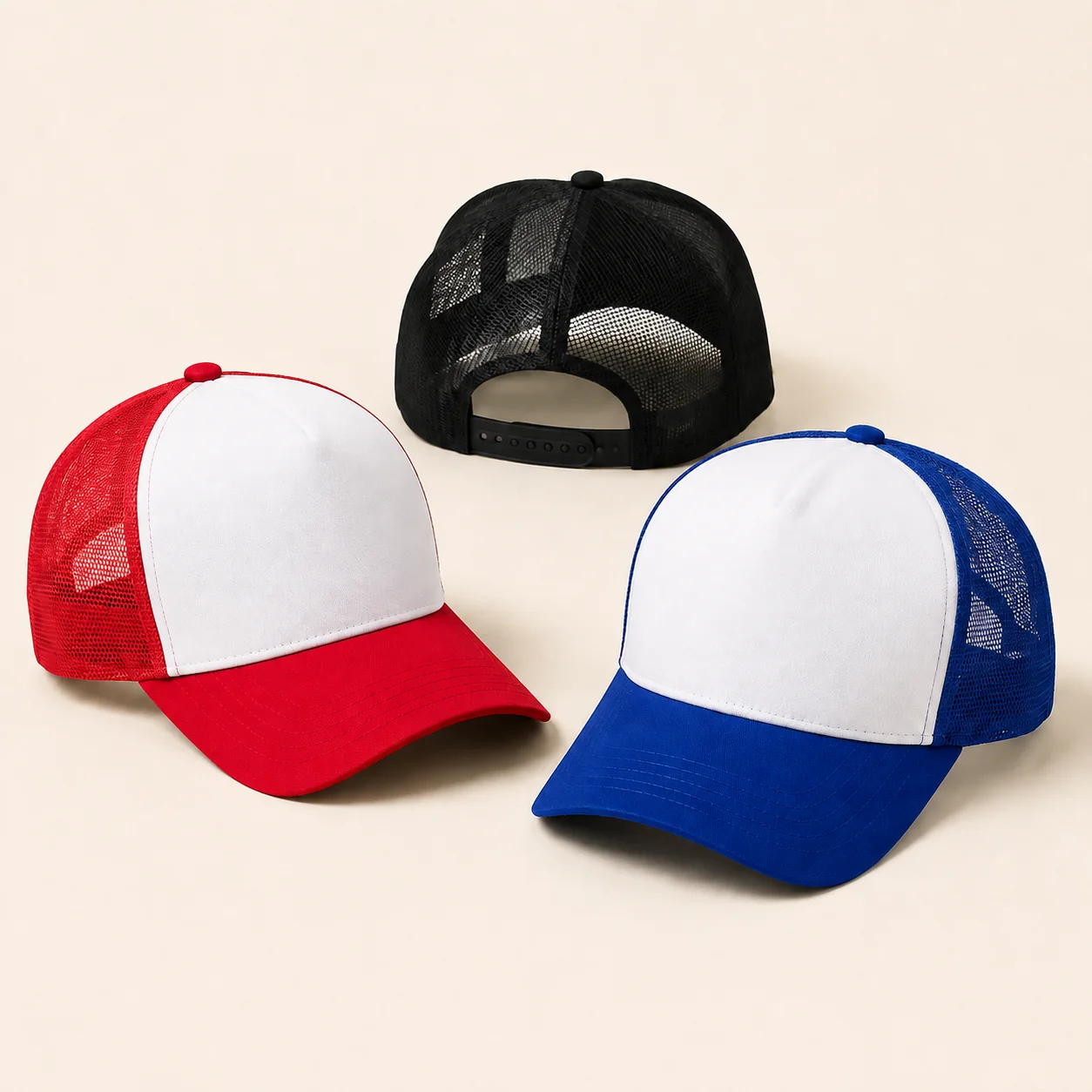
Separate ready-stock buying from a production order
Ask what the proposal actually covers. Available inventory, a repeat manufacturing run and a new custom development are different starting points. A product photograph does not establish that a particular quantity or color is ready to dispatch.
Confirm the proposed materials, available quantities or production basis, approval steps and timing for the actual order. If you are buying undecorated caps for later customization, the blank trucker hat buying checklist covers the additional decoration review.
Create an assortment sheet before requesting the total price
Give every style and color combination its own line. Include the cap reference, material combination, logo version, size or adjustment reference, quantity and packing group. Mark shared components clearly without combining distinct products into an ambiguous description.
Keep the names consistent across the enquiry, quotation, artwork files and stock records. “Navy cap” may describe several different fronts, mesh combinations or logos. A stable item reference helps the supplier and receiving team identify which version you mean.
| Field | What to record |
|---|---|
| Style reference | Cap reference and current revision |
| Color combination | Approved front, mesh and trim colors |
| Branding | Artwork version and decoration method |
| Quantity | Units for this specific style and color |
| Packing group | Single-item carton or identified assortment |
| Destination | Receiving location or customer allocation |
Choose a manageable group of core and trial variations
Use your actual sales history, committed customer orders and channel requirements to decide the assortment. Distinguish regular replenishment lines from seasonal or experimental colors. A wide selection is useful only if the quantities and receiving plan support it.
Ask how minimum quantities apply to each style, color and material combination. Do not assume that an order total can be divided freely across every option in a catalogue. Review the proposal by line so its assortment remains workable for both production and your stock plan.
Keep product codes and retail identifiers organized
Record your internal item code separately from any identifier required by a retailer or trading partner. Keep the approved product description, color, size and artwork reference connected with the relevant code. Avoid using one informal name for several different cap combinations.
For programs using GS1 identification, the GS1 explanation of GTINs describes their role in uniquely identifying trade items. Confirm the required identifiers and data with the responsible buyer team before printing labels or loading product records.
Compare quotations on the same product basis
Check whether each quoted line includes the same front, mesh, closure, decoration, inside labels and packing. Identify any sample, setup or development work that is included or needs separate review. A lower unit price is difficult to assess when the underlying construction differs.
Record the commercial basis and delivery scope stated in the proposal. Keep a clear distinction between a cap price, a packed-order price and a proposal that includes additional shipment arrangements. Resolve differences before comparing the final totals.
Specify cartons around the receiving workflow
Decide whether each carton should contain one item or an agreed assortment. Give the quantity and ratio for a mixed carton and identify how it will be labeled. Keep destination-specific allocations visible if different warehouses or customers will receive parts of the order.
Ask the receiving team which references they need on carton marks and packing records. The information should connect directly with the assortment sheet. A packing sample or clear packing photographs can help confirm that the proposed arrangement protects the cap and makes counting practical.
Approve branding and presentation for each selling channel
A distributor supplying decorators may need plain caps and simple grouped packing. A retailer may need a complete label, hangtag and individual presentation. Define the intended channel for each line rather than assuming every cap needs the same packaging.
Use our private label trucker hat guide to coordinate the retail branding kit. Keep shared trim items identified, but confirm that their artwork and placement suit every cap combination that will use them.
Inspect and receive by the same item references
Count the delivery against the agreed style and color quantities, not only the total number of caps. Check carton markings, mixed-carton ratios and any destination separation. Keep a record of shortages or differences while the packing is still identifiable.
Review construction and appearance against the approved references using the trucker hat quality checklist. Separate a product issue from a picking or packing issue so the report explains what needs to be corrected.
Make replenishment a controlled repeat
Retain the approved sample, component references, item codes, artwork and packing instructions. When planning a reorder, identify which lines are unchanged and which need a revised proposal. Compare any new material or component with the retained reference before accepting it as a repeat.
Review timing against the actual approval and production requirements for that run. Keep old and new receiving batches distinguishable until their consistency has been checked. This supports stock control without assuming that every order bearing the same style name is identical.
Frequently asked questions
Does a wholesale listing mean the hats are available immediately?
No. Ask whether the proposal covers available inventory, a repeat production run or new development. Confirm the quantities, colors and dispatch or production timing for the actual offer.
Can several colors be combined into one order?
Discuss the required assortment with the supplier and confirm the minimums for each style and color. Keep quantities itemized instead of treating the combined total as approval of every requested split.
What makes a repeat order easier to review?
A stable item reference, retained sample and current component, artwork and packing files help identify what is being repeated. Record any proposed changes before the next run is approved.
Send an itemized wholesale enquiry
Review the Wenext Caps trucker hat production page, then send the style and color quantities, branding direction, packing groups and receiving target through the contact page. An itemized brief makes the assortment and replenishment discussion more useful.