
Buying blank trucker hats in bulk gives a decorator control over the final logo, but the blank still needs a precise specification. Front fabric, crown support, center seams and internal labels can affect the next stage of work. An inexpensive cap becomes a poor purchase if it cannot accept the decoration your customer has approved.
Start with the intended decorating process and work backwards to the blank. Our custom trucker hat guide covers the complete cap brief; this checklist focuses on buying undecorated caps for later customization or resale.
Decide what the blank needs to support
Explain whether the caps will be sold undecorated, embroidered locally, printed for events or held for several customers. A blank intended for small embroidered lettering may need a different front from one intended for a broad printed graphic. Avoid ordering an assortment solely because the colors look attractive in a catalogue.
If one blank will serve several logo programs, test the most demanding artwork early. Keep its cap reference, decoration method and approved result together. This gives the decorating team a useful starting point when a new customer chooses the same base style.
Approve the front panel with the decorator
Compare woven fronts, such as cotton twill or polyester, with foam-front options on actual samples. Check crown height, reinforcement, seam position and the usable decoration area. A six-panel front has a center seam; a five-panel construction can provide a wider uninterrupted surface. Neither choice automatically guarantees a better result for every design.
Send the proposed blank to the person who will decorate it. Ask them to review access for their equipment and the likely support needed for the artwork. Our embroidery sample approval guide explains the stitch checks that follow this initial blank review.
Test the actual application before committing the order
A successful test on one cap material does not establish compatibility with another. Review the intended ink, transfer, thread, backing or patch attachment on the chosen blank. Use the decorating system’s instructions and equipment settings rather than a generic temperature or pressure copied from a different product.
Inspect the cap after application for changes in shape, surface appearance and comfort. Where the finished product needs wash or wear testing, agree the method before approval. Keep an undecorated reference as well as the decorated sample so any later problem can be compared with the original blank.
Define what “blank” means inside and outside
No front logo does not necessarily mean an unbranded interior. Confirm whether the cap will have plain or branded seam tape, inside labels, a closure mark, visor stickers or hangtags. Identify the product information that needs to remain with the cap and who will provide the final label artwork.
If you plan to add private labels later, discuss the attachment method and position during development. Removing an unwanted label after receipt can leave marks or create extra work. Show the complete inside finish in the approval photographs instead of relying only on a front-facing product image.
Keep color and construction references by batch
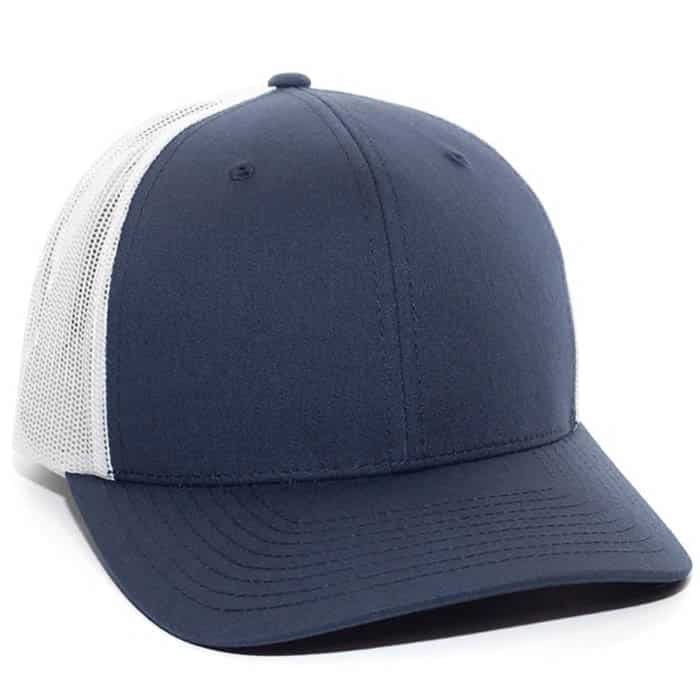
Approve the front, mesh, binding, closure and visor as a complete color combination. A navy fabric and navy mesh may appear different because their surfaces are different. Use physical references to agree whether you want a close match or a deliberate contrast.
Record which material and construction reference applies to each colorway. Keep receiving batches identifiable, particularly when the same style will be decorated over several months. When a replacement batch arrives, compare it with the retained sample before mixing it into existing undecorated stock.
Pack blanks for the next operation
Tell the supplier how the decorating team will receive and count the caps. Specify style and color codes, units per inner pack, carton quantities and any separation needed for different projects. The labels used on cartons should match the names in your purchasing and stock records.
Protect the approved crown and visor shape during packing. Avoid an arrangement that makes the next team spend time restoring crushed fronts before decoration. For wider assortment planning, see our wholesale trucker hat sourcing page.
Inspect blanks before adding value to them
Check incoming caps before committing decoration time and materials. Review shade, panel symmetry, visor alignment, mesh damage, closure operation, loose threads and the agreed measurements. Separate suspect units and identify the delivery batch while the caps are still undecorated.
Agree how shortages, blank defects and decoration problems will be documented. Photographs of an untouched cap and its carton label are more useful than a complaint raised only after a logo has been applied. Make responsibility for the blank and the later decorating process clear when planning the order.
Verify any certification claim for the actual product
If a supplier offers a certification claim, ask for the certificate details and check that its scope covers the relevant article or material. OEKO-TEX provides an official Label Check for checking certificate or label numbers. A familiar logo in a presentation is not a substitute for reviewing the supporting information.
Keep those documents with the approved specification. Do not carry a claim from one material combination to a different finished cap without checking its applicability. Any required evidence should be discussed before material sourcing and decoration begin.
Frequently asked questions
Are all blank trucker hats ready for embroidery?
No. Front construction, support and equipment access vary. Test the intended design on the actual blank and approve the decorated result before ordering the full quantity.
Can I order blanks without inside branding?
Specify the inside labels, tape, closure marks and packaging you need. Confirm the agreed finish on the sample, including any product information that must accompany the cap.
Are blank caps available as immediate stock?
Do not assume that a supplier’s sample photograph represents ready stock. Ask whether the quoted caps are available inventory or a made-to-order program, and confirm quantities, colors and timing for that proposal.
Prepare your blank-cap enquiry
Wenext Caps can review a blank trucker cap development brief through our trucker hat manufacturing page. Send the intended decoration method, front material, crown shape, mesh color, closure, inside finish, quantity by color and packing direction through the contact page.