
A washed trucker cap combines two decisions: the appearance of the fabric front and the construction of the mesh-back cap. Approving a faded swatch settles only part of the design. The finished front, mesh, seams, closure and branding still need to work together in the assembled sample.
Use the washed cap buying guide to organize the finish references, then use the custom trucker hat guide for the underlying construction. This checklist connects those decisions without assuming every component should receive the same treatment. Discuss a proposed style through the washed cap product page. For the mesh-back construction, also review our trucker cap product page.
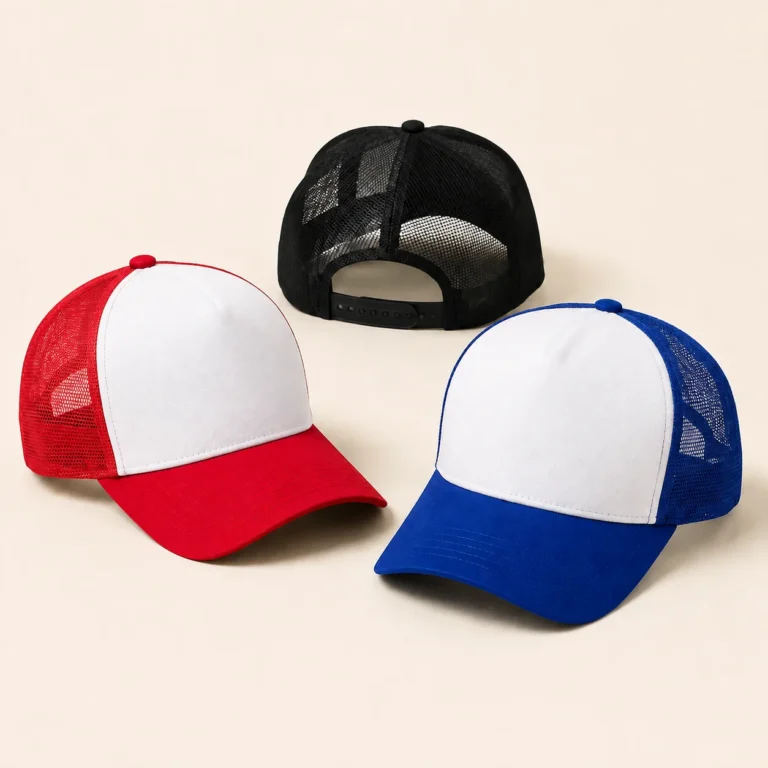
Map the front, mesh and trims separately
Give the front fabric, mesh, visor, sweatband, closure and decoration identifiable references. Include their proposed colors and any relevant material specifications. “Vintage trucker” is a style direction, not a complete bill of materials.
Ask the supplier to explain the proposed assembly and finishing sequence. Which materials are treated before assembly? Which components are present during any later treatment? When are the closure, logo and labels attached? Record that sequence with the sample so later revisions can be compared fairly.
CottonWorks describes several garment finishing processes. Use that background to ask informed questions. It does not prove that a specific fabric, mesh or trim combination is suitable for a particular cap process.
Set the relationship between front and mesh colors
Decide whether the mesh should closely match, deliberately contrast with or sit within an accepted range of the front color. Keep physical references where color is important. A screen image can communicate the direction, but it should not silently become a precise shade standard.
Review the assembled cap under the agreed viewing conditions. Look at the front-to-mesh junction, visor edge, top button and rear closure together. A component that looks suitable in isolation may create a different overall impression beside the approved front.
For several colorways, keep a separate component list for each. Do not assume an approval for one fabric-and-mesh combination automatically covers another combination. Mark provisional substitutions clearly and resolve them before releasing the affected version.
Check the panel junction and finished profile
Compare front, side, rear and inside views of the finished sample. Check the seam where the fabric and mesh meet, the intended crown support and the position of the rear opening. Use the same reference setup when comparing revisions so camera angle or closure setting does not become the explanation for every visible difference.
Record whether the front is intended to hold a defined profile or remain relaxed. Show the supplied visor curve and the cap’s worn position. Keep shape comments separate from color comments; otherwise a change to one component can be mistaken for approval of the complete design.
Approve the closure as part of the assembled sample
Identify the actual closure type and component version. Check its attachment, adjustment and inside contact areas on the finished cap. If a snap closure is selected, record the agreed setting used for fit review rather than calling the cap universally “one size fits all.”
Discuss the intended wearer range and any required size checks. A supplier’s standard reference can be a useful starting point, but the buyer still needs to confirm whether it suits the planned range. Keep alternative closure proposals identifiable until one is approved.
Place branding on the actual front construction
A logo proof should name the application method, size, position, colors and version. Review it on the specified front fabric and intended crown support. A flat artwork preview does not show the result around a seam or the appearance on a curved, assembled front.
Confirm the application stage relative to finishing and assess the complete result. Look at the logo edges, surrounding panel, attachment and inside finish. The embroidered washed cap checklist explains the approval records needed when stitching is used.
Use a component review sheet for the final sample
- Front: fabric identity, finish reference, shape and accepted color range.
- Mesh: component reference, color relationship and assembled appearance.
- Visor and closure: approved versions, supplied presentation and adjustment reference.
- Branding: artwork version, application details and finished-sample result.
- Inside finish: sweatband, seams, backing and labels as specified.
- Approval: dated sample ID, open comments and the versions actually covered.
If a test or certification is required, agree the relevant scope and obtain evidence tied to the material or product concerned. A general supplier statement should not be treated as proof that every combination has passed a named test.
Carry the approved combination into the order
Reference the same component versions in the quotation, sample record and order specification. Confirm quantities by colorway, any component-specific minimums and the treatment of substitutions. If the design changes after approval, identify which checks need to be repeated.
Keep a finished sample available for the agreed production and receiving checks. For packing and order allocation, use the wholesale trucker hat assortment checklist. It complements the finish review rather than replacing it.
Questions buyers ask about washed mesh-back caps
Does “washed trucker” mean the whole assembled cap is washed?
The name alone does not establish the sequence. Ask which materials and components receive treatment and at what stage, then approve the assembled result.
Can a washed front and a clean contrasting mesh be specified?
You can include that appearance in the brief. The supplier should review the proposed materials and sequence, identify limitations and provide a representative sample before the combination is approved.
What should accompany a quotation request?
Send the front finish reference, mesh color, profile, closure, artwork, quantity split and destination. Use Contact Wenext Caps to agree the proposed scope and outstanding sample decisions.