
An unstructured washed cap needs a clear shape reference even when a relaxed look is the goal. A soft crown photographed on a table may look quite different when worn, filled for a product photograph or taken straight from a carton. If those presentation states are mixed together, buyers and suppliers can disagree about a sample that has not actually changed.
Start with the washed cap buying guide for the overall specification. This article focuses on the shape views, handling instructions and packing trial that help an unstructured design arrive with the intended appearance. For a project discussion, use the Wenext washed cap product page.
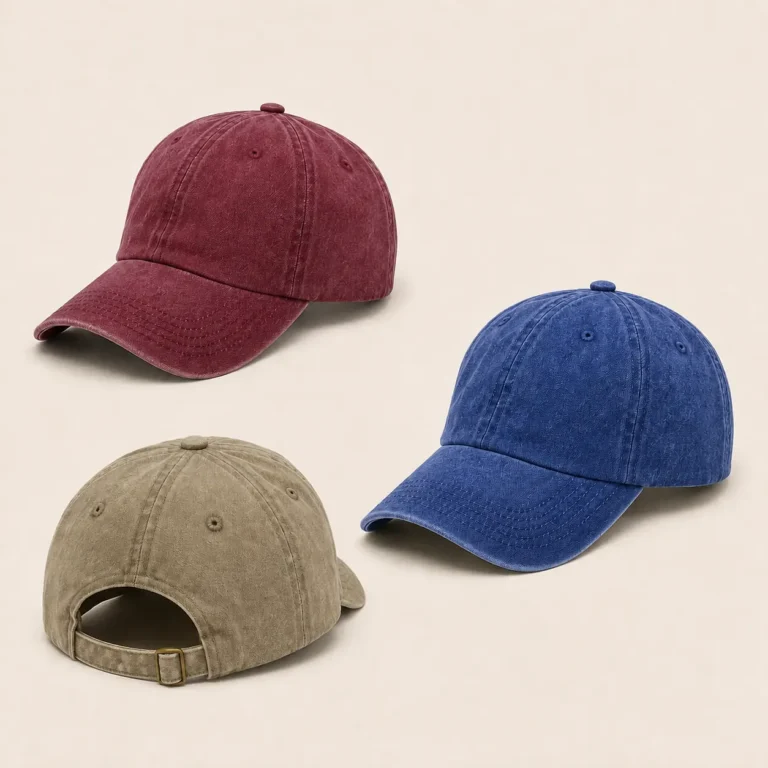
Define what “unstructured” means for this design
Do not use the word as a substitute for a construction specification. Identify the intended front-panel support, seam treatment, lining and sweatband. Record any backing needed around a logo separately from the overall crown construction. A localized decoration support and a deliberately firm front are different design decisions.
A reference cap is useful when it is accompanied by notes. Mark the area that should remain soft, the profile you want when worn and any feature you do not want copied. The appearance of a photograph alone cannot establish the materials inside the cap.
Approve the crown in more than one presentation state
At rest
Photograph the finished cap resting naturally, without stuffing or hidden supports. Use front, side and rear views so the panel balance and relationship to the visor can be discussed. Note whether it has just been unpacked or has already been arranged for display.
On the agreed reference
Use a consistent wearer or display reference for the approval views, with its size and setup recorded where relevant. Agree the closure setting and how the cap is positioned. A different head size, tightened back strap or camera angle can change the impression of crown depth.
Keep these views with the same sample ID. They should explain how one approved cap behaves in different situations, rather than quietly replacing an unacceptable view with a more flattering one. The separate washed dad hat shape and fit checklist covers the worn silhouette in more detail.
Keep the visor and soft crown in balance
Specify the visor’s finished curve and the condition in which it is reviewed. Show how it meets the front of the crown, and include an overhead or underside view if that reveals a detail the side photograph misses. Avoid treating every change in a flexible crown as a visor problem.
If a retail photograph uses a deliberately reshaped visor, keep that styling instruction separate from the supplied product reference. The buyer should know which appearance is expected out of the pack and which depends on later presentation.
Review the finished material and decoration together
Approve the assembled design in its intended finished state. A promising fabric swatch does not show the complete crown, and an embroidery sample on a flat piece does not show how the logo sits on the worn cap. Record the material and decoration versions used in the approval sample.
CottonWorks’ garment finishing reference explains several finishing routes. It provides background for a technical discussion; it does not establish which route is suitable for your particular cap. Confirm the proposed sequence with the supplier and review its result on the relevant sample.
Use the embroidered washed cap approval notes when a logo is part of the design. Ask for close views of the surrounding panel and inside finish as well as a straight-on logo photograph.
Make packing presentation part of the approval
A packing trial should use the intended cap arrangement and relevant packaging components. Open the trial pack as a receiving team would, record its condition and compare the caps with the approved presentation references. If a recovery or display step is proposed, describe it and check the result before accepting it.
- Identify the cap style, colorway and sample version in the trial.
- Record the quantity and arrangement inside the pack.
- Show the crown, visor and closure immediately after unpacking.
- Note any agreed preparation before retail display.
- Confirm that labels and other included items remain legible and correctly associated.
Do not resolve a packing issue simply by adding a filler or support without agreement. It may affect presentation, handling, pack size or the buyer’s requirements. For the order-level quantities and milestones, use the bulk washed cap planning checklist.
Release a reference that receiving staff can use
Keep the approved cap, dated photographs, construction notes and packing instructions under one revision record. State which appearance differences are acceptable and which need review. Where a limit matters, agree a practical comparison method instead of relying on “premium shape” or “perfect finish.”
For a repeat order, check that the reference still represents the desired design. A new fabric, closure, artwork or packing arrangement may need another review. Do not assume that matching the old style name alone preserves the original approval.
Common questions about soft washed cap presentation
Should an unstructured cap stand upright on its own?
Use the agreed construction and presentation reference to answer that question. A softly resting crown and a supported display photograph show different states; neither should silently become the acceptance standard for the other.
Can photographs replace the physical approval sample?
They help record views and changes, but they do not communicate every aspect of feel, fit or movement. Decide which physical checks are needed and identify the sample on which approval is based.
What should I send to start development?
Send the preferred shape reference, intended crown support, material direction, logo artwork, closure and packing requirements. Add the quantity split and destination through Contact Wenext Caps so the proposed scope and outstanding decisions can be reviewed together.