
Use the Custom Dad Hat Buying Guide for construction and closure choices alongside the washed finish.
A washed dad hat brief needs more than the style name. The buyer may want a soft front, a particular crown depth and a curved visor, but those details still need references. The accepted shape should be reviewed with the intended material, wash and back closure.
This guide focuses on the silhouette and adjustable fit of washed dad hats. Use the Washed Cap Buying Guide for the wider finish and approval plan, and the main washed cap product page for manufacturing enquiries.
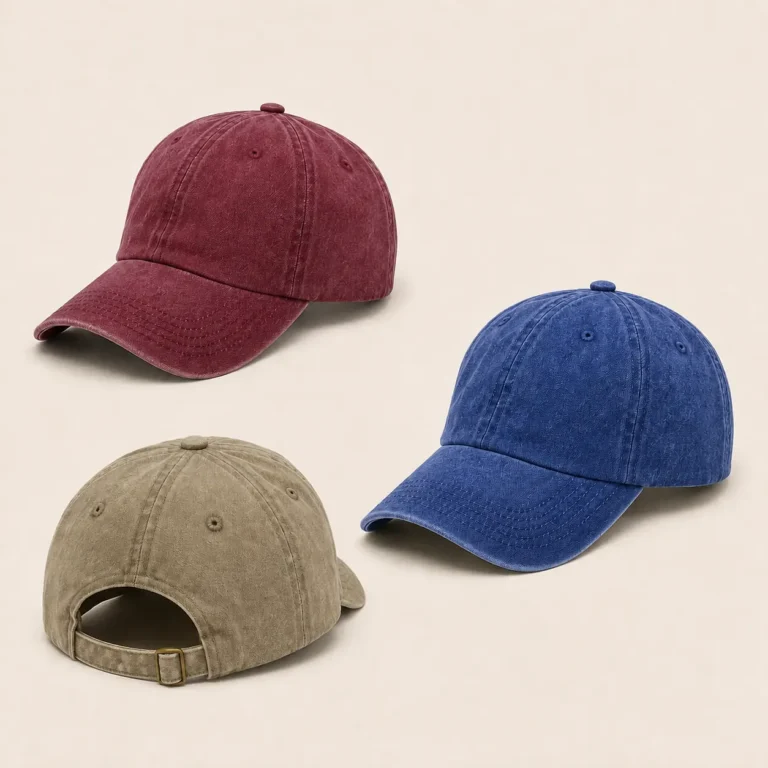
Define the soft-crown appearance
Show the front shape and panel balance you want. Identify whether the front should have minimal support or a more defined appearance, and ask the supplier to explain the proposed construction. A general request for a relaxed cap leaves several choices open.
Use the dad hat product page for the broader product family. Keep the washed finish as a connected requirement rather than assuming that the category name defines the color, surface or hand feel.
Review depth in the intended wearing position
Supply front, side and rear references that show how the cap should sit. Identify relevant crown-height or depth measurement points where dimensions are required. Keep the measurement method and units explicit.
Try the sample in the intended position and record where it settles. Separate a depth concern from a concern about the opening or closure adjustment. Moving one feature without identifying the actual issue can leave the desired silhouette unresolved.
Specify the visor as supplied
Record the requested curve, relevant dimensions, underbrim color and visible stitch layout. Ask how the supplied profile will be compared with the reference. A cap manually reshaped for a photograph may not show the presentation the buyer expects on unpacking.
Review the visor with the complete crown from the front and side. Confirm the relationship between front height and visor angle on the actual sample rather than approving the two parts only as isolated components.
Check the closure and rear opening
Identify the closure type, strap, hardware and rear-opening reference. State the intended fit range and agree how it will be assessed. An adjustable back still needs a usable specification for the actual construction and wearer group.
Review the strap path, loose end, hardware position and inside feel on the finished cap. Record any required label or decoration near the rear opening so the sample team can check the combined layout.
Keep materials connected to the silhouette
Identify the fabric, internal support, sweatband and visor components used in the sample. Mark substitutes as provisional. The material-approval guide helps keep swatches and finished-sample decisions distinct.
Review the intended wash result with those components. If the material or finish route changes, ask which shape and fit checks need repeating. Keep the new sample revision identifiable instead of silently extending an earlier acceptance.
Approve shade and surface separately
Record the physical cap or material reference controlling the washed appearance. Identify the overall shade, seam contrast and any accepted variation. A shape reference may have a color or finish that you do not want reproduced.
Pantone’s physical-sample guidance explains the value of a current, unfaded color reference for physical work. Keep the accepted material and cap samples identifiable alongside the color direction.
Check decoration on the soft front
Provide the artwork revision, dimensions and placement reference. Review the actual decorated cap, including the surrounding panels and inside finish. Keep the desired logo appearance clear if the design includes an intentionally aged effect.
Compare the front and side views after decoration and finishing. A logo proof on a flat screen does not establish every aspect of the completed shape. Record the accepted combination of artwork, support, material and placement.
Make the sample comments actionable
Describe the observed feature and the intended result. “Please review the crown depth against side reference D2” gives a clearer direction than “make it more like a dad hat.” Add marked views or measurements where they clarify the issue.
Keep accepted details visible while requesting a revision. The dad hat sampling guide covers the broader approval discussion, while the washed-cap design brief helps separate shape and finish references.
Retain a complete shape-approval set
- Sample: the accepted style and revision.
- Views: front, side, rear and inside details.
- Construction: actual fabric, support, sweatband and visor references.
- Fit: the closure, intended range and review method.
- Finish: the controlling washed appearance and accepted variation.
- Decoration: artwork, dimensions, placement and inside finish.
Keep the physical sample where it controls the decision. Photographs help explain the approved direction, but retain the references needed to review the actual product.
Shape and fit questions
Does every dad hat use the same crown depth?
Specify the depth and appearance you want rather than relying on the style name. Confirm the reference on the intended material and finished sample.
Can a soft cap use a different visor profile?
Provide the desired reference and ask the sample team to review the combination. Keep the supplied shape identifiable in the approval record.
What should I send for the first sample?
Send the shape and wash references, material direction, closure, artwork, relevant measurements and quantity plan. Mark features that need a proposal.
Discuss the washed dad hat brief
Review the washed cap manufacturing page, then send Wenext Caps your shape and fit references. Clear front, side and rear instructions make the next sample easier to assess.