
One reference cap may have the right faded shade while another has the crown and visor you want. Put both in a brief without explanation, and the sample team has to decide which features control. An annotated design brief makes a custom washed cap easier to develop.
This guide focuses on what to send before the first sample. Use the Washed Cap Buying Guide for the wider approval sequence and the main washed cap product page for a manufacturing enquiry.
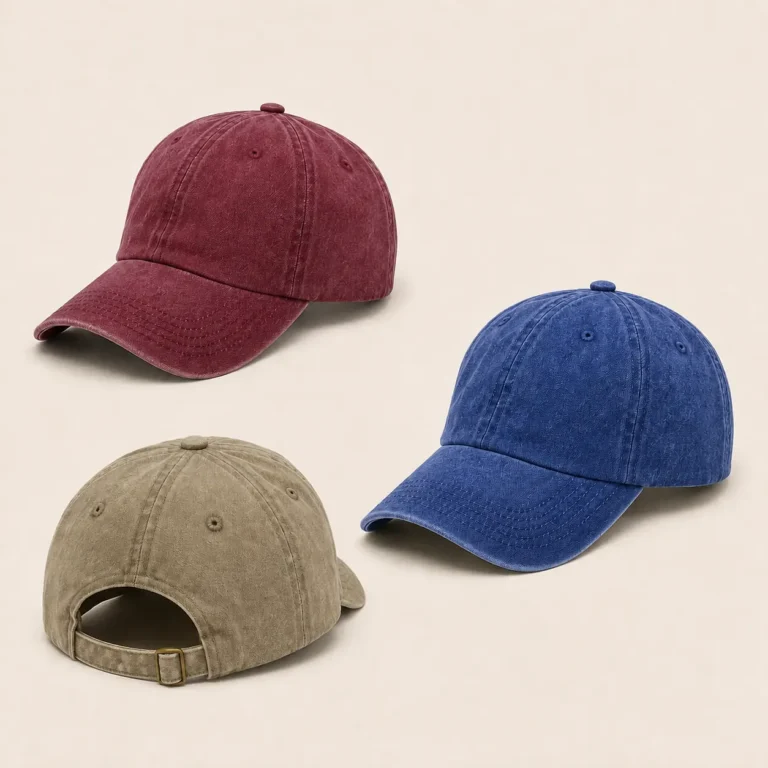
Start with the collection and intended wearer
Describe where the cap fits in the range and who will wear it. A retail collection, event item and staff program may need different branding, size information and packing. Identify the actual product requirements rather than relying on a general lifestyle description.
State the first sample’s purpose. You may be choosing between finishes, checking a new crown shape or developing decoration. Mark the main decision and identify any component that can remain provisional for that round.
Separate shape references from wash references
Name each reference and explain what it controls. Use front, side, rear and inside views where they resolve a question. A color reference does not automatically define the panel layout, crown depth or back closure.
- Keep: features to retain, such as a curved visor or a particular seam contrast.
- Change: features to develop, with an annotated view or measurement reference.
- Propose: choices for which you need a material or construction option.
Use artwork you own or are authorized to reproduce. Make clear when a reference logo is only present in the photograph and does not belong in the new design.
Map the intended washed appearance
Describe the overall shade and identify areas where contrast matters: front panels, seams, visor edge, strap or another specified feature. Explain whether the cap should look softly washed, noticeably faded or deliberately distressed.
Keep those effects distinct in the brief. If worn edges or exposed threads are intentional, mark their locations and provide a separate reference. Do not leave an unspecified amount of distressing to be inferred from the word vintage.
Identify the material and color direction
State the fabric reference or the composition, surface and hand-feel preferences that need a proposal. Keep the intended wash result connected to that material. Mark an available substitute as provisional rather than treating it as the final specification.
Pantone’s physical-sample guidance explains the value of a current, unfaded reference for physical color work. Identify the accepted material or cap sample as well as the color direction, especially where the design includes an intentional range of shades.
Specify the underlying cap construction
Record the panel arrangement, front support, crown depth, visor profile and back closure. Mark the relevant measurement points and units where dimensions are required. A photograph without a known scale cannot settle those measurements.
Ask which construction details need review against the proposed finishing route. Identify the actual sweatband, internal taping, eyelets, button and closure components. Keep decisions about the supplied shape separate from styling used only for a photograph.
Give the logo its own finish instruction
Provide the artwork revision, finished dimensions, colors and placement. State whether the logo should remain crisp or have an intentionally aged appearance. The desired result on the cap needs a reference of its own.
Ask the supplier to propose how decoration fits into the finishing sequence. Review the completed decorated sample, including the surrounding fabric and inside surface. A flat artwork proof cannot establish every part of that result.
List trims and packing that affect the sample
Identify brand labels, size information, hangtags and any packaging needed for the review. Mark content still awaiting approval. Ask which components will be present during finishing and which are planned for later attachment.
Include the proposed quantity breakdown by style, color, finish and artwork version. Add the destination and requested timing for quotation review. Keep the sample quantity distinct from the intended bulk order.
Make the first-sample review specific
Record the sample revision and the actual components used. Compare the result with the relevant shape and wash references. Separate accepted features, required changes and open questions.
Use observable comments. “Please review the lighter contrast around the front seam against reference W2” gives a clearer direction than “make the wash better.” Include a marked view where it helps locate the issue, and identify any proposed change to the controlling reference.
Keep an approval boundary
- Sample purpose: the decision this round is intended to answer.
- Actual components: materials, trims and artwork used.
- Accepted details: features approved and the variants they cover.
- Provisional details: items that still need the intended material or another sample.
- Next action: the revision or proposal required and its responsible owner.
Keep the reference cap and file revisions together. If the material or finishing route changes, ask which earlier decisions need another review before treating the sample as complete.
Design-brief questions
Can several references be combined?
Yes. Identify which feature comes from each and ask the sample team to review the proposed combination. Keep unresolved construction and finish questions visible.
Do I need a finished technical pack to begin?
You can begin with annotated references and a clear decision list. Ask which details must be resolved before sampling or costing.
Should the first sample use the final logo?
Agree what the round needs to demonstrate. If decoration is provisional, keep the final logo and any affected appearance or finish checks open.
Send a clear first brief
Review the washed cap manufacturing page, then send Wenext Caps your annotated design and wash references. For supplier questions, use the washed-cap manufacturer checklist alongside your brief.