
A dad hat can look right in a reference photo and still arrive with a crown that feels too shallow, a logo that pulls the fabric, or a strap that is awkward to adjust. Those problems are easier to resolve in a sample than after a bulk order has been sewn.
Start with the Custom Dad Hat Buying Guide for the shape, material and closure decisions that the sample plan needs to confirm.
This dad hat sampling guide explains what to put in your brief, how to review the first sample, and which details to approve before production. It is written for buyers developing custom headwear with a factory in Bangladesh. For Wenext Caps product and sourcing options, visit our dad hat manufacturing page.
Start with fit, rather than a logo mockup
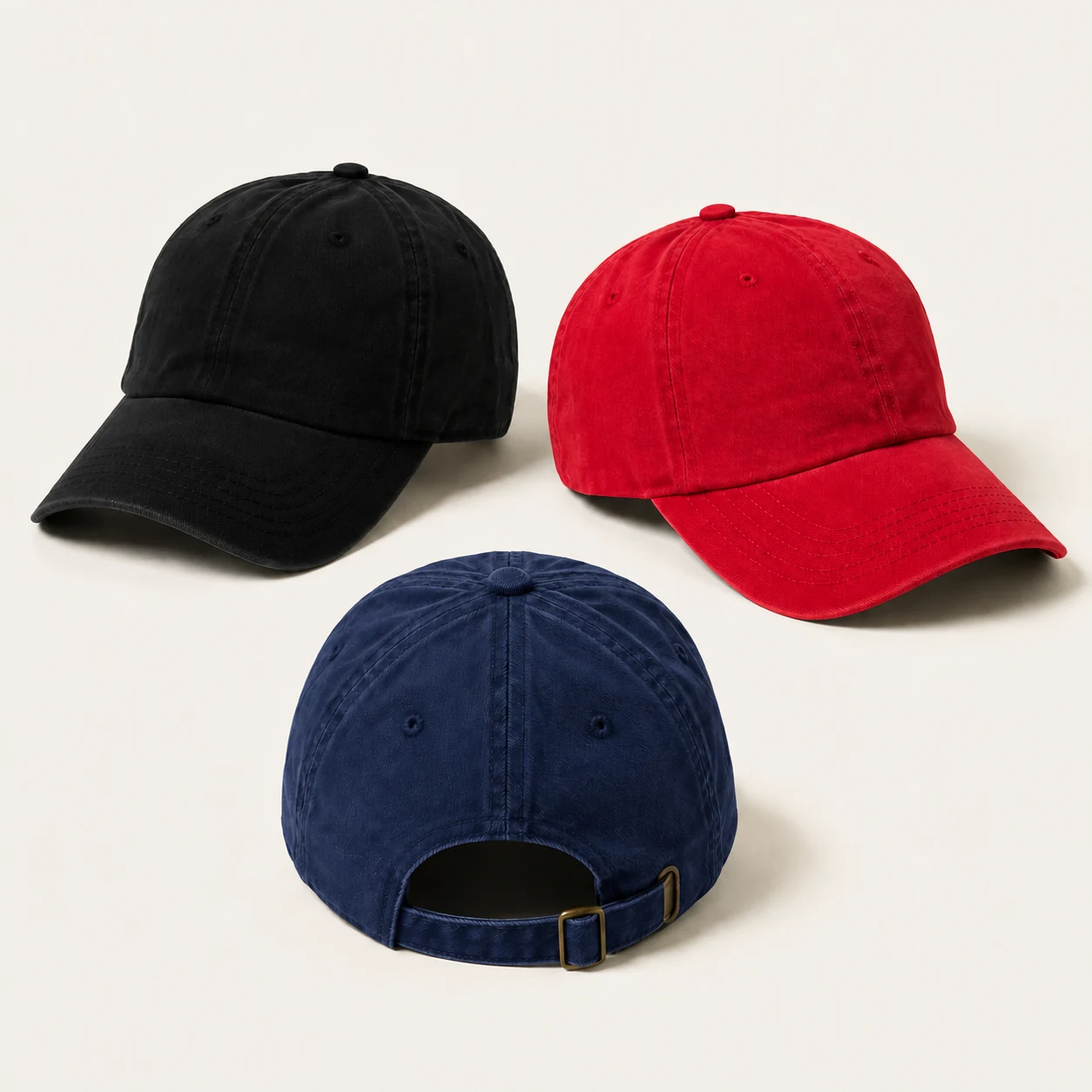
“Dad hat” describes a relaxed look, but it does not define one exact fit. Two low-profile caps can have different crown depths, front-panel shapes and visor lengths. A drawing alone rarely communicates how those differences feel when the cap is worn.
If you have a physical reference, explain what you want to keep and what you want to change. A useful note might say: keep the curved visor and soft crown, allow more room above the ears, and use a shorter back strap. That gives the sample team a clearer starting point than “make the same quality.”
Agree how measurements will be taken. Identify the points for crown depth, visor length and head opening on a simple sketch. Record whether each measurement is taken flat, around a curve or with the closure set at a particular position. Keep that method with the specification so later comparisons are meaningful.
Write a brief that can become a quotation
A factory needs both a product description and an order breakdown. A total quantity without colors, decoration or packing requirements leaves too much open to interpretation.
- Shape: unstructured crown, panel construction, profile and visor direction.
- Material: fabric reference, composition preference, color and desired hand feel.
- Decoration: artwork, logo dimensions, thread colors and placement.
- Closure: back-strap material, buckle finish and adjustment requirements.
- Branding: woven labels, care information, hangtags and barcode requirements.
- Order plan: pieces by color and style, delivery destination and target launch date.
- Packing: individual bags, carton assortment and SKU identification.
Keep preferences separate from requirements. For example, a particular buckle finish may be essential to the collection, while an alternative fabric may be acceptable if it passes your sample review. Tell the supplier which choices are flexible before asking for a revised price.
Compare fabrics in the finished cap
Cotton twill, washed cotton and canvas can lead to quite different results in an unstructured cap. A swatch helps with color and touch, but the finished sample shows how the fabric behaves at panel seams, behind embroidery and around the visor.
Review the crown while worn and after handling. Does it sit as intended? Are there distracting folds around the front logo? Does the sweatband feel comfortable? If you are developing a washed finish, approve its appearance on a cap rather than relying only on a screen image. Lighting and displays can change how colors appear.
For a collection built around a worn-in finish, compare the choices in our custom washed dad hats guide. Keep the selected fabric and wash reference attached to the sample record; “soft cotton” is too broad to serve as a repeat-order specification.
Check embroidery on the soft crown
Flat embroidery that looks clean in a digital mockup may need adjustment on a flexible front panel. Ask to see the logo at its actual size on the proposed fabric. Review small lettering, narrow gaps, filled areas and the way the material sits around the stitching.
A larger logo is not automatically more effective. If the design distorts the crown or loses detail, discuss a simpler stitch interpretation, a different size or another decoration method. Approve the revised sample before applying the change to the order.
Record logo width, height and position from an agreed reference point. “Centered” is useful as a direction, but a measured placement is easier to check consistently. For decoration-specific planning, see our embroidered dad hat development guide.
For background on material support during stitching, Madeira’s embroidery backing guide explains different stabilizer categories, including cap applications. Use it to frame questions about the sample rather than assuming one backing suits every soft-crown design.
Use one sample review sheet
Scattered comments in messages make revisions harder to follow. Use a single sheet with a photo, the item being reviewed, your decision and the requested change. Mark each item as approved, revise or awaiting confirmation.
Wear the sample as well as inspecting it on a table. Open and close the adjustable strap, look at the strap end, and check the inside seams and sweatband. Compare the crown shape and visor curve with the brief. Photograph any issue from a repeatable angle so the next sample can be compared fairly.
Be specific when requesting a revision. “The cap feels tight at the current strap setting; please review the opening against the agreed measurement” gives a team something to investigate. “Make it better” does not identify what needs to change. Avoid approving fit from photographs alone when fit is important to the product.
Approve labels and packing before bulk production
Private label details are part of the product, not an afterthought. Check the brand label position, label text, hangtag artwork and any required care information. Confirm who supplies and approves the wording for your selling market.
Use the same style, color and SKU references across the product list, barcode stickers, packing list and carton marks. A well-made cap can still create receiving problems if cartons contain an unclear mix of colors or labels do not match the buyer’s system.
Ask for a packing example if the assortment is complicated. Confirm how many pieces go in each carton and whether sorting is by color, style or customer. Keep the agreed arrangement with the approved sample and purchase documents.
Separate sample approval from the production schedule
A target delivery date should allow for development, approval, material preparation, production, inspection and transport. Ask the factory to explain which dates depend on your decisions. A late artwork revision or an unapproved trim can affect more than the sample itself.
Request the minimum order quantity and lead time for your actual specification. Fabric availability, color breakdown, decoration and private label trims can change the answer. A general quantity or timing shown on a website should not replace a written quotation for your order.
Before confirming production, agree the approved reference, outstanding decisions, inspection approach and shipment terms. For repeat orders, identify the earlier sample and specification revision instead of assuming that a product name alone will reproduce the same result.
Questions buyers ask about dad hat samples
Is a physical reference necessary?
It is helpful when fit and fabric feel matter, but a project can also begin with drawings and clear specifications. Explain which features of each reference are relevant; several photos without notes can point in different directions.
Should every color have a sample?
Agree the approval route with the supplier. A fit sample does not by itself approve every fabric shade, thread combination or wash appearance. Identify which variations need physical approval and which can be reviewed through other agreed references.
What should I send for the first discussion?
Send your reference, size or fit direction, proposed fabric, logo artwork, quantity by color, branding needs and destination. Add your target date and any requirements that cannot change.
Prepare your dad hat development brief
The most useful brief makes decisions visible: what the cap should feel like, how it should look, and what must match when the order reaches your warehouse. Wenext Caps can review your reference and discuss a development route. Send your dad hat brief and order details to start that conversation.