
A custom washed dad hat collection can share one silhouette while still containing several products that need separate approvals. Change the fabric color, embroidery thread or rear label, and the result is a new combination. The practical challenge is keeping those combinations clear from the first brief to the final item list.
Use the Custom Dad Hat Buying Guide to define the shared crown, fit and closure before mapping the collection’s colorway differences.
Use the washed cap buying guide for the overall development checks. This article explains how to organize colorways and artwork versions across a range. For the underlying silhouette, review the dad hat product page; for finish development, start with the washed cap product page.
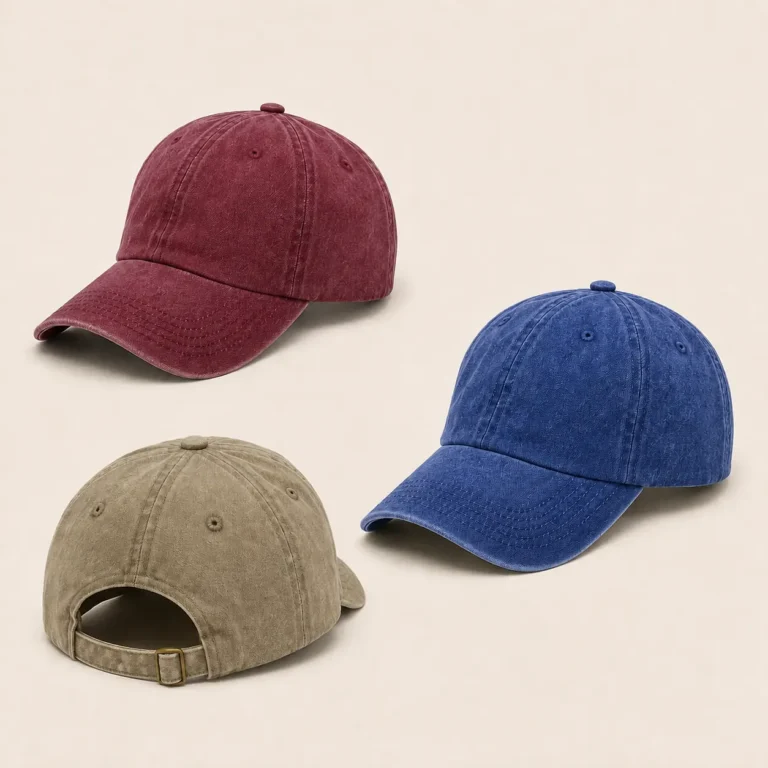
Separate shared construction from colorway details
Write the shared design once: crown construction, panel arrangement, visor, closure type and the intended fit reference. Then identify the details that vary by colorway, including fabric reference, finish direction, thread colors, labels and packaging. This makes it easier to see whether a comment affects one item or the whole collection.
Do not describe several caps as “the same except color” if their materials, decoration or trims also differ. A clear exception list helps the supplier quote and sample the actual range. The washed dad hat shape checklist can support the shared silhouette specification.
Give each combination its own item reference
Use a simple collection sheet with one row per sellable combination. Keep the item reference, commercial color name, physical color reference, artwork version, trim version and planned quantity together. A memorable color name is useful for merchandising, but it should lead back to a precise approval record.
For example, a planning sheet might list a blue cap with cream front embroidery, a khaki cap with dark front embroidery and a burgundy cap with a small side mark. These are illustrative combinations, not a statement of stock availability. The point is that the logo version belongs to a specific cap color, not to the collection as an ambiguous attachment.
Build physical finish references for the relevant colors
Decide which swatches or finished samples are needed for each proposed colorway. Record the reference ID, date, finish stage and any accepted variation. If a material is provisional, say so before the sample is used as a production approval.
Pantone explains the role of physical color samples in its color workflow. Use a current physical reference where appropriate, then agree how the desired washed result will be reviewed. A starting color reference and an accepted finished appearance are related records, but they are not automatically identical.
Review the colors together when the collection will be displayed as a group. Note whether the range should have a closely related level of fading or deliberately different character. Keep this collection-level judgement alongside the individual approvals.
Control logo versions and thread colors
Give every artwork file a clear revision name. Include the application method, size, placement and color references in the same record. If the same logo uses different thread colors on different caps, show those mappings explicitly.
For a tonal design, review the logo on the actual finished cap rather than choosing a thread only from a screen preview. For a contrasting design, check the intended visual balance at the agreed size and position. Use the embroidered washed cap approval checklist to record application timing and the complete finished result.
A comment such as “use the smaller logo” needs a file or dimension reference. When a new version is accepted, mark the superseded version so it cannot be picked up from an old message later.
State exactly what each sample approval covers
Separate construction, finish, decoration and label comments. A sample may be suitable for reviewing the crown shape while still using a temporary buckle or unapproved thread color. That limitation should remain visible until the actual combination has been reviewed.
- Shared approval: identify the construction reference and the items it covers.
- Color approval: name the finished reference and accepted appearance for each item.
- Artwork approval: record the correct file, application and color mapping.
- Final approval: identify the complete sample version and any remaining conditions.
Do not extend an approval to another material or component combination solely because the cap has the same style name. Ask which differences require another sample or check.
Match the quantity split to the approved range
Keep the requested quantity beside each item rather than giving only a collection total. Confirm the supplier’s proposed minimums and any implications of separate materials, finish trials, artwork setups or trim orders. Record the agreed basis in the quotation.
If a colorway is removed or its quantity changes, update the collection sheet and affected packing instructions. The washed cap bulk order checklist explains how to carry those decisions into order planning.
Keep retail files aligned with the finished cap
Link the product name, item reference, tag artwork and any required retail identifier to the same approved combination. Check that the photography and product description represent the finished design. Avoid showing an early sample with a different logo or closure as if it were the released item.
For a later reorder, retain the final collection sheet and physical references. Record any intentional change as a new revision so the supplier and buyer can distinguish a repeat from a redesigned item.
Questions about developing a washed dad hat collection
Can one sample approve every colorway?
It may answer a shared construction question, but its approval scope needs to be explicit. Determine which color, material, decoration and trim differences still require their own evidence.
Should each colorway have a different logo?
That is a design decision. A common logo can unify the range, while different artwork can distinguish items. Either approach needs a clear cap-to-artwork mapping and identifiable approved versions.
What should I send first?
Send the shared silhouette reference, proposed colors, artwork options and quantities by combination. Add the destination and retail presentation needs through Contact Wenext Caps so the sampling scope can be discussed.