
Private label washed dad hats need more than a front logo. The inside label, hangtag, item identifier and packaging should all describe the same finished cap. When these files are approved separately without a shared item reference, an otherwise suitable product can arrive with an outdated label or the wrong retail information.
Use the Custom Dad Hat Buying Guide to align the retail files with the underlying cap construction and fit references.
Use the washed cap buying guide for the finished product specification. This checklist focuses on the brand and retail files attached to it. The washed cap product page and dad hat product page provide starting points for discussing the proposed style.
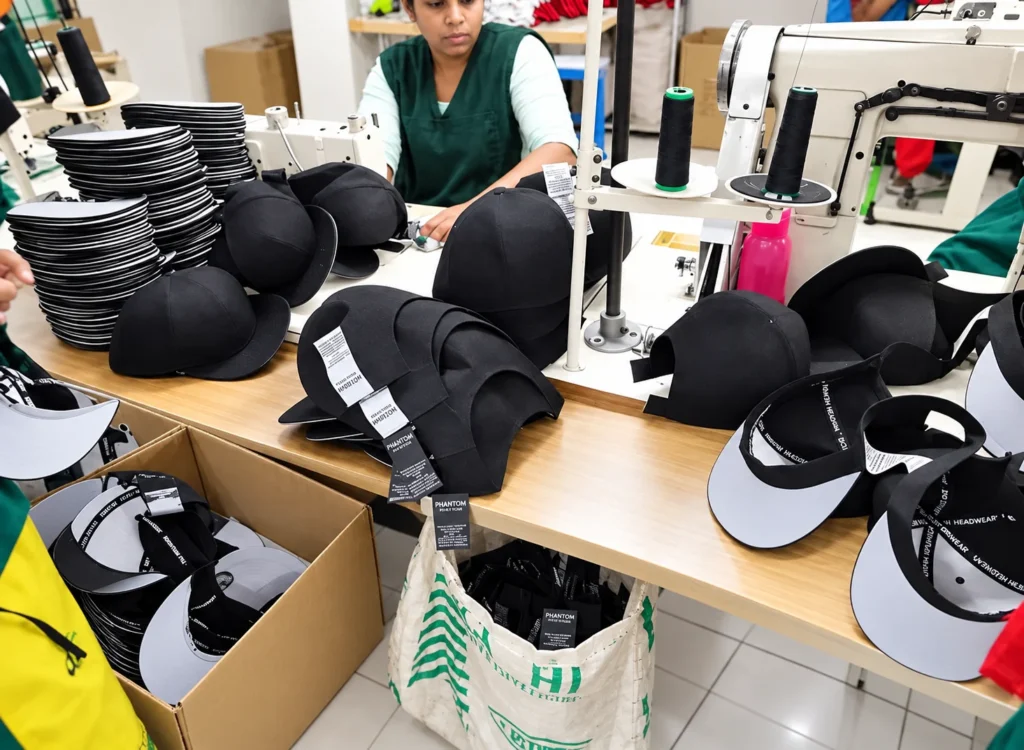
List every branding component before artwork approval
Create a trim list that identifies what is required and where it goes. It may include an inside brand label, information label, seam tape, side tab, hangtag, sticker or outer pack label. Keep the front decoration specification separate so it cannot be mistaken for approval of the whole label package.
For each component, record its artwork version, dimensions, material direction, colors and placement. Mark anything still provisional. A photograph of a reference hat is useful for explaining a position, but it should not leave the supplier guessing which text and graphics to reproduce.
Separate brand artwork from product information
A brand mark and an item description have different approval needs. Confirm who supplies and approves the product information, including any material, origin, care or market-specific wording that is required for the intended sale. Have the responsible party resolve those requirements before the final files are released.
Do not copy composition or care text from a previous cap simply because the silhouette looks similar. Tie the wording to the actual material and product specification. This article is a file-planning checklist; it does not establish a universal labeling rule for every market.
Confirm when attached labels enter the finishing sequence
Ask when each sewn or applied component will be attached relative to the intended finish. A label used in an early construction sample may not represent the final component or sequence. Identify that limitation rather than treating the temporary label as approved.
Review the relevant components on the finished sample. Look at legibility, attachment, placement and contact areas inside the cap. If a label is present during a treatment, assess the result after that stage as part of the agreed development review. The supplier should explain the proposed route for the actual materials.
Keep item codes and retail identifiers in separate fields
A buyer’s internal style code, a supplier reference and a retail identifier may all appear in the same project. Give each one a clearly named field. Do not let a spreadsheet column called “code” carry several meanings.
GS1 explains the Global Trade Item Number as an identifier for trade items. If a buyer requires a GTIN and barcode, use the identifiers and approved artwork supplied through the agreed process. An internal cap style number does not become a GTIN just because it is printed beneath bars.
Map the required identifier to the correct item combination. Confirm how the buyer distinguishes colorways, sizes and pack configurations before making the artwork. The washed dad hat collection planning checklist explains how to maintain the underlying colorway and artwork list.
Review the actual-size artwork and the physical application
Check the artwork at its intended print or woven size, with the complete text visible. Then review the physical component and its application on the cap where required. A large screen preview can hide a readability problem that becomes obvious on a small label.
- Does the approved brand mark appear in the correct version?
- Is the product information complete and approved by the responsible party?
- Do item names and identifiers map to the intended cap?
- Are dimensions, attachment and placement recorded?
- Does the finished component remain readable and suitably positioned?
- Are any temporary materials or missing details still clearly marked?
Where barcode verification is required, agree the method and evidence with the relevant buyer or technical specialist. A visual photograph or successful casual scan should not be presented as a formal verification report.
Approve hangtags and packaging as a set
Connect each hangtag and package label to the same item reference as the cap. Check the front and back artwork, attachment method, quantity and any colorway-specific information. If the buyer wants a common hangtag for the whole collection, make that shared scope explicit.
Review the packed presentation before it becomes the order’s reference. Confirm how caps are grouped, how the tag is positioned and how the receiving team identifies the contents. Use the washed cap export packing checklist for carton-level allocation and release records.
Release one final trim package
Keep a dated release list naming the final files and the item combinations they cover. Mark superseded files clearly, including rejected proofs that may still be present in an email thread. If a label changes, check whether related hangtag, package and packing-list files also need revision.
For a reorder, compare the retained physical reference and final artwork with the new request. A change to a website address, product name, material or retail identifier can affect an otherwise unchanged cap. Confirm those details instead of relying only on “same as last time.”
Common private label planning questions
Can one label package cover several cap colors?
It can be planned that way when the relevant information is shared. Identify which components are common and which contain item-specific text, colors or identifiers, then approve that mapping.
Should the factory create the retail numbers?
Agree responsibility with the buyer before the files are produced. The approved identifiers and their item mapping should come from the responsible party’s established process.
What should accompany a private label enquiry?
Send the cap reference, proposed colorways, brand artwork, required trim list, available product information and quantity split. Include the intended market and packing instructions through Contact Wenext Caps so unresolved requirements can be identified before sampling.