
“Cotton” is a starting point for a washed cap brief, not a complete material specification. The buyer still needs to identify the fabric construction, surface, color and finishing result. A swatch approved for its appearance should remain connected to the cap sample in which it was used.
This guide covers material approval for washed cotton caps. Use the Washed Cap Buying Guide for the wider order plan and the main washed cap product page for a manufacturing enquiry.
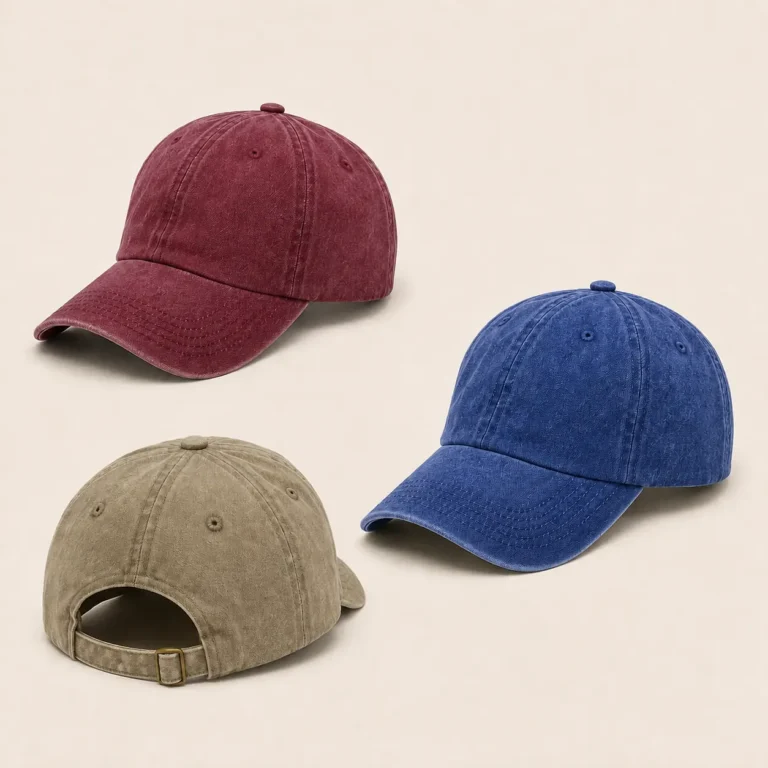
Separate fiber content from fabric construction
State the required composition and ask for an identifiable fabric proposal. Record the weave, surface and other agreed characteristics separately. A broad cotton description leaves those choices open.
CottonWorks’ woven-fabric guide describes different weave structures, including the diagonal pattern associated with twill. Use such terms to describe the proposed material more clearly, then confirm the actual swatch rather than assuming every fabric with the same name will behave identically.
Give each swatch a controlling reference
Record the supplier or mill reference where available, stated composition, color and agreed weight or finish. Mark the relevant face and direction if they matter to the design. Keep the reference readable on the material record and sample request.
When reviewing several similar options, give them distinct names. A note saying “use the soft navy” can become ambiguous once a new navy swatch arrives. Link the accepted option to the style and colorways it covers.
Explain the intended surface and hand feel
Describe what you want the finished cap to look and feel like, with a physical reference where useful. Identify whether the priority is a smooth appearance, a visibly textured surface, a softer feel or another defined requirement.
Separate that preference from an unverified performance claim. Ask the supplier to identify the proposed material and finishing route, and agree the review needed for the result you expect. Do not turn a fabric name into a promise about every finished characteristic.
Review the fabric after the proposed finish
Keep the material used in a wash trial identifiable. Compare shade, surface and any intended contrast with the accepted direction. Record the sample revision and the actual route represented by the trial.
If an available material was used temporarily, identify what the trial can demonstrate and what remains open. Review the intended fabric before treating the final combination as accepted. Keep the design and wash references separate where they control different features.
Check the complete crown and visor combination
Review the fabric with the selected front support, sweatband, internal components and visor. Compare the complete cap’s shape and relevant measurements after the proposed finish. A loose swatch cannot establish every feature of the assembled product.
Ask which checks should be repeated if a material or support changes. Keep the new sample reference visible. A substitution should not silently inherit the earlier cap’s approval solely because its color looks similar.
Develop decoration on the intended material
Provide artwork dimensions, colors and placement. Ask the sample team to review the proposed embroidery, patch or print method against the selected fabric and finish. Identify any temporary support or decoration component in the trial.
Review the completed logo, surrounding surface and inside finish on the cap. Keep artwork acceptance distinguishable from acceptance of the finished application. If a logo is intentionally weathered, provide its own appearance reference.
Define the color approval and accepted range
Record the physical cap or material reference controlling each colorway. Where the washed appearance includes variation, identify the range the buyer accepts. Compare the relevant samples under consistent viewing conditions.
Keep color approval separate from acceptance of the fabric construction when those decisions occur at different times. A swatch can be accepted for its weave and feel while the final shade remains unresolved.
Use a material-approval record
- Material identity: the actual fabric and its supplier reference.
- Declared details: composition, construction, color and agreed characteristics.
- Application: the styles and colorways covered.
- Trial: the cap and finish revision in which it was reviewed.
- Status: proposed, provisional, accepted or awaiting further evidence.
- Open decision: any remaining shade, shape, decoration or availability question.
Connect the record to the production references. Ask how a material change will be identified before the next operation or approval.
Confirm the scope for the actual assortment
List the quantities using each material and color reference. Ask the supplier to review availability and minimum quantities against that breakdown. Record a proposed consolidation or alternative before accepting a revised quotation.
For a reorder, provide the earlier material and sample references alongside the new assortment. Use the wholesale planning guide to keep item quantities and finish versions clear. Confirm current availability rather than assuming the earlier material remains unchanged.
Material questions
Is cotton twill always the best choice?
Review it against the actual design, finish and decoration requirements. Compare identifiable proposals and approve the combination that meets the agreed brief.
Can the same fabric be used for every color?
Ask the supplier to identify the proposed material and finish for each colorway. Review any difference relevant to the accepted product.
What should I send with a material enquiry?
Send the cap reference, composition requirements, desired surface and feel, wash direction, decoration, quantities and destination. Mark details for which you need options.
Discuss the material brief
Review the washed cap manufacturing page, then send Wenext Caps your fabric and finish references. Use the supplier checklist to keep the proposed material and sample scope clear.