
A sample photograph is most useful when the reviewer can identify the cap, understand the view and connect the observation to a specific decision. A close-up without a sample reference may show a seam clearly while leaving the product version uncertain. Plan the photo set around the questions the buyer needs to answer.
Start with the Custom Trucker Hat Guide for the full buying brief. This article focuses on trucker cap sample photography for construction, fit and branding discussions.
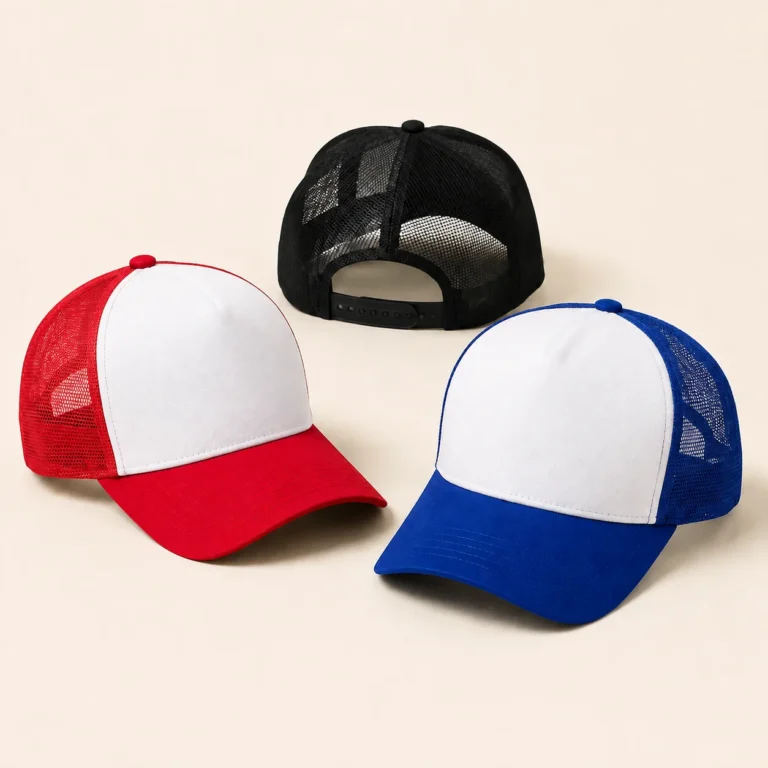
Identify the sample before showing the detail
Record the sample reference, revision, colour and relevant size or closure setting. Include that identity in the photo record and retain the date. When several samples are being reviewed together, give each one a clear reference instead of relying on its position in a message.
State the purpose of the review: shape, construction, decoration, a revised component or another defined question. Mark edited presentation images separately from decision photographs so the reviewer understands how each image is being used.
Use a repeatable set of views
| View | Useful information |
|---|---|
| Front | Front profile, symmetry, logo and visor join |
| Side | Crown depth, front angle, mesh transition and visor projection |
| Rear | Opening, closure setting, mesh joins and rear branding |
| Interior | Band, seam finishing, support, labels and decoration backing |
| Detail or measurement | Specific issue, reference point and agreed measuring method |
Use comparable camera positions for a revision review. Keep the full cap view alongside a detail so the location remains understandable. A close-up can answer a workmanship question while a worn view is needed for the intended fit position.
Show measurements without hiding the method
Identify the measuring points and the condition of the cap. Show where the measure begins and ends, including whether it follows a curve or a straight line. Retain the actual recorded value with the photograph rather than expecting the reviewer to infer it from an angle.
For an adjustable cap, state the closure setting used in the fit or rear view. If the setting changes between photographs, mark it clearly. Otherwise a shape or opening difference can be mistaken for a sample revision.
Keep colour discussion tied to physical references
Use consistent lighting and surroundings for comparison photographs, and avoid filters that alter the decision image. Identify the accepted material reference. Pantone’s physical sample guidance explains why physical colour references remain useful alongside screen images.
Record which conclusions need a physical sample or other evidence. A photograph can document appearance and position, while attachment strength, material identity or care performance needs the agreed review method and scope.
Connect each comment to the next decision
Number the images, identify the relevant view and describe the requested change. Separate accepted features from unresolved questions. The OEM trucker sample guide helps connect comments to the technical file, and the trucker quality checklist covers the agreed inspection questions.
Use the Wenext Caps trucker cap product page for development, or send the sample photo brief with the dated references, annotated images and decisions required.