
A fitted cap sampling process should resolve the design, materials and size set in an order the buyer can review. The useful outcome is an identifiable approved reference, with remaining questions clearly recorded before the production brief is released.
Start with the Fitted Cap Sizing and Buying Guide. Then agree what each sample round will demonstrate, which sizes it covers and what evidence is needed for the next decision.
Give the first sample a defined purpose
Identify the reference size and the design questions the first prototype must answer. It may focus on crown shape, visor relationship, material combination or the decoration method. State any provisional components before the sample is assessed.
The custom fitted design brief helps organize those inputs. A first sample is more useful when both sides know which decisions it can settle and which need a later trial.
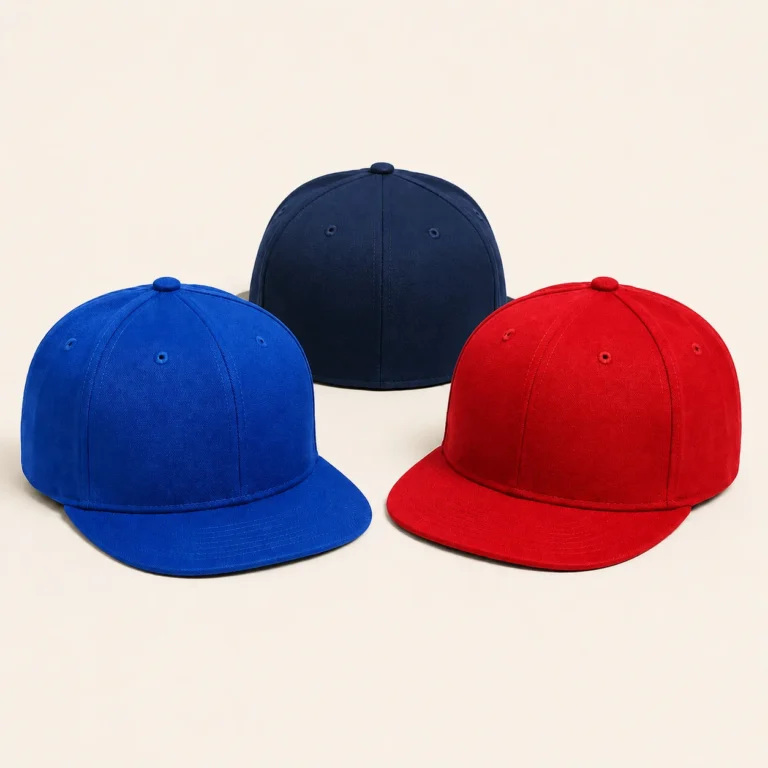
Review the material references alongside the cap
Keep the proposed fabric, sweatband, trim and color references available during the review. Identify whether each part matches the intended production material. If an alternative was used for development, record what still needs confirmation.
Pantone’s physical-sample guidance explains why a physical reference matters for product color decisions. Approve the actual component combination rather than treating a screen preview as the finished material result.
Separate accepted details from requested changes
Review the prototype against the brief and record each outcome. Identify what is accepted, what needs a revision and what cannot yet be assessed. Use marked photographs, actual measurements and specific locations where they help explain a request.
For example, a buyer may accept the crown profile while requesting another underbrim color and a revised label position. Keep those decisions separate so the next sample preserves accepted details while resolving the open points.
Plan the size-set review explicitly
Agree which sizes need physical samples and how the intended range will be checked. Include the measurement method, size chart and relevant wearer-review information. Keep the approval scope tied to the sizes actually assessed.
Use the size-set silhouette guide for crown and visor comparisons and the wearer-trial guide for fit observations. Record any size-specific artwork or trim differences at the same time.
Keep a sample-round decision log
| Sample record | What to retain |
|---|---|
| Sample identity | Style, size, colorway, revision and date. |
| Round purpose | Design, material, decoration or size questions being reviewed. |
| Component status | Final references and explicitly identified provisional parts. |
| Measured result | Checking method, actual values and applicable requirements. |
| Decision | Accepted details, changes and items awaiting another review. |
| Next sample | Affected sizes, components and evidence needed. |
| Approval scope | Controlling sample, file revision and any remaining conditions. |
Review decoration and trims on the complete construction
Assess artwork at the intended finished size and position on the proposed fabric and panel layout. Keep the accepted trial connected to its file revision. Check the reverse side and surrounding fabric where decoration affects the inside finish.
Use the trim approval guide to review label copy, folds, placement and variable size data. Identify whether the sample represents the final trim set or still needs another physical proof.
Release one clear approval package
Before production instructions are treated as final, reconcile the accepted sample, size chart, artwork, materials and packing references. Keep the technical-file revision aligned with the decisions recorded during sampling.
Confirm the applicable commercial scope and production plan for that approved specification. Sampling approval should identify the product result it covers; quantities, costs and timing still need their own agreed records.
Common fitted-sampling questions
How many sample rounds are always required?
Agree the rounds and checks for the actual design, materials and size range. Record the purpose and remaining questions for each round.
Can a sample with provisional fabric be approved?
Define which details are accepted and which remain conditional. Confirm the final material combination through the agreed review before it is treated as the production reference.
What should happen after a revised sample arrives?
Check the requested changes and the previously accepted details, then identify the new decision and the references it replaces.
Plan a fitted-cap sample review
Review the fitted cap product page, then send Wenext Caps your sample brief and size references. Identify the first-round questions, proposed materials and approval points you need to resolve.