
An OEM fitted cap specification needs to connect the design with every size that will be produced. The team should be able to identify the correct materials, measurement points, artwork and sample revision without guessing which file is current.
Use the Fitted Cap Sizing and Buying Guide to establish the product decisions. This guide focuses on the technical-file records needed to communicate and review a size-specific order.
Give the style and revision clear identities
Put the style reference, document revision and issue date on the technical file. Identify the person or team responsible for approval and keep a short change record. If several suppliers or sample teams receive the brief, issue the same controlling version.
Separate the current specification from reference photographs and older samples. A useful file tells the reader which source controls a measurement, which controls appearance and which details are still provisional.
Define points of measurement with a diagram
Give each measurement a name or code and show where it is taken. State the unit, cap condition and checking method. Clarify whether the measurement follows a surface or uses another agreed approach. Keep the diagram beside the values rather than relying on a label such as “cap height” alone.
Record agreed tolerances for the actual point and product. Do not apply one tolerance to every dimension simply because it is convenient for the spreadsheet. The method and acceptance criteria need to be understood before sample or production checks begin.
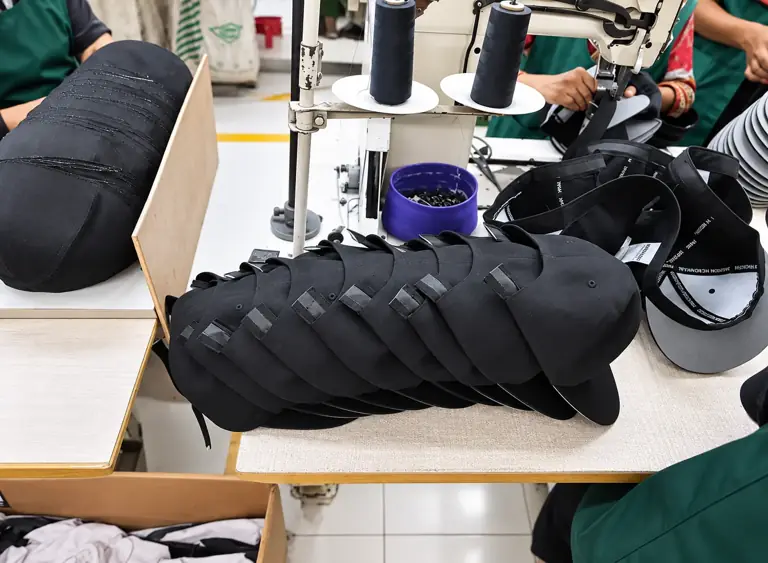
Keep the size chart and grading decisions explicit
List every intended size label and the corresponding finished-cap requirements. Identify the reference size and show the specified values for the remaining sizes. Ask the development team to explain proposed grading decisions before they become production instructions.
Record which components or placements are shared and which change by size. Crown dimensions, visor relationships and decoration positions need their own decisions. The fitted size-set silhouette guide provides prompts for reviewing those relationships on complete samples.
Build a component-level material list
Assign references to crown fabric, visor materials, sweatband, reinforcement, seam finishes and trims. Include stated composition and other agreed material specifications where relevant. Match each component to the correct colorway and identify approved alternatives separately.
Keep physical color references available with the file. Pantone’s physical-sample guidance explains the importance of a physical color reference for product development. A reference number or screen preview should not obscure which actual material combination was approved.
Link artwork and trims to the size specification
For each decoration position, record the artwork revision, finished dimensions, color references and measurement-based placement. If a version varies by size, show that assignment clearly. Keep the decoration trial with the cap construction on which it was assessed.
Use the private-label fitted trim register for label copy, placement and variable data. The technical file should point to the approved trim versions rather than storing an unexplained mixture of earlier artwork files.
Use an OEM specification handover checklist
| File section | Controlling information |
|---|---|
| Document identity | Style code, revision, issue date and change history. |
| Measurement diagram | Point codes, locations, units and checking method. |
| Size chart | Values and agreed tolerances for every intended size. |
| Materials | Component references and approved colorway combinations. |
| Construction | Panels, crown structure, seams, visor and inside finish. |
| Artwork and trims | Version assignments, dimensions, placements and size-specific data. |
| Sample status | Accepted references, provisional details and outstanding approvals. |
| Packing | Item identification, size assortment and carton instructions. |
Review exceptions before the file is released
If the accepted sample used a temporary fabric or label, state what remains to be approved. Identify whether a later change affects appearance, fit, measurements or several parts of the order. Keep those questions visible in the handover record.
When a revision is approved, identify the files and samples it replaces and the sizes it covers. Avoid changing a shared sheet without a revision note; that can make an earlier approval appear to refer to different values.
Keep order quantities separate from product revisions
A new quantity breakdown does not necessarily mean the product specification changed. Keep the order and size-assortment revision linked to, but distinguishable from, the technical-file revision. Record both where the production or packing team needs them.
For repeat orders, confirm that the approved components and construction remain applicable. Review any substitution through the same reference and sample process instead of treating the old style name as sufficient approval.
Common OEM specification questions
Can the supplier propose measurements?
Identify the intended fit and reference cap, then review the proposed chart and method before approval. Keep proposals separate from accepted production values.
Must every component change between sizes?
Record the actual size-specific and shared decisions. Review the finished size set rather than assuming one grading rule applies to everything.
What if a sample differs from the written file?
Resolve the difference explicitly and identify which reference controls the accepted result. Issue the necessary revision before the handover is treated as complete.
Review an OEM fitted-cap file
Review the fitted cap product page, then send Wenext Caps your technical file and sample references. Highlight the size chart, measurement method and open development questions that need review.