
Private label fitted caps need a trim system that identifies the brand and the exact product. A good-looking label is only part of the job: its wording, size information, position and item data must agree with the approved cap and order.
Use the Fitted Cap Sizing and Buying Guide for the construction and size decisions. Then approve the labels, hangtags and packing identifiers as a connected set.
Separate shared branding from variable information
List the trims used across the collection and the fields that change between variants. A brand label may be shared, while the size label, item code and barcode may differ. Identify those differences before artwork is sent for preparation.
Create a trim reference for each distinct version. If a size is written in more than one format, have the responsible brand team confirm the intended wording and relationship. Avoid letting a label proof become an unreviewed change to the product’s size system.
Approve the copy before the production proof
Supply the exact brand name, size text and other required wording in a controlled file. Confirm that material or care statements describe the actual cap and its components. Review destination-specific requirements with the responsible specialist before the final copy is approved.
Do not add certification, origin or performance claims simply because a similar cap carries them. Keep any supporting references with the artwork approval so the label is based on the actual product, not a borrowed example.
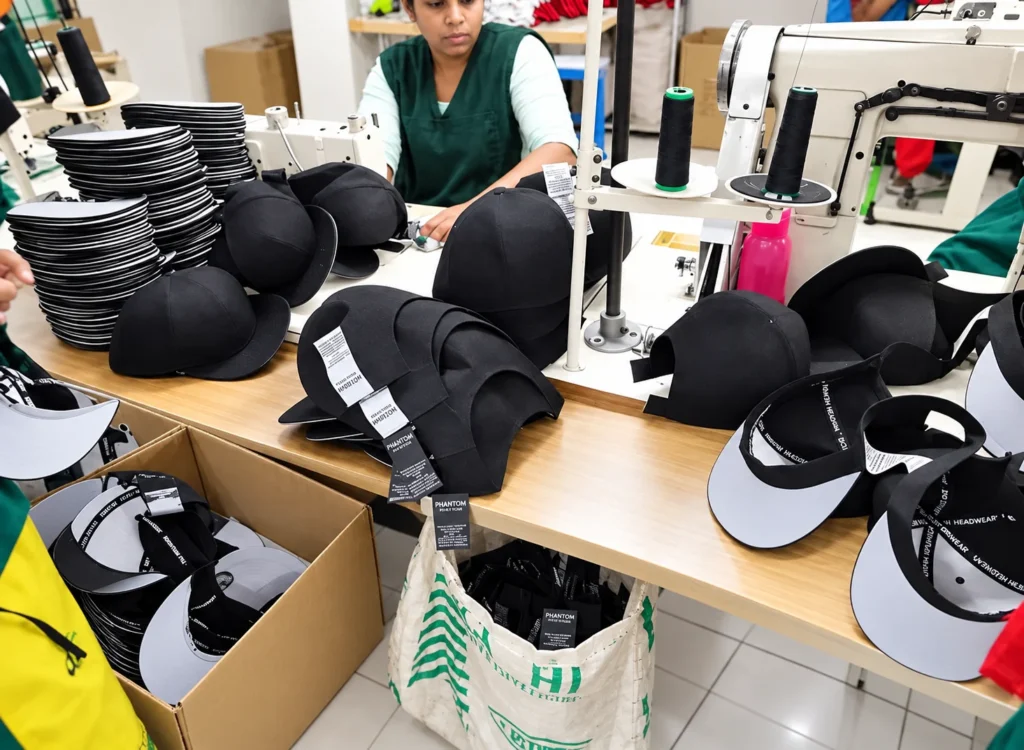
Check the physical label at its finished size
Review lettering, edges, folds and the attachment area on a physical trim sample where needed. A large artwork preview can hide small text or a fold that crosses important information. Record finished dimensions and the visible area after attachment.
Assess color and material with the cap’s fabric, sweatband and decoration. State which physical references control the accepted combination. If a replacement label material is proposed, review its appearance and feel rather than approving it only by a matching color name.
Make placement clear on the complete cap
Show the label position on an inside-view drawing or marked photograph. Include the direction of the text and the intended attachment method. Review the finished sample to see whether the label is readable and whether an edge or attachment affects wearer comfort.
Check the arrangement across the approved size set. A position accepted on one sample should not be assumed to work identically on every size without review. Keep the trim instruction connected to the custom fitted cap development brief.
Approve item data and barcode assignments
Link each variant to its approved size text, stock code and barcode data where required. Ask the responsible brand or retail team to supply and verify the identifiers. Check that the printed and encoded information agree before approving the full trim run.
GS1’s explanation of the GTIN describes its role in identifying trade items. Keep any required GTIN separate from your internal SKU, and confirm the correct assignment for the actual variant.
Use a private-label trim register
| Trim record | What to approve |
|---|---|
| Brand label | Artwork revision, wording, colors and finished dimensions. |
| Size label | Exact text and the variant or size specification it identifies. |
| Information label | Supported product details and approved final copy. |
| Placement | Position, orientation, fold and attachment reference. |
| Hangtag | Front and reverse artwork, attachment and variable fields. |
| Identifiers | SKU and approved external barcode data where applicable. |
| Version status | Physical proof, controlling revision and approval scope. |
Connect the trims with the packing plan
State which tag or sticker belongs to each item and where it should appear. Review the cap after tagging and packing so the attachment does not change the intended presentation. Confirm any receiver-specific label requirements before cartons are prepared.
The wholesale fitted assortment guide explains how to connect variant data with carton contents and receiving checks. Keep that item breakdown consistent with the trim register.
Control changes and unused trim versions
When wording, artwork or size data changes, issue a new revision and identify the affected variants. Confirm which earlier proofs are superseded. Ask how unused or already attached trims will be handled before the change is applied.
Retain the approved physical reference and final artwork for a reorder. Confirm whether the repeat order uses the same product details and identifiers instead of automatically reusing an old print file.
Common private-label questions
Can every cap size share one label file?
Shared branding can use one approved reference, but variable size or item data needs its own controlled assignment.
Is a digital proof enough?
Use it to approve the copy and layout, then review physical size, folds, attachment and feel where those affect the result.
Who should approve retail barcode data?
Have the responsible brand or retail team confirm the required system, identifiers and variant assignments before printing.
Prepare a fitted-cap trim brief
Review the fitted cap product page, then send Wenext Caps your label and hangtag requirements. Include artwork, exact size text, item data and placement references for review.