
A custom fitted cap brief should make the first sample useful. It needs to tell the development team which size and shape to build, how the artwork should appear and which details still need a proposed solution. A folder of attractive references helps, but it also needs a clear explanation of what each reference controls.
Start with the Fitted Cap Sizing and Buying Guide. Then prepare a brief that connects your design decisions to an identifiable sample and size specification.
Choose one controlling shape reference
If you send several caps or photographs, label their purpose. One may show the crown profile, another the visor edge and another the inside label arrangement. State which feature to follow rather than asking the team to combine every visible detail.
Include front, side, rear and inside views of the reference. Mark what should change. For example, “keep the crown profile, use our supplied underbrim fabric and replace the front graphic” is more useful than “make something similar.” Keep the reference size visible in the record.
Define the size used for the first sample
List the proposed size system and identify the initial development size. Record the intended wearer measurements, finished-cap checking method and any measurement references already agreed. Mark provisional figures clearly so they are not mistaken for approved production requirements.
The first sample can resolve the design direction before a wider size set is reviewed. Plan that later review explicitly. The flat-brim fitted size-set guide explains how to compare the silhouette across the intended range.
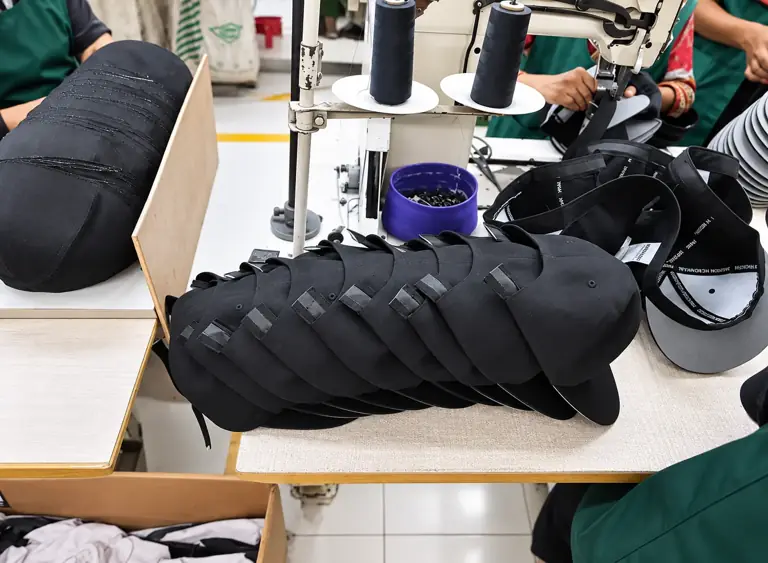
Separate the material choices by component
Identify crown fabric, visor top, underbrim, sweatband and internal finishes separately. Record material references, stated compositions and colors where known. If you want the supplier to propose a material, describe the intended surface and feel and request an identifiable swatch.
Review the physical combination when color alignment matters. Pantone’s physical-reference guidance explains why a screen selection needs a physical reference for product development. Keep the accepted fabric and trim references with the brief rather than relying on color names alone.
Give each artwork position its own instruction
Provide clean files and name the version used for each position. State finished width and height, placement references and the proposed decoration method. Identify lettering or gaps that are essential to the design so they receive attention in the trial.
A front logo, side mark and rear detail may need different files and approval checks. List them separately. If the same graphic appears on several colorways, show the intended thread or patch combination for each background and identify any variation.
Use a first-sample brief sheet
| Brief area | Information to supply |
|---|---|
| Design reference | Controlling cap or drawing and the purpose of each additional reference. |
| Initial size | Development size, intended fit and agreed checking method. |
| Construction | Crown structure, panels, visor profile and inside finish. |
| Materials | Component references, colors and options awaiting a proposal. |
| Decoration | Artwork revision, dimensions, position and requested trial. |
| Trims | Label artwork, placement, item identifiers and hangtag details. |
| Approval scope | What this sample must resolve and which later checks remain. |
Make the sample feedback specific
Review the returned sample against the brief, with each requested change tied to a location or measurement. “Move the side mark toward the rear using this revised position” gives a clearer next step than “the branding feels wrong.” Supply a marked photograph where it helps.
Separate accepted details from changes. Ask for the revised sample to identify its reference and date, and keep earlier versions recognizable. If a material remains provisional, record that exception even when the shape is accepted.
Confirm the next development stage
Before treating the design as ready for the full order, review the size set, remaining decoration trials and final trims. Confirm the quotation scope, quantities and schedule for the current specification. A design approval does not automatically confirm every commercial condition.
Keep the final approval attached to the actual sample and documents it covers. That record gives the production and inspection teams a shared reference and gives the buyer a useful starting point for a reorder.
Common custom-brief questions
Can I start with a sketch?
Yes. Identify the intended wearer, silhouette and artwork, and mark details that need development. Agree the sample scope and the references needed to resolve those details.
Should every reference photograph be followed exactly?
State which feature each reference controls and identify what should change. Confirm the resulting combination in the actual sample.
Does approving one development size approve the whole range?
Record the scope of that approval and agree the size-set review before committing the full assortment.
Send a custom fitted cap brief
Review the fitted cap product page, then send Wenext Caps your references and artwork. Include the initial sample size, material direction, intended quantities and questions that need a development proposal.