
The first sample of a custom five-panel cap does not have to answer every question at once. It does need a clear purpose. If the crown shape is still being developed, a temporary fabric may be useful for an early review. The problem starts when that temporary choice is mistaken for an approved production component.
Agree the sample plan with the custom 5-panel cap factory before development begins. Identify the decisions each round will address, the materials it will use and the evidence needed for approval. The 5-Panel Cap Buying Guide connects these sample decisions with the wider order brief.
Give the first round a focused question
Write down what you need to learn. It might be whether the top panel gives the intended profile, whether the visor balances the crown, or whether the rear opening works with the selected fastening. A sample made to settle those points should be reviewed against them.
If the pattern is not yet clear, prepare the panel views and construction brief first. Mark the desired changes on a small set of references. Several conflicting inspiration photographs can leave the sample maker with no clear instruction.
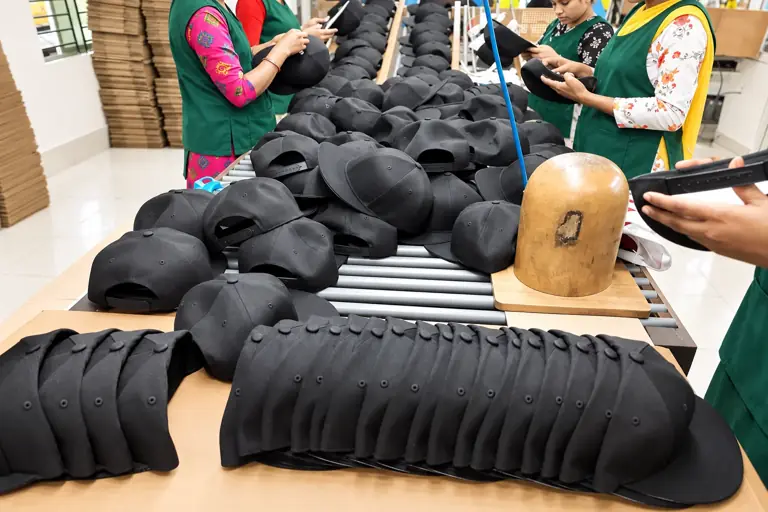
Make temporary components easy to spot
List every substitution used in development. This could include an available fabric color, an unbranded buckle or a temporary inside label. State what the sample can demonstrate and what remains open because of that substitution.
For example, a construction sample in an available fabric may help compare panel proportions. It does not settle the final shade or prove that another material will behave identically. When the intended fabric arrives, agree which shape, fit and decoration points need to be reviewed again.
Review fit in a repeatable setup
Use the agreed wearing or display reference and record the closure setting where relevant. Compare crown depth, side position, visor alignment and rear opening in that setup. Keep the measurement method and units with the comments so a later sample can be checked the same way.
A photograph can help explain a concern, but “too shallow” still needs a location and reference. Describe where the sample sits differently from the intended fit. If a dimension is to change, identify its measurement points and the requested revision rather than leaving a number detached from the pattern.
Approve the decorated construction, not only the graphic
An artwork file confirms the design being requested. The decorated sample shows what happens when that design is applied to the chosen front layout. Review the finished logo dimensions, marked placement, nearby seams and surrounding fabric together.
Embroidery support is one example of a component decision tied to the application. Madeira’s embroidery backing guidance discusses support choices for embroidery. Use the relevant fabric and design when reviewing the proposal; a successful result on a different sample is not approval of the new combination.
Write comments so the next round is unambiguous
Keep accepted features visible while requesting changes. “Keep the approved visor outline; revise the crown as marked in side view B” is more useful than a new list that makes every detail appear open again. Use annotated photographs alongside the written comments where they add clarity.
| Record | What it should identify |
|---|---|
| Sample identity | Style, colorway, sample date and specification revision |
| Review point | Feature, measurement or marked photograph |
| Decision | Accepted, revise or still provisional |
| Next action | Requested change, responsible party and next review evidence |
Close the component gaps before production approval
Check the final material, support, visor, closure, decoration and trim references against the proposed production specification. Confirm how the approved cap is expected to arrive after packing. If the sample still contains a substitute, state the outstanding condition and who must resolve it.
Keep the accepted sample and its approved specification connected. A later artwork revision or component change should have a visible decision attached to it. Do not let an old approval cover a new combination by default.
Plan development time around the open decisions
Ask what materials, artwork and buyer comments are needed before each sample stage can proceed. Include time to review the sample and respond. The number of rounds and their timing depend on the actual project; the sample plan should make those dependencies clear.
Use the Wenext five-panel cap product page to discuss the proposed construction. Send the current brief and unresolved questions through Contact Wenext Caps so the scope of the next sample can be agreed before work starts.