
A flat brim can look right on its own and still feel out of balance when attached to a cap. The visor needs to be reviewed with the selected crown, front layout and wearing position. For a five-panel project, the brief should define the supplied visor shape and show how it relates to the rest of the cap.
Agree those references with the flat-brim five-panel cap factory before final approval. The 5-Panel Cap Buying Guide covers the wider construction brief. This article concentrates on the visor, the views used to review it and its condition after packing.
Define what “flat brim” means for the supplied product
Provide a reference for the intended visor curve or flatness. Distinguish that supplied state from styling the buyer may use for photographs or the wearer may apply later. A front photograph alone can leave the expected profile unclear.
Use a side view and a view from above alongside the front reference. Identify the cap and sample version in each view. If a reference has been reshaped before photography, say so rather than using it as an unexplained production target.
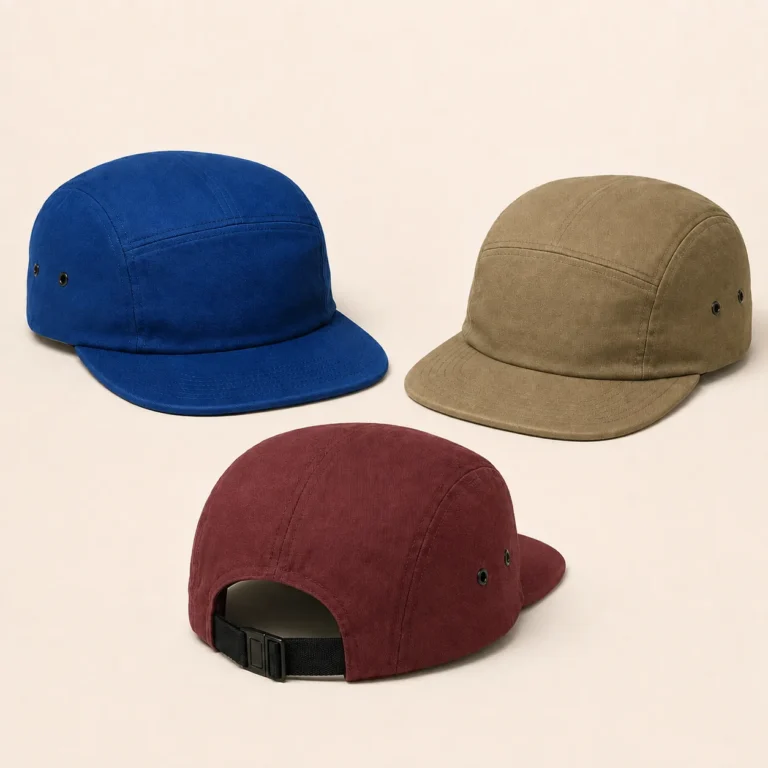
Review the outline and dimensions together
Mark the proposed visor outline, projection, width and relevant edge details. Put units and measurement points on the drawing. Where topstitching, an underside color or a contrasting edge is part of the design, identify it in the same visor specification.
Measurements help identify a version, while the assembled sample shows its visual balance. A change in outline should therefore be reviewed on the cap rather than accepted only as a revised number in a spreadsheet.
Check how the visor meets the selected crown
Use consistent front and side views to compare the visor with the crown profile. Look at its position beneath the front panel, the apparent balance from each side and the relationship to the artwork. Keep the intended wearing or display setup consistent between samples.
As one industry example, AS Colour’s Class Five Panel Cap combines a flat peak with a mid-profile construction and internal mesh support. Those are features of that product. Specify the crown, support and visor combination required for the actual project instead of treating the category name as a complete design.
Identify the visor components used in the sample
Ask the supplier to identify the proposed insert, covering and relevant construction details. Mark a temporary component clearly. If the intended combination changes after approval, ask which shape and handling checks need another review.
Do not infer an insert material, stiffness or folding capability from a photograph. If packability is part of the concept, use the camper-cap handling review and agree the appropriate checks on the complete construction.
Record the approval from repeatable views
| Reference | Decision to capture |
|---|---|
| Supplied state | Expected curve or flatness before styling |
| Outline and measurements | Drawing version, units and measurement points |
| Assembled views | Front, side and top references in the agreed setup |
| Components | Insert, covering, edge and stitch details reviewed |
| Unpacked condition | Accepted appearance after the agreed packing review |
Include packing in the visor discussion
Review how the approved cap is placed in its proposed pack and carton. Look at the visor, front panel and decoration after unpacking. If the packing arrangement needs support or a change in orientation, record it alongside the product approval.
A sample photographed before packing does not answer what the recipient will see later. Agree the review conditions and retain the accepted reference. Keep changes to carton composition or presentation visible when they affect the supplied cap.
Keep later changes tied to the approved combination
When a colorway, covering fabric or component changes, identify the version being proposed. Ask which approvals remain applicable and which need confirmation. This is especially useful for a range that shares a crown but uses more than one visor treatment.
Discuss the intended silhouette through the Wenext custom five-panel cap page. Send the marked visor views, component questions and packing expectations through Contact Wenext Caps so the sample can be reviewed against one clear reference.