
A fashion five-panel cap is often judged through details that are easy to leave out of a broad design brief: the way two panel colors meet, the visibility of a seam, the fabric face and the shape seen after unpacking. Those details need references of their own if they are central to the collection.
Use the 5-Panel Cap Buying Guide for the complete development process. This article focuses on material appearance, seam contrast and the retail presentation of a fashion five-panel cap.
Identify the visual details that define the design
Mark the features a sample must retain: perhaps a contrasting top panel, a quiet seam treatment or a particular fabric texture. Separate them from incidental details in an inspiration photograph. Show the intended changes beside the relevant cap view.
Choose consistent front, side, top and rear views for comparison. A collection mood image can communicate direction, while the marked product reference defines what the manufacturer is being asked to develop.
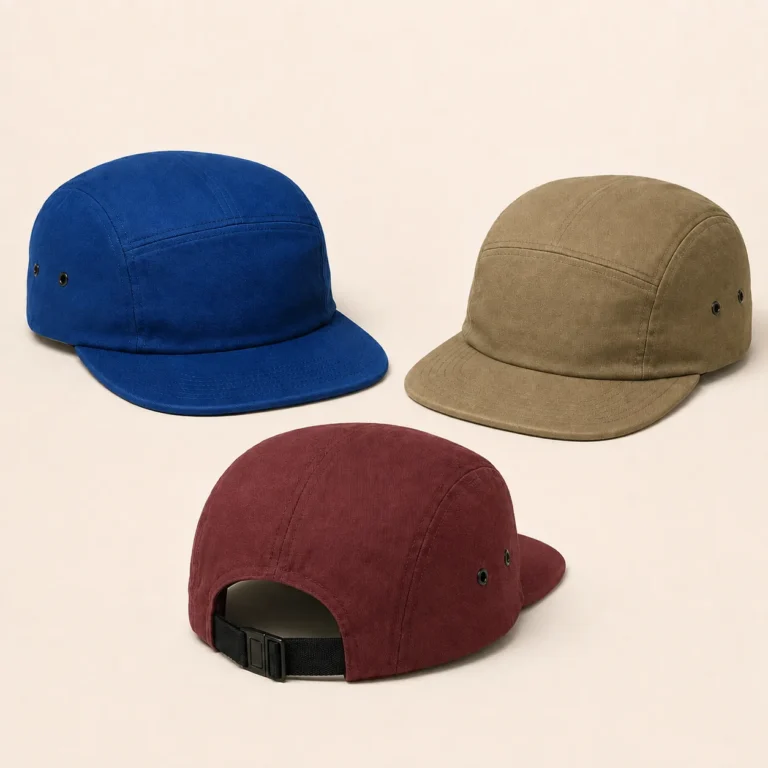
Review the fabric face beyond its color name
Ask for an identifiable swatch and the relevant material information. Review the visible texture, finish and intended fabric direction with the cap concept. A material name or photograph alone can leave the proposed surface unclear.
CottonWorks explains basic woven fabric designs, including plain and twill structures. The construction of a fabric is a separate part of its description from its fiber content or color. Use the supplied swatch and specification to identify the proposed material rather than inferring composition from its appearance.
Make seam contrast an explicit decision
Identify where thread should blend with the fabric and where it should be visible. Mark the relevant panel seams, visor stitching and edge treatments. If the cap combines several colors, show which thread reference applies at each location.
Review those junctions on the assembled sample. A contrast seam can make its position part of the design, so the approval should show the accepted appearance from the relevant views. Avoid approving only a loose thread color while leaving its application unclear.
Compare panel colors as a complete combination
Put the proposed front, side, top, visor and rear details together. Decide which areas should match and which should contrast. Review the logo and small brand components against those surroundings.
The five-panel range and color-blocking checklist helps identify the combination for each item. Keep that range identity connected to the sample instead of approving a set of unrelated swatches and assuming the assembled result is settled.
Define the condition used for the appearance approval
Record whether the cap is being reviewed as supplied, worn or arranged for photography. Keep the visor and crown setup consistent when comparing sample versions. If a feature needs a close-up, include that view alongside the whole cap.
Describe an appearance comment at its location: a particular panel junction, visor edge or area beside the graphic. Keep accepted details clear when asking for a revision. A request to make the cap “more premium” does not identify the change the sample maker needs to make.
| Area | Approval reference |
|---|---|
| Material face | Swatch identity, texture, finish and fabric direction |
| Panel combination | Colors assigned to the selected construction |
| Seams and edges | Locations intended to blend or contrast |
| Sample views | Consistent setup, cap version and marked comments |
| Retail presentation | Cap with approved trims and packing after unpacking |
Check the presentation the recipient will see
Review the cap with the intended labels, tag, sticker and pack. Check that the item information belongs to the right version and that the arrangement presents the cap as agreed. Include the appearance after unpacking in the relevant approval.
Use the private-label trim release record to connect those pieces to the approved files. When photography is prepared, identify the correct sample and avoid quietly substituting an earlier design version.
Release an identifiable finished version
Keep the accepted cap, specification and comments linked. If the material, seam treatment or color combination changes, identify which appearance approvals need another review. The style name alone should not conceal a changed product.
Discuss the collection through the Wenext five-panel cap product page. Send the marked design references, material proposal and presentation questions through Contact Wenext Caps.