
An outdoor five-panel cap brief should explain what the cap is intended to do and how each requirement will be checked. A light-looking fabric, mesh panel or short visor can describe a design feature. It does not by itself establish drying performance, moisture management or another measured property.
When discussing an outdoor five-panel cap with a supplier, separate construction choices from the claims that need supporting evidence. The 5-Panel Cap Buying Guide covers the broader specification. This article focuses on the intended use, performance questions and sample or document references needed to assess the proposal.
Describe the intended activity and wearing situation
Identify the wearer and the situation the cap is being developed for. Mark the desired wearing position, visor shape, fastening and ventilation layout. Explain relevant carrying or equipment interactions so the sample review can address them.
Keep the requirement specific enough to discuss. “Outdoor performance” leaves several questions open. A request for a certain side-panel arrangement is a construction decision; a drying-rate requirement needs a defined measurement and acceptance basis.
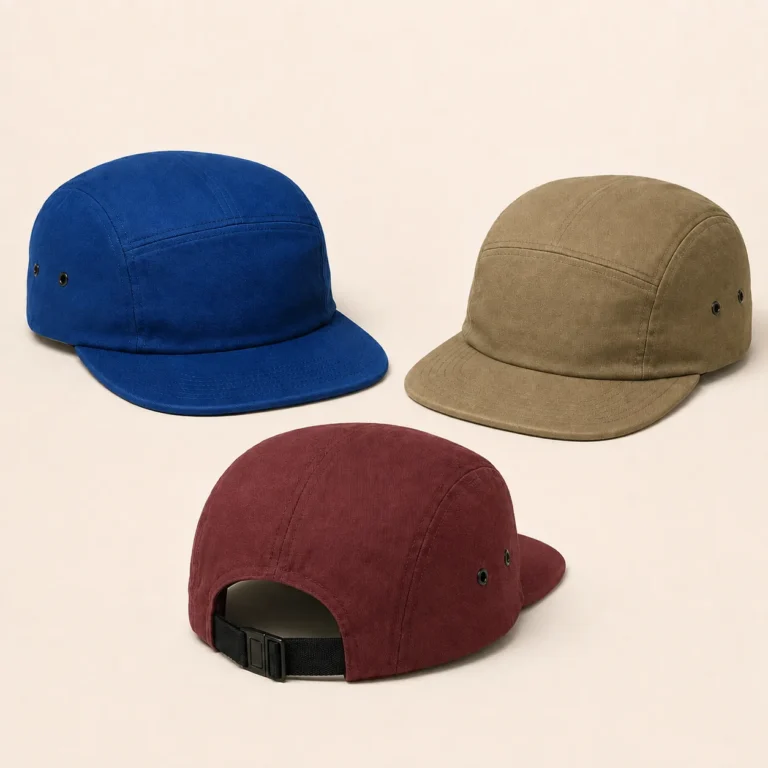
Keep fabric identity connected to any supporting document
Identify the proposed material, relevant construction information, finish and item reference. Ask which supplied combination a document covers. If the sample uses a substitute material, keep that difference visible while reviewing performance requirements.
A report for another fabric or treatment may leave the proposed material unconfirmed. Ask the responsible technical party to review applicability, test conditions and the required acceptance basis. Avoid transferring a claim simply because two fabrics have a similar appearance or fiber description.
Distinguish liquid moisture management from drying rate
AATCC’s public summary of TM195 describes assessment of liquid moisture management properties in fabrics. Its public summary of TM201 describes a fabric drying-rate method using a heated plate. These address defined questions rather than one interchangeable “performance” score.
Use the relevant technical discussion to agree what the project needs. A method name alone is not a passing result. Identify the material tested, the applicable method and conditions, the reported result and the acceptance requirement. Keep the applicable report, material identity and approval decision together.
Review the assembled cap as well as the material
The cap includes its inside band, seams, labels, support, closure and decoration. Review those features on the actual sample in the intended wearing setup. Record observations about fit, adjustment or contact areas against that sample.
A wear observation and a laboratory fabric result serve different purposes. Keep both identifiable where both are required. The camper-hat fit and closure checklist helps define the construction points to review with the wearer reference.
Build an evidence list around the claim
| Record | What it should identify |
|---|---|
| Intended use | Wearer, activity and relevant carrying or equipment situation |
| Requirement | The feature, observation or measurable property requested |
| Material or sample | The construction and version being assessed |
| Evidence | Applicable sample review or technical document reference |
| Decision | Acceptance basis, responsible reviewer and open conditions |
Revisit the relevant evidence when components change
A new material, finish, decoration or inside component can raise a new review question. Identify what changed and ask which earlier decisions remain applicable. Keep provisional choices out of the final claim release until they are resolved.
For a cap that must fold or compress, use the separate packability review. Do not treat a drying or moisture-management document as evidence of the cap’s condition after that handling.
Keep the selling description within the approved scope
Connect product wording to the construction and evidence accepted for the item. Identify who approves the final claims and supporting information before labels or retail copy are released. Avoid adding broader promises simply because a technical term appeared in a material proposal.
Use the Wenext five-panel cap product page to discuss development. Send the intended use, requirement list and available references through Contact Wenext Caps so the evidence gaps can be identified early.