
“Cotton twill” is a starting description for a cap fabric. Two swatches with that description can differ in weight, texture, shade and finish, and those differences can change the appearance of a six-panel crown. Give the chosen material an identifiable reference before approving the complete cap.
Use the 6-Panel Cap Buying Guide for the overall specification. This article explains the material decisions to carry from a cotton twill swatch into the sample and the order records.
Separate fibre composition from weave
Cotton describes the fibre; twill describes the weave. CottonWorks’ basic woven fabric guide explains the diagonal line associated with twill and distinguishes different twill constructions. A diagonal surface alone does not establish the fibre composition of a particular swatch.
Ask for the composition and construction proposed for the cap. Where a specification includes a fabric weight or other measurable requirement, identify the value, unit and applicable confirmation. Keep the material description consistent between the enquiry, sample notes and accepted proposal.
Give the selected swatch a reference
Label the swatch with a material code, colour reference and supplier or project reference. Keep the date and approval status visible. If several options are being compared, retain their separate identities until one is selected.
A useful note might identify the selected navy swatch and the cap sample made from it, while marking an alternative navy as unapproved. That simple distinction helps prevent a similar-looking replacement from being treated as the same fabric.
Review texture and fabric direction across the crown
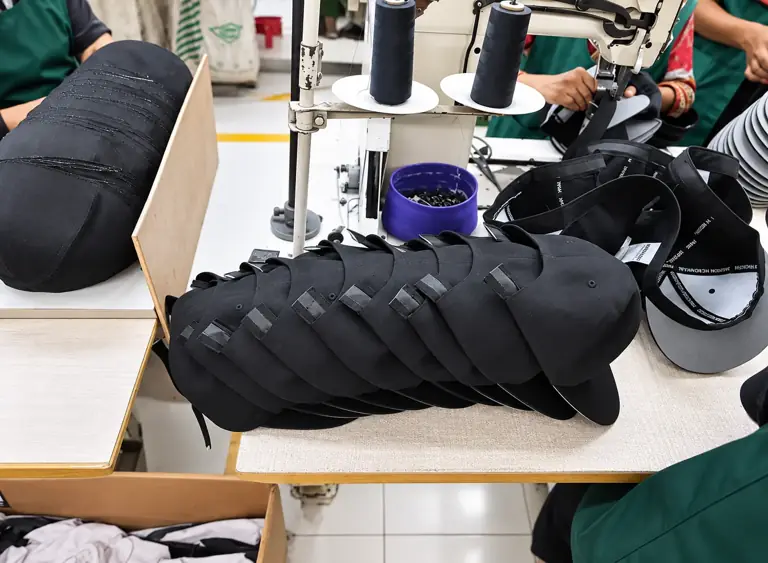
Look at the proposed fabric in the finished crown, including the front seam, side sections and rear opening. Compare the visible texture and its direction across the panels. Ask how the intended orientation is recorded in the construction specification.
Examine the cap under consistent lighting and identify any panel-to-panel differences requiring clarification. Keep a full view and close views of the relevant seams together. Use those images to describe a concern while retaining the physical material reference for the material decision.
Assess the fabric with the intended support
A loose swatch cannot show the complete cap’s shape or feel. Review the material with the proposed crown support, sweatband, visor and fastening. Check how the crown presents when worn or displayed in the agreed way.
Use the six-panel front-support review where a structured crown is proposed. Record the shell and support as separate components so a change to either can be assessed against the accepted sample.
Approve the intended colour and finish stage
Identify whether the material reference is unfinished, dyed, brushed, washed or otherwise finished as proposed for the item. If a later process is still pending, make that stage clear. Review the completed sample for the resulting shade, surface appearance and dimensions relevant to the brief.
Keep shade comments tied to the physical reference and sample revision. For contrasting components, review the visor, stitching and closure alongside the crown. Ask for confirmation when a later material lot or proposed finish differs from the accepted combination.
Review embroidery on the selected material
Apply the proposed decoration to the relevant fabric and cap construction for the embroidery trial. Check small details, the area around the centre seam and any visible distortion. Identify the thread and backing references used in that trial.
The six-panel embroidery sample guide provides a focused review sequence. Carry the accepted decorated result into the material record rather than relying on a trial made with an unidentified substitute.
Keep a concise material approval record
- Shell composition, proposed construction and any agreed measurable requirements.
- Swatch identity, colour reference and finish stage.
- Sample revision connecting the fabric to the crown and other components.
- Accepted decoration and any open material questions.
- Changes that require a fresh review before the order is confirmed.
Discuss the proposed combination on the Wenext six-panel cap product page. Send the material references and intended cap details through Contact Wenext Caps for a project-specific discussion.