
A baseball cap fabric swatch is a starting reference, not the complete product specification. Two swatches can share a colour name while differing in composition, construction, weight or finish. Record those differences before deciding which material should be used for the sample cap.
Start with the Baseball Cap Buying Guide for the complete buying brief. This article focuses on comparing fabric swatches and retaining the material references needed for crown, decoration and colour approval.
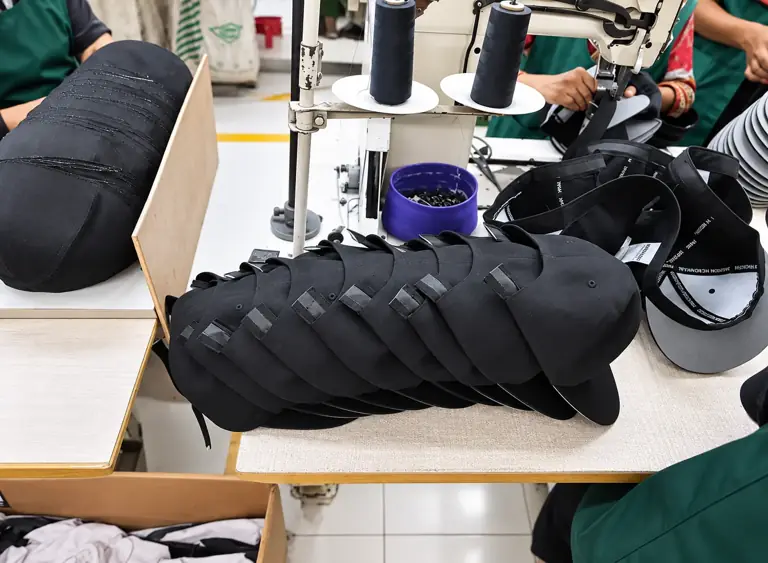
Identify the cloth beyond its colour name
Record the supplier’s fabric reference, stated composition, construction, weight and finish. Identify the accepted face of the cloth and any direction that matters to the intended appearance. Keep the swatch reference connected to the proposed cap colourway.
Distinguish a description supplied for review from information already verified. A photograph or hand feel cannot establish every material property. Where the brief requires documentation or testing, identify the relevant evidence and what material version it covers.
Separate fibre, weave and finish decisions
Fibre composition identifies the stated material content, while weave describes how the yarns are arranged in a woven cloth. CottonWorks’ basic woven fabric resource explains plain, twill and other weave terms, including the diagonal appearance associated with twill.
The finish is another part of the reference. Define the intended surface and hand feel rather than assuming a familiar fabric name settles those decisions. For a washed-cap direction, use the Washed Cap Buying Guide to connect the target appearance to an approved cap sample.
Compare physical colour references consistently
Review the actual swatches under agreed viewing conditions and retain the accepted reference. Identify whether the shell, visor and trims should match or deliberately contrast. Record the material and shade version rather than using one informal colour name for every component.
Pantone’s physical sample guidance explains why physical references matter. A screen image is useful for discussion, while the accepted material comparison gives the sample team a more specific matching reference.
Review the material on the assembled cap
Compare the crown profile, seams, visor join and decorated area using the intended cloth. Check how the chosen fabric works with the front support and band. A swatch can show surface and colour while the complete cap reveals different construction questions.
Keep the cap and material versions identifiable when commenting. If the pattern and fabric change together, record both revisions so the effect can be reviewed accurately. Do not attribute every difference in the new sample to the fabric alone.
Retain a comparison record for substitutions
| Field | Reference to retain |
|---|---|
| Material identity | Supplier reference and stated composition |
| Construction | Weave, weight and relevant direction |
| Appearance | Accepted colour, surface and finish |
| Cap review | Sample version, support and decoration combination |
| Evidence and status | Required reports, accepted scope and open decisions |
Review proposed substitutes against the same fields and identify any changed approval or evidence requirement. Use the Wenext Caps baseball cap product page for development, or send the fabric swatch brief with the intended cap shape, artwork, material references and item quantities.