
Plan each headwear style around its construction, fit, materials and branding. A fitted cap, a mesh-back cap and a knitted beanie need different specifications and sample checks, even when they share the same logo. Use this guide to compare those choices and find the right checklist for each product.
Start with the planning checklist, browse the product guides, or open a topic below. The Wenext Caps Factory Profile explains the manufacturing overview.
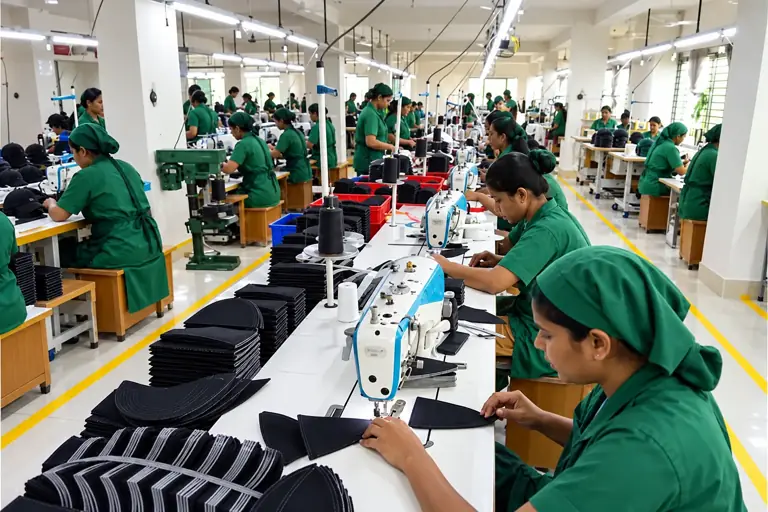
Plan the construction
Describe the intended wearer, use and appearance. Identify the crown, panel arrangement, visor and fit system rather than relying only on a style name. If several product families are being considered, mark which choices are confirmed and which remain alternatives.
For example, the baseball cap product page, trucker cap product page and 5-panel cap product page lead to different construction discussions. A common front logo does not make their panel, support or rear-opening specifications interchangeable.
Compare styles in one order plan
| Decision | What to identify | Why it affects the brief |
|---|---|---|
| Product construction | Crown, panels, visor and internal support | Defines the pattern and assembled appearance |
| Fit system | Fitted sizes, stretch bands or adjustment arrangement | Changes the chart and sample coverage |
| Materials | Shell, band, closure and other components | Connects swatches to the actual product |
| Branding | Artwork, method, dimensions and placement | Needs review on each relevant construction |
| Supply version | Complete style, colour, size and artwork item | Allows quantities and packing to be reconciled |
Use the matrix to expose differences rather than force every style into one specification. If a component is shared, identify it explicitly. Where a new material or decoration changes the sample review, keep that dependency visible.
Define the fit and sample sizes
Give each proposed construction its measurement method and intended wearer range. A fitted size, a stretch-fit band and an adjustable setting answer different fit questions. Record the crown depth and wearing position as well as the head-opening measurement.
Identify which sizes and product variants each sample represents. A cap accepted for one wearer group should not automatically approve another pattern or a kids version. Bring destination- and use-specific requirements into the brief before choosing the sample coverage.
Record materials and branding for each item
Keep fibre composition, cloth construction, weight, finish and colour as identifiable fields. CottonWorks’ woven fabric resource explains useful cloth terminology; the finished headwear brief also needs the remaining components and construction references.
Provide authorised artwork and review the intended application on each relevant material and crown. Record accepted adaptations rather than treating one digital logo proof as approval for every style. Labels, tags and packing should use the same finished-item references as the quantity sheet.
Product buying guides
- Crown and panel construction: Baseball Cap Buying Guide · 5-Panel Cap Buying Guide · 6-Panel Cap Buying Guide.
- Fitted, stretch and snap closures: Fitted Cap Sizing and Buying Guide · Stretch-Fit Cap Buying Guide · Snapback Cap Buying Guide.
- Style and finish references: Custom Dad Hat Buying Guide · Washed Cap Buying Guide · Custom Rope Cap Guide.
- Mesh-back and activity briefs: Custom Trucker Hat Guide · Custom Golf Cap Buying Guide · Performance Cap Buying Guide.
- Other forms and wearer programmes: Custom Bucket Hat Guide · Custom Beanie Buying Guide · Sun Visor Buying Guide · Custom Kids Cap Buying Guide · Work Cap and Uniform Headwear Guide.
Sourcing, sampling and production
Fabrics and material checks
Patches and badges
Printing and personalisation
Branding and embroidery
Promotional and corporate caps
Sports and performance caps
Send your range brief
List the quantities for every style, colour, size and artwork combination. Include the accepted references, material status, packing breakdown, destination and requested timing. Confirm available production allocation against that brief and identify any open development decisions.
State whether the proposal covers one product, several coordinated styles or alternatives still being compared. This makes exclusions and assumptions easier to resolve before a sample round. Send Wenext Caps the range brief with the item matrix and the specialist references relevant to the order.