
A denim cap finishing brief should state when the shell, decoration and trims enter the proposed process. A faded reference image shows a desired appearance, while the sequence determines which components are present during treatment. Make that route visible before accepting the complete cap sample.
Use the washed cap guide for broader finishing decisions. This article focuses on the treatment sequence and the sample records needed to connect an intended denim effect with the actual cap construction.
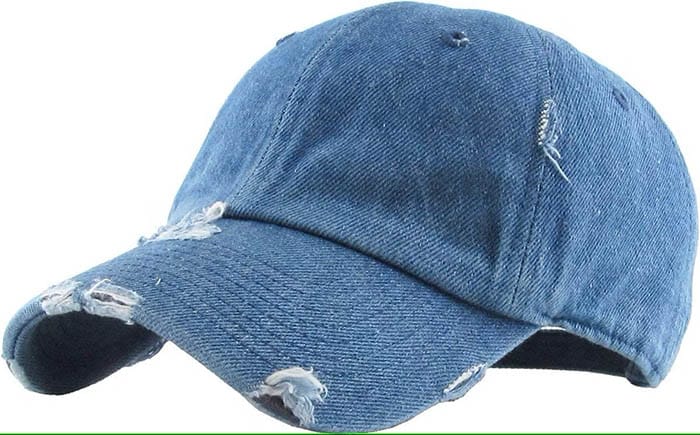
Identify the denim and the intended finished state
Retain the actual fabric reference, declared composition, construction, mass and starting shade. Mark the intended contrasts and distressed areas in reference views. Separate a uniform shade direction from local seam or visor effects.
CottonWorks’ garment-finishing resource explains relevant process background. The proposed cap’s visor, support, closure and trims still need their own review to establish a suitable route.
Map what is present at each stage
Ask whether the cloth is treated before cutting, whether an assembled cap receives further treatment and when decoration and labels are attached. Identify the materials that are exposed at each step. Keep provisional components visible in the sequence sheet.
For example, an embroidered panel treated before assembly and a finished decorated cap treated later are different development configurations. Ask the supplier to explain its proposed route and sample the intended combination rather than borrow a garment recipe.
Review the effect and component condition together
Inspect the finished crown, visor, seams, decoration, hardware and inside labels. Compare the intended fade or fraying with the accepted reference, while checking relevant dimensions and the condition of attached components. Record an intentional effect separately from an unwanted defect.
If colour transfer is a requirement, agree suitable evidence for the relevant finished material. AATCC TM8 addresses colour transfer by rubbing. Keep the tested material and condition identifiable rather than extending a result from an untreated swatch to a different finished cap.
| Check | Reference to retain |
|---|---|
| Starting material | Actual denim reference, starting shade and composition |
| Process stages | Treatment route and components present at each step |
| Decoration and trims | Application timing, attachments and sample configuration |
| Finished review | Effect, dimensions, component condition and required evidence |
| Release reference | Accepted finished cap, sequence version and open changes |
Carry the accepted sequence into repeats
Retain the accepted finished sample and controlling process references. If a fabric lot, trim, decoration or proposed route changes, ask which appearance and component checks need repeating. A previous faded image alone is not a complete repeat-order instruction.
The washed-denim shade and colour-transfer review complements this sequence sheet. Discuss the construction through the washed cap product page, then send the proposed route through Contact Wenext Caps.