
Custom Bucket Hat Guide
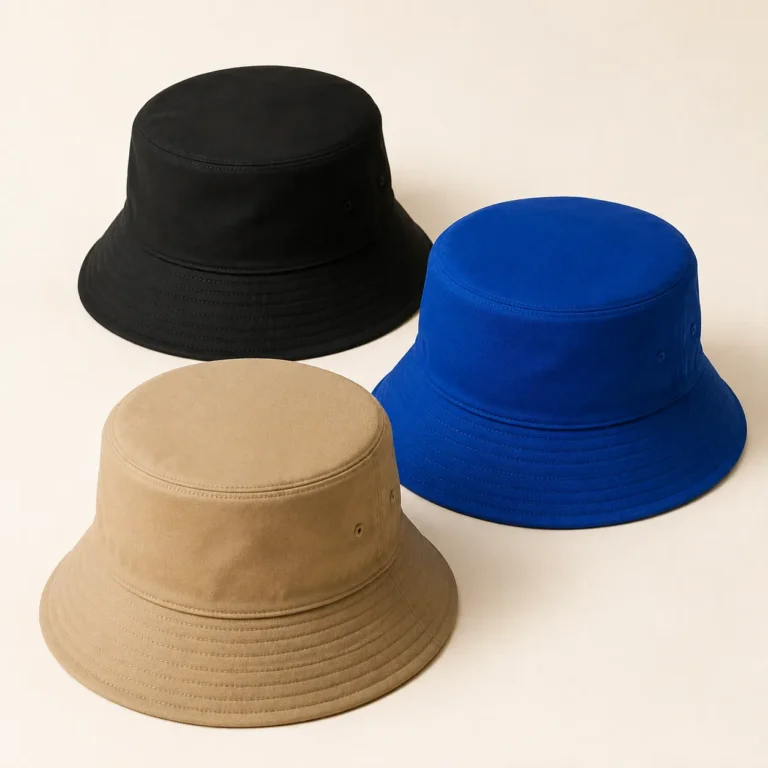
A custom bucket hat is shaped by the relationship between its top, side crown and all-around brim. Small changes to crown depth, brim width or slope can give the same fabric a noticeably different appearance. Start with the shape and fit you want, then connect the material and decoration to that brief.
Use the Wenext Caps bucket hat product page for a project discussion. This custom bucket hat guide explains the decisions to make before approving a sample or asking for a detailed proposal.
Show the crown and brim from more than one angle
Provide front, side and top views of the intended hat. Identify the top shape, side-crown depth and the point where the brim joins the crown. Include an inside view where lining, seam treatment or other hidden details matter.
Mark the brim width and intended slope around the hat. If the front, sides or back differ, show those differences explicitly. Keep the intended supplied shape clear when a reference photograph shows the brim turned up or styled by hand.
Choose fit with the complete crown in view
State whether the range needs fixed sizes or an adjustable feature. Identify the intended wearers and record the cap measurements, units and measurement method proposed for approval. Review crown depth as well as the opening size; two hats with similar opening measurements can sit differently.
For fixed sizes, identify the sample sizes to review and the planned quantity of each size. For an adjustment, check its handling, inside finish and appearance at the required settings. Keep the accepted fit tied to the relevant pattern and material combination.
Select fabric and finish as separate decisions
Identify the shell composition, weave or knit construction, colour and proposed finish. Keep a physical material reference where available. A similar-looking swatch can differ in weight, texture or handling, so retain its own identity during the comparison.
For woven choices, CottonWorks’ basic woven fabric guide explains plain and twill constructions. Use the proposed material information and completed sample to settle your own hat’s specification. Review any washing, brushing or other finish at the stage relevant to the supplied item.
Review brim support and stitching together
Ask which material or construction gives the brim its intended shape. Identify any reinforcement, lining and stitching details separately from the outer fabric. A soft brim and a firmer brim require their own sample references, even where the overall outline is similar.
Check the brim around the complete hat, including the join and any seam intersections. Review its edge finish, visible stitching and response to the handling you intend. If folding or packing is part of the brief, assess the hat after that handling before accepting the presentation.
Specify inside details that affect comfort and appearance
Include the sweatband or inside finishing arrangement, lining, seam treatment, ventilation details and labels required for the design. Identify the position and appearance of any eyelets or other visible components. Use an inside view to make the specification easier to review.
If a reversible style is proposed, treat both outward-facing sides as part of the design. Consider decoration, labels and seam finish on both sides, then agree how those details will be sampled. Keep the reversible construction distinct from a conventional lined hat.
Position the artwork on the curved side crown
Show the artwork at its proposed finished size and identify its location against the crown and brim join. Include the intended number of positions around the hat. Check that the artwork, seams and available side-crown space work together on the actual sample.
For embroidery, discuss the fabric, inside support and design with the decorator. Madeira’s backing guidance provides relevant technical background. Review the finished application and surrounding fabric, including the inside result where it affects the wearer.
Connect product claims to the applicable evidence
If the brief includes a protective or performance claim, identify the property and the evidence needed for the proposed item. Brim width, a fabric description or an outdoor photograph leaves other performance questions open. Ask which material or complete product the supporting information covers.
Keep the relevant reference, test scope and accepted wording with the specification. Review the applicable evidence again when a changed material, colour, finish or construction affects that decision. Confirm the intended product information with the responsible party for the destination market.
Give the sample a clear approval checklist
- Shape: top, side crown, brim width, slope and supplied presentation.
- Fit: size system, crown depth, measurements and intended wearing setup.
- Materials: shell, finish, lining, support and visible components.
- Branding: artwork version, method, colours, size and placement.
- Presentation: inside finish, labels, packing and any handling review.
Identify provisional materials and details before the sample is reviewed. Mark accepted features and changes separately. The final approval should name the complete proposed combination and any remaining condition requiring confirmation.
Build the quantity and packing brief
List each complete colour, size, graphic and packing variation with its quantity. Identify any separate receiving or release groups. Ask for minimums, included development work and timing against that breakdown.
Agree whether the hats will be nested, folded or otherwise packed, and review that arrangement with the brim and decoration. Keep carton contents and retail identifiers connected to the item breakdown. For repeats, identify the previous approved version and ask for confirmation of any changed components.
Related planning resources
- Canvas bucket hats: fabric, brim shape and finish approval
- Bucket hat samples: crown depth, fit and brim shape
- Supplier comparison: sample evidence and proposal scope
For campaigns still deciding on a format, the promotional headwear comparison explains how caps, bucket hats, visors and beanies differ in fit, artwork surface and packing. Retain a separate accepted sample and quantity reference for each chosen format.
Compare other headwear shapes
The Dad Hat Buying Guide covers a cap with a front visor and rear fit arrangement. The 6-Panel Cap Buying Guide explains another crown layout. Use each guide to define the construction you want rather than treating the product names as complete specifications.
Common bucket hat buying questions
What decides whether the brim looks soft or firm?
Review the proposed outer material, support, stitching and construction together on a sample. Identify the accepted combination and assess it after any handling included in the brief.
Can one sample cover every size and material?
Identify what the sample demonstrates. Agree which size, material or construction variations require their own review before extending an approval to the range.
What should I send for an initial enquiry?
Send marked views, the intended size system, crown and brim details, materials, artwork, quantities and destination. Add target timing and open development questions through Contact Wenext Caps.