
When sourcing promotional caps in Bangladesh, start with a brief that two suppliers can interpret the same way. The useful comparison is the proposed cap, decoration and delivery scope. A country name or a factory photograph cannot settle those product decisions.
For the related construction decisions, see the baseball cap buying guide. The plan below addresses the campaign or corporate buying task.
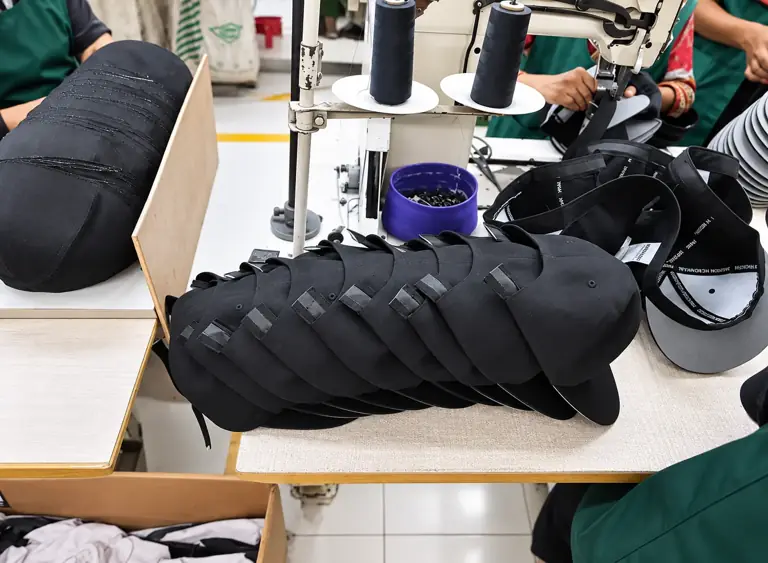
Describe the cap behind the campaign
State who will wear it, where it will be distributed and which details are essential. Add the proposed construction, fabric, closure, colours, artwork locations, quantities and packing. Give references a purpose: shape, colour or finish, rather than asking a photograph to define everything.
Separate requirements from options still open for discussion. If two fabrics or logo methods are acceptable, ask for identifiable alternatives. This keeps an attractive low price from concealing a different product or a missing trim package.
Ask for evidence that answers your actual questions
Request a relevant construction sample and identify which proposed details it covers. Note differences in material, support, artwork or fit that still need development. Discuss who prepares the sample, who approves it and how corrections are recorded.
For brand colours, use an agreed physical reference and review the proposed materials together. Pantone’s guidance on physical colour references explains why real-product colour decisions need more than a screen value. Retain the accepted combination with the sample record.
Compare the commercial scope line by line
Check what the quotation includes for development, decoration setup, labels, packing and transport. Keep the currency, validity, quantity assumptions and proposed delivery responsibilities with that offer. Do not assume that similarly named terms cover the same costs or handover.
Ask each supplier to identify open information and substitutions. Verify any certification, test or capacity claim against evidence for the relevant entity and scope. Broad claims about national cost or quality are less useful than a proposal tied to your actual cap.
| Decision | Record to keep |
|---|---|
| Product | Construction, materials, fit and complete variants |
| Sample | Relevant evidence and details still to develop |
| Quote | Inclusions, alternatives and open assumptions |
| Delivery | Named responsibilities, location and receiving needs |
| Release | Accepted sample, files and authorised changes |
Close the brief before release
The promotional production change record is useful if artwork or components change after the first proposal. Identify affected items and obtain a revised decision before treating an earlier sample as approval.
For a repeat order, retain the accepted cap, released files, component references and delivery assumptions. Reconfirm changed inputs rather than copying the old purchase order unquestioned. A complete brief makes both the initial comparison and the later reorder easier to understand.
Explore the related headwear product, then send your cap reference, artwork, item quantities and receiving needs through Contact Wenext Caps to discuss the next proposal or sample.