
Choose a cap printing method after the artwork, fabric and crown layout are clear. A process that suits one graphic or panel can be a poor match for another. Compare physical samples against the same brief instead of deciding from a process name or a finished photograph alone.
Use the 5-panel cap buying guide to define the base cap, then use this checklist for the decoration decision.
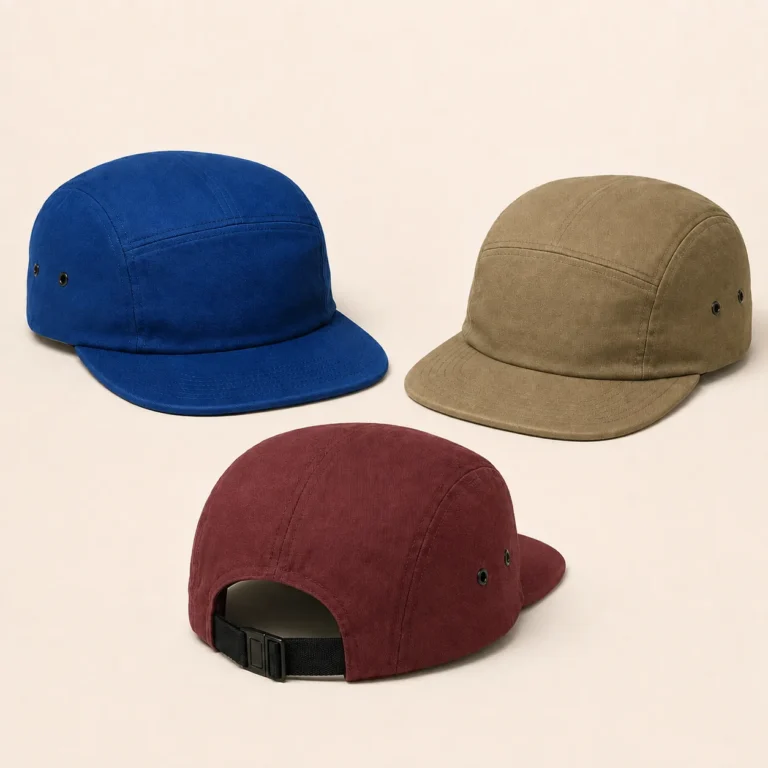
Write the visual and product requirements first
Identify the intended cap, front construction, fabric reference, base shade and finish. Add the artwork version, actual dimensions, colours, fine detail and proposed position. Explain the desired feel and any care or use requirements that the final product description must support.
Distinguish important brand features from details that may be adapted. Record whether a graphic crosses seams or needs broad panel coverage. These questions help the supplier discuss a workable route before a quotation quietly assumes a simpler design.
Compare proposed routes with their own instructions
Use the screen-print proof checklist for ink and registration questions, the DTF transfer review for the supplied film-transfer system, or the sublimation panel-map review for the proposed substrate and transfer route.
Heat application is a production step shared by several decoration systems, not a complete material specification. The selected transfer, adhesive where relevant, substrate and equipment still need to be identified. Ask for actual-size development samples when the visual outcome remains uncertain.
Approve the printed surface and assembled appearance
CottonWorks’ textile printing resource explains broader fabric-printing technologies. Use that background to ask relevant questions, then evaluate the actual proposed cap. Keep the same artwork and viewing purpose when comparing alternative sample routes.
Review colour, readable detail, edges, feel and placement. Check seam interruptions, crown distortion, unwanted marking and the inside where relevant. A flat print or loose transfer can resolve a component question without closing how the finished cap looks and feels.
| Check | Reference to retain |
|---|---|
| Brief | Graphic, dimensions, fabric, cap layout and intended use |
| Route | Named print system and applicable supplier instructions |
| Component proof | Readable artwork, colour, edges and feel |
| Cap review | Seams, placement, crown shape and inside result |
| Release | Accepted inputs, required evidence and change rules |
Release one identified method and retain the evidence
Keep the accepted sample with its fabric, artwork and process reference. The heat-application record helps where pressing is part of the route. Identify any temporary input and the decisions that remain open before production release.
Agree the evidence needed for a particular care or durability claim. A visually convincing new print does not establish every end-use property. For repeat orders, compare changed fabric shades, finishes, materials or equipment with the accepted reference and decide which checks need repeating.
Discuss the proposed construction through the related cap product page. Send the artwork, cap reference, quantity breakdown and open questions through Contact Wenext Caps so the next sample or proposal addresses the actual requirement.