
Heat transfer cap development needs more than a time and temperature written beside a logo. The selected transfer, crown layers, support and equipment all belong to the application record. Use that record to explain the accepted sample and what must be reviewed if the combination changes.
Use the baseball cap buying guide to define the base cap, then use this checklist for the decoration decision.
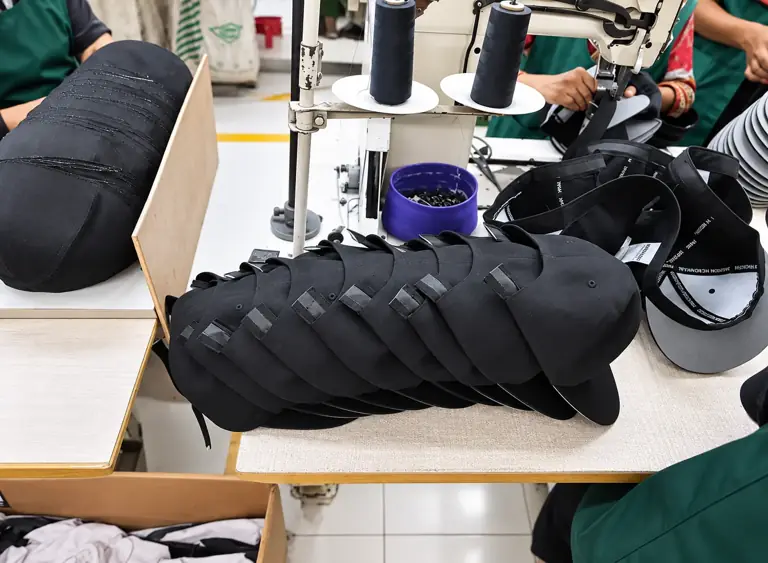
Define the proposed transfer rather than only the artwork
Record the transfer type, supplier reference, graphic version, dimensions and intended finish. Name the cap fabric, surface treatment and construction beneath the decoration zone. A good artwork file does not by itself identify the adhesive or application route.
Obtain the selected product’s instructions, including any required pre-treatment, pressing, peel and finishing steps. Identify which equipment those instructions cover. Keep unresolved compatibility questions open until the actual sample has been reviewed.
Show how the cap will be supported
Map the logo against the crown curve, seams, visor and any support or lining. Record the proposed application area and the equipment arrangement that supports it. Ask the operator to identify a seam or thickness change that may interfere with the intended result.
Review the trial cap for visible marking, flattening, distortion, edge contact and apparent alignment. Inspect the inside and overall feel. The application record should explain the actual construction tested, including temporary components that could change the result.
Retain the instructions with the sample outcome
STAHLS’ UltraColor MAX guidance is one example of product-specific application and peel instructions, with an equipment qualification. It should not become a universal setting sheet for every heat transfer. Use the instructions for the system actually proposed in the order.
Record the relevant application reference, date and sample identity alongside the observed result. If the required outcome has not been achieved, identify the correction and the next trial. A controller display describes an input; the finished-cap review addresses the product result.
| Check | Reference to retain |
|---|---|
| Transfer | Selected product, artwork, size and intended finish |
| Cap layers | Fabric, treatment, seams, support and lining where used |
| Equipment | Relevant setup and applicable product instructions |
| Outcome | Accepted complete sample and observed appearance |
| Change control | Care evidence and affected decisions for substitutes |
Release care wording and changes deliberately
Keep intended cleaning and use requirements with the relevant evidence for the assembled cap. For a separate badge rather than a print transfer, use the patch attachment review to resolve its backing and edge questions.
Retain the accepted complete cap, artwork and component references for repeats. A change in transfer family, cap colour, fabric finish, crown support or equipment arrangement may affect earlier approval. Record the affected decisions and confirm the revised combination before repeating the application.
Discuss the proposed construction through the related cap product page. Send the artwork, cap reference, quantity breakdown and open questions through Contact Wenext Caps so the next sample or proposal addresses the actual requirement.