
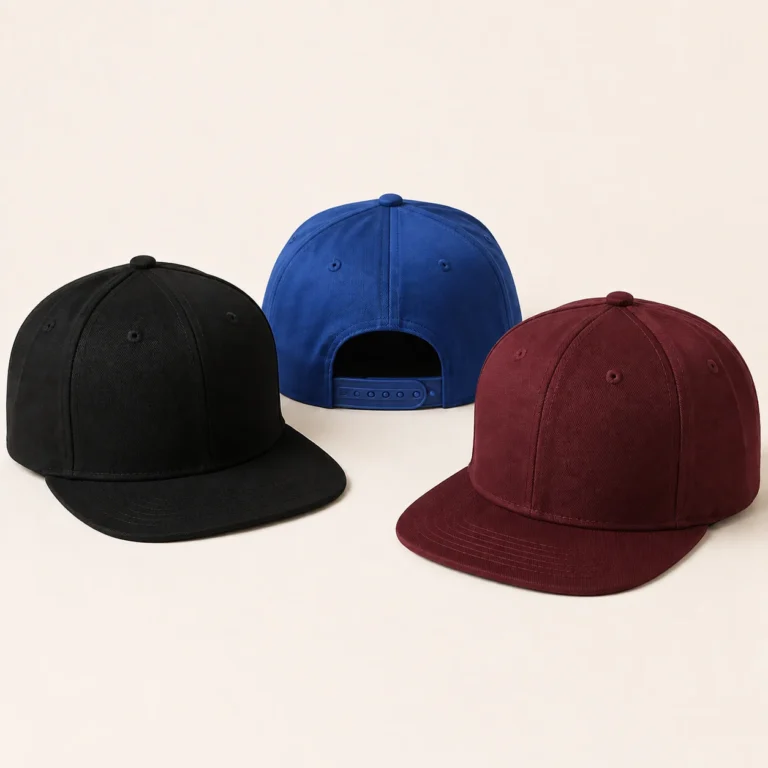
Flat visor snapback caps combine a rear adjustment with a defined brim shape, but “flat” is only the starting point for a useful specification. The visor outline, projection, edge, stitch pattern and relationship to the crown all affect the finished appearance.
Use the Snapback Cap Buying Guide for the complete brief. This guide focuses on the visor details to compare before approving a custom sample.
Choose the supplied shape, not only a style name
Provide front, side and underside references that show the appearance you want on delivery. If the visor should arrive flat, state that clearly. If a slight curve is intended, use a physical reference or an agreed profile rather than asking different people to interpret “almost flat.”
For a familiar retail example, New Era’s 9FIFTY silhouette guide describes a flat-visor snapback construction. That is a reference to its own branded style; your custom order still needs its own dimensions, materials and approved sample.
Define the measurement points
Ask the sample team to record the visor’s center projection and width using agreed reference points. Clarify whether a dimension follows the surface or is measured another way. Keep the method with the drawing so the inspection team can repeat it.
Review the edge outline and both sides of the visor. A dimension alone will not describe a rounded corner, a squarer end or the way the visor joins the crown. Include clear photographs of those details with the sample record.
Review the crown and visor as one silhouette
A brim that looks balanced on one crown may look different on another. Compare the front height, panel shape and visor attachment together, including the cap worn at the intended adjustment setting.
The snapback crown-profile guide covers those shape decisions. Keep the approved crown reference unchanged when comparing visor alternatives; otherwise, the review may be comparing two different cap designs at once.
Specify the underbrim and visible edge
Record the top fabric, underside fabric and any contrasting edge or sandwich detail separately. Identify each color with the agreed material reference. Check the combination on the finished sample because photographs and screen previews may show the same color differently.
Where the underbrim includes decoration, provide its finished dimensions, orientation and placement. Review it from the wearer’s perspective as well as from the front. Ask the sample team to assess the proposed method on the actual visor construction before approval.
Use a visor approval worksheet
| Detail | Reference to approve |
|---|---|
| Supplied profile | Flat or specified curve, shown from the side and front. |
| Dimensions | Projection, width, measurement points and method. |
| Outline | Front edge, corner shape, symmetry and crown attachment. |
| Materials | Top, underside, insert and any contrast-edge reference. |
| Stitching | Thread color, row layout and agreed edge spacing. |
| Decoration | Artwork, orientation, position and finished appearance. |
| Packing | Approved arrangement and condition after unpacking. |
Check stitching and the finished feel
Review stitch rows against the edge and the intended design. State the row layout and thread color in the specification. Identify an uneven line by its location rather than describing the whole visor only as “poor stitching.”
Handle the complete sample and review its firmness against the accepted reference. Record the material or insert reference where it is part of the agreed specification. Do not infer the internal construction from an exterior photograph alone.
Keep packing from changing the approved presentation
Review the cap after it is removed from the proposed packaging. Compare the visor profile and crown with the approved condition. Check any added sticker, hangtag or protective insert at the same time.
The snapback export-packing guide explains how to connect that arrangement with carton records. For the final check, use the same reference points in the quality inspection checklist.
Common flat-visor questions
Does every snapback have a flat visor?
Snapback describes the adjustment. Specify the visor profile separately and confirm the actual combination in the approved sample.
Can the underside use a contrasting color?
Include the requested fabric and color in the brief, then confirm material availability and appearance for that design.
Can I approve the visor from the front photograph alone?
Request side, underside and edge views, measured details and a physical sample where needed to assess shape and feel.
Develop your flat visor snapback brief
Review the snapback cap product page, then send Wenext Caps your visor and crown references. Include the intended silhouette, colors, artwork and the details that need sampling.