
Snapback cap export packing should help the goods arrive in the agreed condition and make the contents easy to identify. Review a packed sample as well as a loose cap. The carton, internal arrangement and shipping records need to describe the same order.
Use the Snapback Cap Buying Guide for the product decisions, then prepare a packing brief for the destination and receiving process. Confirm the actual shipment requirements with the responsible logistics partners before dispatch.
Approve how the cap sits inside the carton
Ask to see the proposed arrangement using the relevant crown shape, visor and decoration. Check the cap after it has been unpacked, including the front profile, visor position and any raised logo or patch. A packing photograph is useful when it shows how the layers are arranged, not only the closed carton.
Specify any dividers, inserts, individual packaging or protective material that the order needs. Confirm compatibility with the finished product and the route. Keep the agreed method with the sample reference so later packing uses the same instruction.
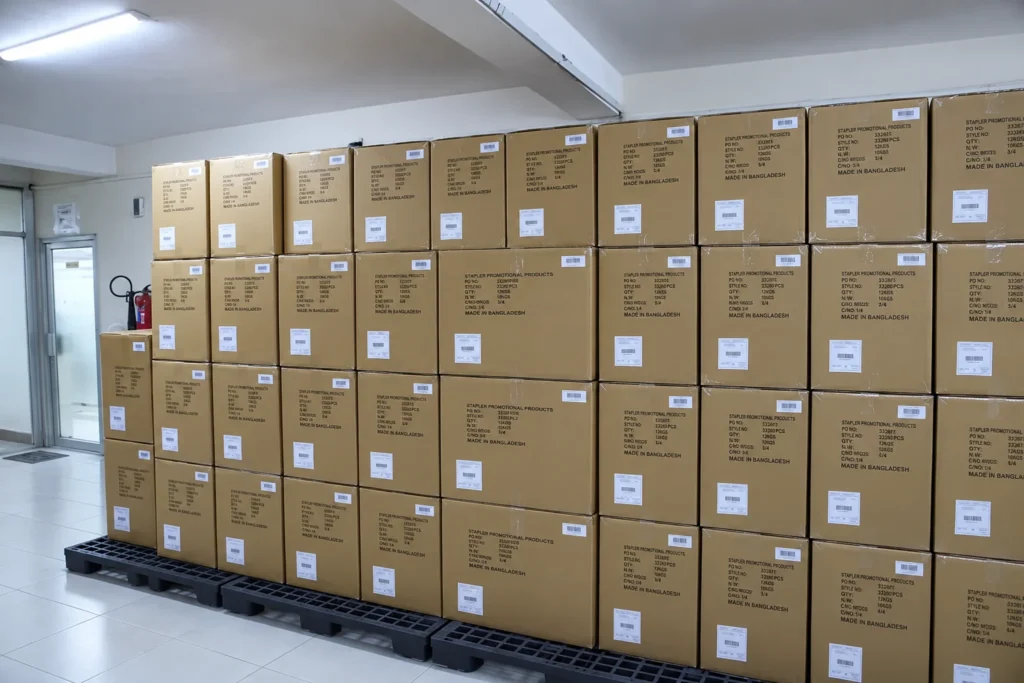
Define the carton contents before assigning marks
State the quantity per carton and identify whether cartons contain one item or a mixed assortment. For a mixed carton, record the quantity of each style, colorway and artwork version. Include a separate instruction for the final partial carton where it differs from the standard pack.
Use the wholesale assortment worksheet to organize item ratios. If the order has several releases, connect each carton range to the relevant batch and delivery record.
Make carton marks match the receiving instructions
Prepare a label proof showing the fields the receiver requires. These may include the buyer’s order reference, item identifier, carton number, quantity and destination code. Agree placement and readability before printing the full set.
Use identifiers supplied or approved by the responsible party. A product barcode and a logistic-unit identifier serve different purposes. If the buyer requires GS1 logistics labeling, the GS1 Logistic Label Guideline explains the role of the SSCC in identifying a logistic unit. Check the buyer’s implementation rather than inventing a barcode number.
Prepare the packing-list information from actual cartons
| Record | What to reconcile |
|---|---|
| Order and release | Approved order reference, shipment group and destination. |
| Item breakdown | Style, colorway, artwork and quantity of each item. |
| Carton range | Unique carton references and contents, including partial cartons. |
| Packed dimensions | Actual external carton measurements and stated units. |
| Weights | Actual recorded net and gross figures with their units. |
| Label proof | Approved wording, data, barcode where required and placement. |
| Handover | Release approval, documents and evidence of the goods transferred. |
Keep estimated carton dimensions clearly separate from measured packed figures. Check totals across the packing list, item records and carton count. A revision should identify what changed so an old file is not used for booking or receiving.
Review the route-specific documentation
Provide the actual goods description, materials, quantities, values and packing information to the parties preparing the shipment. Confirm the required documents with the appointed forwarder, importer or other responsible specialist for the destination.
Product descriptions, classification and any origin or compliance statements need a factual basis for the specific goods. Keep approved document versions together; do not reuse another order’s details simply because both shipments contain caps.
Record the shipment handover
Before the goods leave, reconcile carton count, identifying marks and the approved release. Keep packing photographs and the agreed inspection outcome linked to that shipment. The snapback quality checklist provides product and packing checkpoints.
Record the relevant dispatch or collection evidence and any exceptions noted at handover. If a receiving discrepancy is reported later, the buyer can then identify a specific carton or item instead of investigating an unexplained overall shortage.
Common export-packing questions
How many snapbacks should go into one carton?
Approve the arrangement for the actual cap, packaging and receiving requirements. Confirm the finished condition after unpacking and record the agreed quantity.
Does every carton need a GS1 logistics label?
Follow the applicable buyer and logistics requirements. Establish which identifiers are required and who is responsible for assigning them.
Can estimated dimensions be used as final shipping data?
Identify estimates during planning, then reconcile the final records with the actual packed dimensions and weights before the relevant booking or documentation step.
Prepare your snapback packing brief
Review the snapback cap product page, then send Wenext Caps your packing and destination requirements. Include the item breakdown, receiving instructions and proposed label format for review.