
“Too tight” is useful feedback, but it is not yet a revision instruction. The sample team needs to know which size was tried, where the pressure was felt and which construction was being reviewed. Without that context, a change to the band can miss a crown-depth problem or alter a detail the buyer already liked.
This guide helps buyers turn stretch-fit cap sample feedback into a clear record. For the wider specification, use the Stretch-Fit Cap Buying Guide. For the size-system checks themselves, read the detailed sizing guide. Manufacturing enquiries belong on the main stretch-fit cap product page.
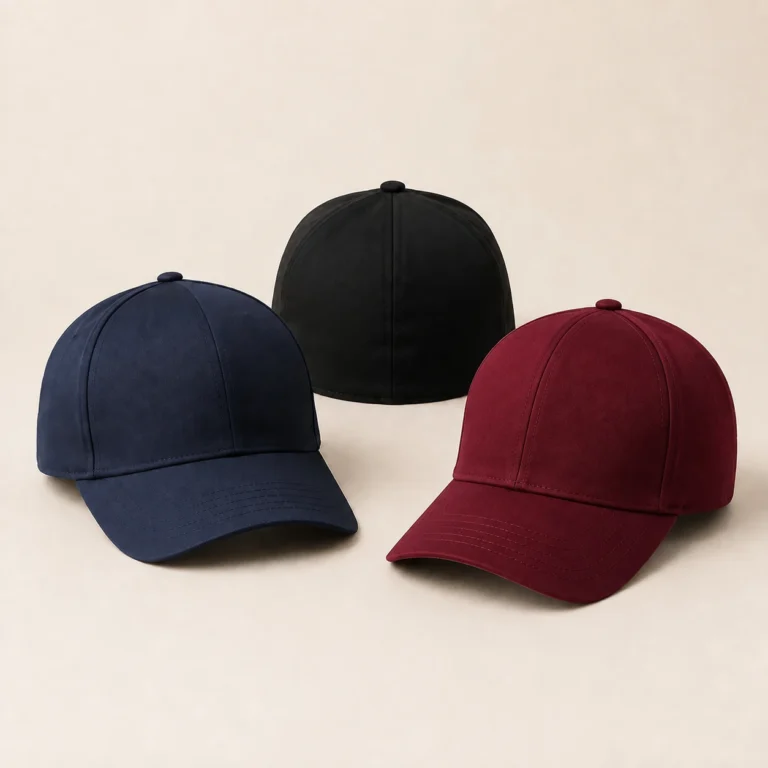
Identify the sample before collecting opinions
Record the style, size label, color, sample revision and materials reference. Note any provisional component. A wearer’s comment on a substitute band should not be attached to a different band as if both had been checked.
Keep the reference photograph and specification beside the sample record. Identify whether this review concerns fit, silhouette, decoration or several of those features. Make the intended wearing position clear before comparing comments.
Use a repeatable review record
Agree a practical review procedure with the supplier and buyer team. Keep the conditions and sequence comparable where you are comparing samples. If a defined performance test is needed, agree it separately; an informal wearer review is not a substitute for that test.
A simple feedback form can contain the following fields:
- Sample reference: the style, size band and revision actually reviewed.
- Wearer-range reference: the relevant measurement or fit category, using the agreed method.
- Review conditions: how the sample was prepared and the agreed wearing activity.
- Observation: a specific description and location of the issue.
- Evidence: annotated views or measurement records where useful.
- Action: the question or revision requested, with an owner.
- Status: accepted, open, awaiting a proposal or requiring another sample.
Use only the wearer information needed for the review. A size reference and relevant observation are often more useful to the sample team than an unrelated personal profile.
Describe location and behavior
Replace a general comment with the observed feature. “The cap sits above the intended position at the side” describes a different issue from “the lower edge feels firm at the rear.” Add the sample size and a marked view so the team can identify the area.
Record both positive and negative observations. If the visor profile and front appearance are accepted, say so. This gives the next revision a boundary and helps avoid changing an approved feature while another problem is being investigated.
Separate the observation from the proposed cause
A buyer can report what they see and feel without diagnosing the construction. Ask the sample team which component or measurement it proposes to review. A request to make the elastic longer may be premature if the issue concerns crown depth or the intended wearing range.
Keep proposed solutions marked as proposals until agreed. Request an explanation of the expected effect on the rest of the cap, including other size bands. This is especially useful when an alteration changes the relationship between the crown fabric and sweatband.
Keep decoration feedback tied to the finished cap
Record whether the sample includes the intended embroidery, patch or printed design. A blank cap and a decorated cap do not demonstrate exactly the same construction. Identify any change in the feel or appearance around the decorated area.
Check the inside finish as well as the visible logo. Madeira’s backing guidance describes fabric and design factors involved in selecting embroidery support. Use it to frame the technical discussion, then review the actual decoration and support combination on the cap.
Compare size bands without losing individual findings
Review the ends of the intended wearer range as well as the reference wearer where the approval plan calls for it. Keep observations associated with the relevant size band. One general “fit approved” message can conceal a concern in a smaller or larger band.
Summarize repeated patterns, but retain the underlying records. If several observations point to the same area, ask the team to review it. If comments conflict, check the sample identities and review conditions before deciding which change to request.
Make the next round answer a defined question
Issue a concise revision list. State what remains accepted, which changes are requested and which questions need a proposal. Use the OEM technical-pack guide to keep drawings, materials and measurement revisions aligned with the comments.
On the next sample, compare the changed feature against the previous record. Confirm the sample revision and check any connected feature that may have been affected. Close each item explicitly rather than treating receipt of a new sample as approval.
Sample-feedback questions
Can photographs replace a wearer review?
They can document appearance and location, but they do not establish every aspect of fit or feel. Use the review method agreed for the actual size system and intended use.
Should the buyer tell the factory exactly how to alter the pattern?
Describe the desired result and any controlling requirements clearly. Ask the sample team to propose the construction change when the cause is uncertain, then record the agreed instruction.
When is a sample approved?
When the responsible parties have recorded acceptance of the relevant sample, specification and scope. Keep outstanding components or checks visible so a partial approval is not mistaken for a complete one.
Send specific sample comments
Review the stretch-fit cap product page, then send Wenext Caps the sample reference and feedback. Clear observations help the team discuss a focused revision instead of repeating the same uncertainty in another sample.