
When a stretch-fit cap moves from cutting to sewing and finishing, the size-band identity needs to move with it. Similar-looking panels, sweatbands and labels can belong to different approved combinations. A final count cannot explain whether the right components stayed together through production.
This guide sets out factory handover questions a buyer can discuss before an order starts. It is a proposed review framework, not a claim that every Wenext Caps order follows one identical route. Use the Stretch-Fit Cap Buying Guide for overall planning and the stretch-fit product page for the actual manufacturing enquiry.
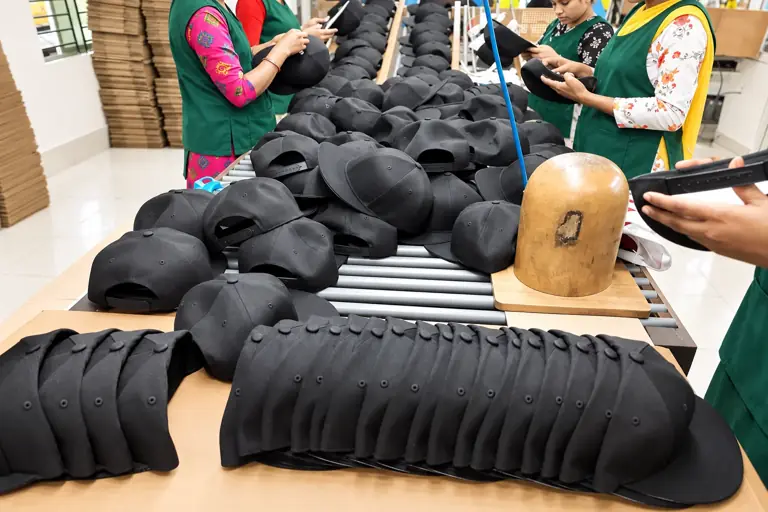
Agree the route for the actual construction
Ask the supplier to describe the operations needed for the approved cap, including where decoration, sweatband assembly and checking take place. The sequence can depend on the construction and decoration method, so resolve it against the actual product.
New Era’s published manufacturing sequence illustrates its own cap-making stages, including cutting and bundling. It is useful background for discussing handovers; it does not establish the number of steps or the production route used for a Wenext Caps order.
Start with a controlled item and component list
Identify the style, color, size band and specification revision for each production item. Link the accepted crown material, elastic band, support and trims to that reference. Ask how any material-lot or component distinction that matters to the approval will be retained.
Keep proposed substitutions visible. An available band that resembles the approved one should not be treated as accepted solely because it fits the same bundle. Use the OEM technical-pack checklist to align the component record with the current instruction.
Make cut bundles identifiable
Discuss how cut components will be grouped and identified by item and size band. The handover reference should let the next operation determine which combination it has received. Agree how a split bundle, replacement component or quantity discrepancy will be recorded.
Ask which quantity is being counted at each stage. A panel count, a bundle count and a finished-cap count describe different things. Keep the unit clear so a progress update does not create a misleading picture of completed goods.
Resolve the first assembled combination early
Ask where the supplier proposes to review the first assembled product for the relevant item or size band. Check the agreed features that can be assessed at that point, and identify anything still awaiting decoration or finishing.
If a concern appears, record the affected item, component reference and operation. Clarify which work can continue and which needs a decision. A general message that “production is on hold” does not show whether every item or only one combination is affected.
Keep size and trim identity through assembly
Pay particular attention to the relationship between the sweatband, crown and sewn size identification. Confirm how the current label and size-band instructions will be available to the relevant operation. Review the private label trim guide for the approval records behind those components.
Keep decoration versions distinct as well. A small change in a side logo can be difficult to notice once several colorways are on the line. The item reference should connect the accepted artwork, placement and construction instead of relying on visual similarity.
Record findings and rework without losing the item
Agree how pieces needing review or rework will be identified and separated from accepted work. Record the issue and the operation involved, then retain the original item and size reference when the pieces return for checking.
A rework count is not automatically a released quantity. Ask how the result will be rechecked and who will close the issue. If the proposed correction alters a material, measurement or appearance, establish whether another buyer approval is needed.
Reconcile the handover to finishing and packing
Before packing, reconcile accepted finished quantities by item with the order breakdown and any agreed changes. Keep unfinished, held and rejected quantities distinguishable in the update. Ask for an explanation of a variance at the relevant item level.
Provide the final carton and label instructions alongside the current assortment. The wholesale planning guide explains how size-band quantities and carton contents should connect. Packing instructions cannot correct an unidentified mix-up earlier in the route.
Useful questions for a production discussion
- Which approved sample and technical-file revision control this item?
- How will the relevant size-band and component references stay identifiable?
- What unit does each progress quantity describe?
- Where will the first assembled combination be reviewed?
- How will open findings and rework be recorded and closed?
- Who confirms that released quantities match the final item and packing plan?
Factory-handover questions
Does every size band need the same operation sequence?
Ask the supplier to confirm the route and relevant checking points for the actual construction. Record any item-specific difference rather than assuming the route is identical.
Can a production photograph establish completed quantity?
It can illustrate progress, but reconcile quantity updates with item references and the stage being counted. A photograph alone is not a release record.
What should the buyer prepare?
Provide the current specification, approved samples, item quantities, artwork and trims, packing requirements and unresolved decisions. Ask the supplier to identify the corresponding production and review responsibilities.
Discuss the production references
Review the stretch-fit cap manufacturing page, then send Wenext Caps your product and order file. A clear item breakdown helps make the production discussion specific to your cap.