
A wholesale baseball cap order needs an item breakdown that a warehouse can receive and a buyer can replenish. A total quantity alone does not show the colours, sizes or decorated versions inside it. Build the assortment around complete finished items, then connect those quantities to the packing arrangement.
The Baseball Cap Buying Guide covers product development. This article focuses on wholesale assortment planning, carton contents and keeping repeat orders consistent with the accepted cap range.
Define the finished items in the assortment
Assign an item reference to each style, colour, size and artwork combination. Identify the accepted material and cap specification behind it. Two similar-looking caps can need separate references when the size, closure, label or logo differs.
Keep unbranded and decorated versions distinguishable where both are proposed. If a range includes optional colours or artwork still awaiting approval, mark them as provisional rather than adding them to the confirmed order total.
Reconcile quantities at the item level
List the units for every finished item and compare their sum with the complete order. Show any customer or warehouse allocation explicitly. Ask for MOQ and quotation confirmation against that actual breakdown instead of assuming that one total satisfies every style or material requirement.
The baseball cap quotation comparison explains how to check assumptions and exclusions. If the assortment changes after quotation, identify the revised quantities and confirm whether the product, price or schedule needs review.
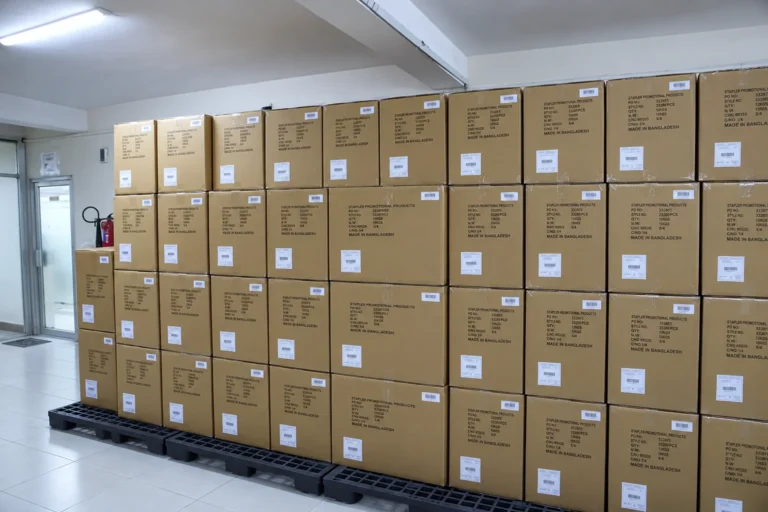
Choose the carton arrangement with the receiver
Agree whether cartons contain a single item or a defined mixed assortment. Show inner-pack quantities, carton contents and any allocation by customer or receiving location. Keep those references aligned with the packing list.
| Field | What to identify |
|---|---|
| Item reference | Style, colour, size and artwork version |
| Confirmed units | Quantity of each finished item |
| Pack arrangement | Single-item or agreed mixed contents |
| Receiving allocation | Customer or warehouse reference where required |
| Carton identity | Contents and packing-list reference |
These are planning fields, not a fixed carton capacity. Review the actual cap shape, visor and decoration with the proposed presentation. Confirm carton dimensions and other packing details against the accepted arrangement rather than borrowing figures from another order.
Use the buyer’s actual identification system
Confirm who assigns item data and who approves printed codes or carton labels. Distinguish a trade item identifier from a logistics-unit identifier. Where a GS1 logistics programme is required, use the buyer’s approved implementation and the official GS1 Logistic Label Guideline as the relevant reference.
Check that the printed information, order list and physical contents agree. An internally invented carton number should not be represented as a GS1 identifier merely because it is printed in a barcode format.
Make replenishment requests specific
Retain the accepted item list, specification, artwork and packing references. State whether a repeat request uses the existing product version or proposes changes. Confirm material availability and timing again, especially when the new assortment is smaller or organised differently.
Discuss supply through the Wenext Caps baseball cap product page. To prepare a proposal, send the wholesale assortment brief with item quantities, receiving allocations, packing requirements and the required schedule.