
A reference cap can show the shape you like, but it may also carry details you do not want to repeat. The most useful custom baseball cap brief explains that difference. Add notes to the views so the sample team knows which features to retain, which to change and which still need a proposal.
Use the Baseball Cap Buying Guide for the main buying decisions. This article focuses on translating design references into an understandable starting brief before the full specification is agreed.
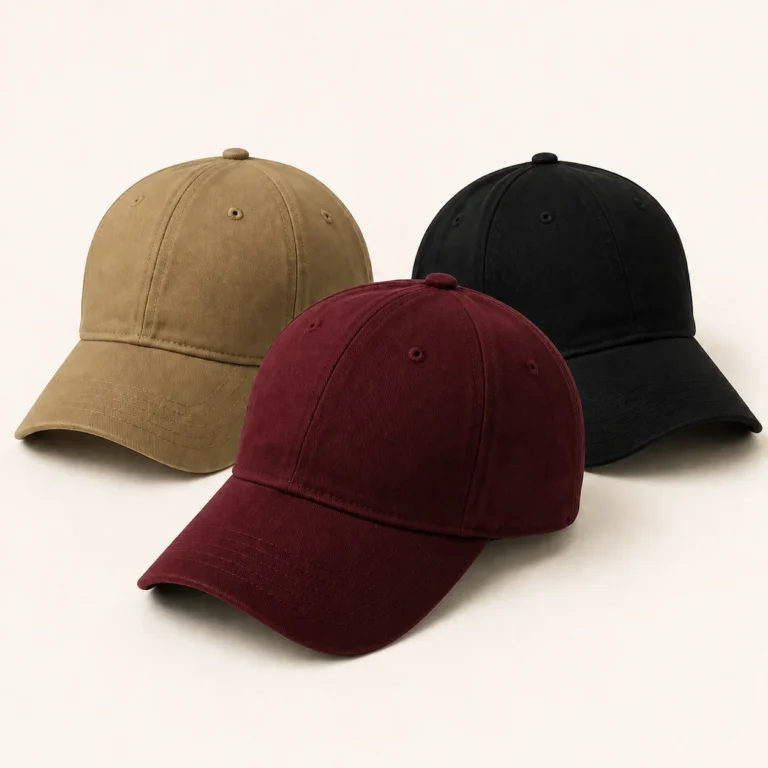
Explain what each reference is meant to show
Identify the preferred crown profile, visor shape, colour direction and other useful features. If different references supply different ideas, say which one controls each part. A front view from one cap and a rear view from another should not be treated as a consistent design without that explanation.
Mark features that are examples rather than fixed requirements. Where a physical sample is available, identify it in the brief and explain how the proposed cap should differ. Keep the reference’s role separate from any assumption about its hidden materials or internal construction.
Use views that answer distinct questions
A front view helps locate the main mark and describe symmetry. Side views help show crown depth, front angle and visor projection. Rear and interior views explain the opening, closure, band and label arrangement. Add dimensions and useful reference points where a photograph alone leaves the choice unclear.
Record the desired wearing position and intended size range. Keep shape comments separate from colour or artwork changes, so the team can recognise which decisions affect the pattern and which belong to another part of development.
Replace ambiguous colour instructions with references
Identify the shell, visor, thread and trim colours separately where they differ. Retain the proposed material references and explain whether colour matching or a deliberate contrast is intended. A phrase such as “same navy” can leave several different components undefined.
Pantone’s physical sample guidance explains the role of physical references. Review the actual materials under agreed viewing conditions before treating a screen image as the final matching standard.
Provide authorised artwork and a placement proposal
Supply the original authorised logo and identify its intended finished dimensions, colours and location. If the application method is undecided, mark it as a choice to develop. Do not ask the sample team to infer brand permissions or the final artwork from a photograph of another cap.
Show the relationship to seams, edges and the visor. Keep any accepted artwork adaptation identifiable, especially when fine details need simplification. A digital placement proposal should lead to a review on the actual cap construction.
Turn the concept into a decision list
| Area | What to explain |
|---|---|
| Shape | Reference features to retain and proportions to change |
| Fit | Wearer range, wearing position and measurement direction |
| Materials | Proposed swatches, colours and unresolved choices |
| Artwork | Authorised files, dimensions and placement proposal |
| Open decisions | Required proposals and responsible review parties |
Once the choices are resolved, the OEM baseball cap specification pack explains how to control the component, measurement and approval references. Discuss development through the Wenext Caps baseball cap product page, or send the custom cap design brief with annotated views, quantities and the required schedule.